Last updated: August 2026
Condensation, damp bedding, wet gear, and musty storage can make camper-van travel uncomfortable fast. This guide compares one compact powered dehumidifier with four passive moisture absorbers for vans and RV-style interiors. A powered unit actively moves air and collects water when reliable electricity is available, while passive absorbers are better suited to closets, cabinets, bathrooms, gear compartments, and parked or stored vans.
Quick verdict: Choose the NeedDuck 44-Ounce Small Dehumidifier when you want active moisture collection and have a dependable power source. Choose the Camco Refillable Moisture Absorber for simple non-electric control in a parked or stored van if you are comfortable with its currently listed lavender scent. The Vacplus Hanging Bags are the most convenient option for a wardrobe or enclosed storage area, while DampRid Fragrance Free is the better hanging choice for scent-sensitive spaces.
Do not compare them as equals: A passive absorber can protect a small enclosed zone, but it does not circulate cabin air or provide the same moisture-removal performance as an electric dehumidifier.
Important: These products support moisture control, but they do not replace ventilation, leak repairs, insulation, or drying wet materials. Secure, remove, or empty any liquid-collecting product before driving.
Quick Comparison
| Product | Type | Power and Placement | Best Use | Main Limitation | Check Details |
|---|---|---|---|---|---|
| NeedDuck 44-Ounce Dehumidifier Best powered option |
Electric thermoelectric unit | Listed 28W; use on a stable surface while parked | Warm, humid vans with dependable power | Modest output compared with larger compressor models | Check Price on Amazon |
| Camco Refillable Moisture Absorber Best refillable passive option |
Refillable moisture absorber | No power; requires a level, secure location | Parked vans, RV storage, cabinets, and bathrooms | Must stay upright, needs refills, and current media is lavender-scented | Check Current Amazon Availability |
| Vacplus Hanging Bags Best for van closets |
Disposable hanging absorber | No power; hang upright with airflow around the bag | Wardrobes and enclosed storage zones | Collected liquid requires careful handling | Check Product Details on Amazon |
| DampRid Fragrance Free 3 Pack Best scent-free hanging option |
Disposable hanging absorber | No power; use in a secure hanging location while parked | Small closets, clothing, and gear storage | No target-humidity control | Check Current Amazon Availability |
| Ksend Moisture Absorber Boxes Best shelf-style multipack |
Disposable absorber boxes | No power; place on a flat, secured shelf | Cabinets, shelves, and under-bed storage | Not intended for whole-cabin humidity control | Check Product Details on Amazon |
How We Selected These Options
We prioritized products that match common camper-van and RV moisture-control needs: compact dimensions, low or no power demand, manageable maintenance, practical placement, and clear limitations. We also separated active electric dehumidification from passive moisture absorption because the two approaches do not deliver the same level of moisture removal.
Product specifications, pack sizes, formulas, and Amazon buying options can change. Confirm the current listing, operating instructions, electrical requirements, scent or fragrance details, and placement warnings before buying or using any product in a vehicle.
Choose by use case:
- Sleeping or cooking in a powered van: Start with ventilation, then consider the NeedDuck for supplemental active collection while parked.
- Storing the van between trips: Use the Camco container in a stable location if its lavender scent suits you, and inspect the container regularly.
- Protecting clothes or gear: Use Vacplus for an unscented hanging format or DampRid when you specifically want a fragrance-free option.
- Managing several small cabinets: Spread the Ksend boxes across flat, protected storage zones.
Camco Dehumidifier Moisture Absorber (Refillable)
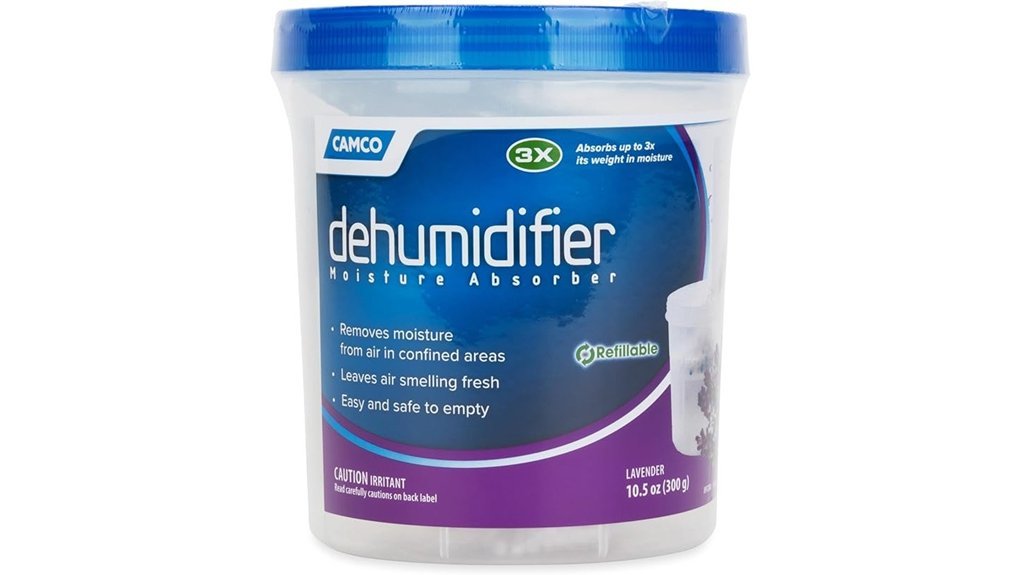
Best refillable non-electric option: The Camco Moisture Absorber is designed for confined areas such as RVs, boats, closets, bathrooms, and kitchens. Its moisture-absorbing media works without electricity, and the container can be refilled instead of discarded after each cycle.
This is a practical choice for a parked van, seasonal storage, or a cabinet that stays damp. The current Amazon listing says the media can absorb up to three times its weight in moisture and includes lavender-scented fragrance beads. It does not actively circulate air or maintain a precise humidity setting. Place it on a level surface where it cannot tip, and inspect the liquid level regularly.
Why you may like it:
- Refillable format can reduce repeated container waste.
- No battery, outlet, inverter, or fan noise.
- Compact enough for a bathroom, cabinet, or protected storage corner.
Who should buy this: Van owners who need passive moisture control during storage, can provide a stable upright location, and do not mind a lavender-scented product.
Who should avoid it: Anyone who needs rapid whole-cabin moisture removal, cannot protect the container from tipping, or prefers a fragrance-free product.
Pros:
- Refillable and non-electric.
- Suitable for RV-style confined spaces.
- Simple operation with no electronic controls to manage.
Cons:
- Collected liquid can spill if the container tips.
- Requires refills and periodic liquid disposal.
- Current media includes lavender fragrance.
- Cannot display or automatically regulate relative humidity.
Vacplus Hanging Closet Dehumidifier Bags (10 Pack)

Best for van closets: The selected Vacplus listing is an unscented 10-pack of hanging moisture absorber bags for closets and other enclosed spaces. The bags use calcium chloride and the Amazon listing currently displays a 500 ml capacity figure.
The hanging design keeps shelves clear and makes it easy to see when liquid has accumulated. Treat the listed capacity as a reservoir or product-capacity figure rather than a guaranteed daily moisture-removal rate. The bags need open space for airflow and should remain upright. In a van, position them where they cannot swing into sharp objects, or remove them before driving.
Why you may like them:
- Easy to hang in narrow storage spaces.
- Visible reservoir makes replacement timing easier to judge.
- Unscented format with no electricity or operating noise.
Who should buy these: Van owners who want local moisture protection for clothing, towels, or gear in a secure hanging compartment.
Who should avoid them: Anyone without a secure hanging point or anyone who needs active whole-van dehumidification.
Pros:
- Ten-pack hanging format.
- Amazon currently lists a 500 ml capacity figure.
- Suitable for enclosed zones such as closets and storage compartments.
Cons:
- Single-use design creates ongoing replacement cost.
- Liquid-filled bags require careful removal and disposal.
- Absorption speed varies with temperature and humidity.
DampRid Fragrance Free Moisture Absorber 3 Pack
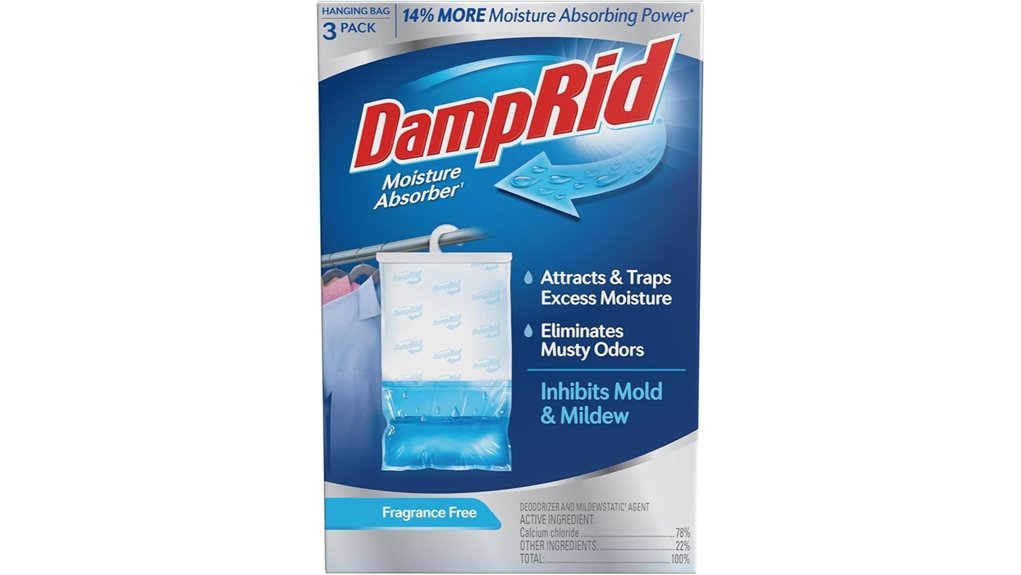
Best scent-free hanging option: DampRid Fragrance Free Hanging Moisture Absorbers are intended for closets and similar enclosed spaces. The selected Amazon listing is a three-pack of 16-ounce fragrance-free hanging bags, making it a sensible choice in a small van where added fragrance may feel overpowering.
Each bag attracts moisture into a lower collection area and may last up to 60 days depending on temperature and humidity. Use it in a van wardrobe or storage section while parked, leave room around the bag for airflow, and hold it upright when removing it. It is a local moisture-control product, not a substitute for ventilation or an active dehumidifier.
Why you may like it:
- Fragrance-free format for scent-sensitive spaces.
- Simple hanging setup with no power requirement.
- Useful for clothing and stored gear exposed to damp, musty air.
Who should buy this: Buyers who want a straightforward fragrance-free absorber for a secure closet or gear compartment.
Who should avoid it: Buyers who want reusable media, automatic humidity control, or a product that can remain unsecured while the van is moving.
Pros:
- Fragrance-free three-pack with 16-ounce bags.
- May last up to 60 days depending on conditions.
- Easy to inspect and replace.
Cons:
- Designed mainly for closets and small enclosed areas.
- Disposable rather than refillable.
- Collected liquid must be handled carefully.
NeedDuck 44-Ounce Small Dehumidifier
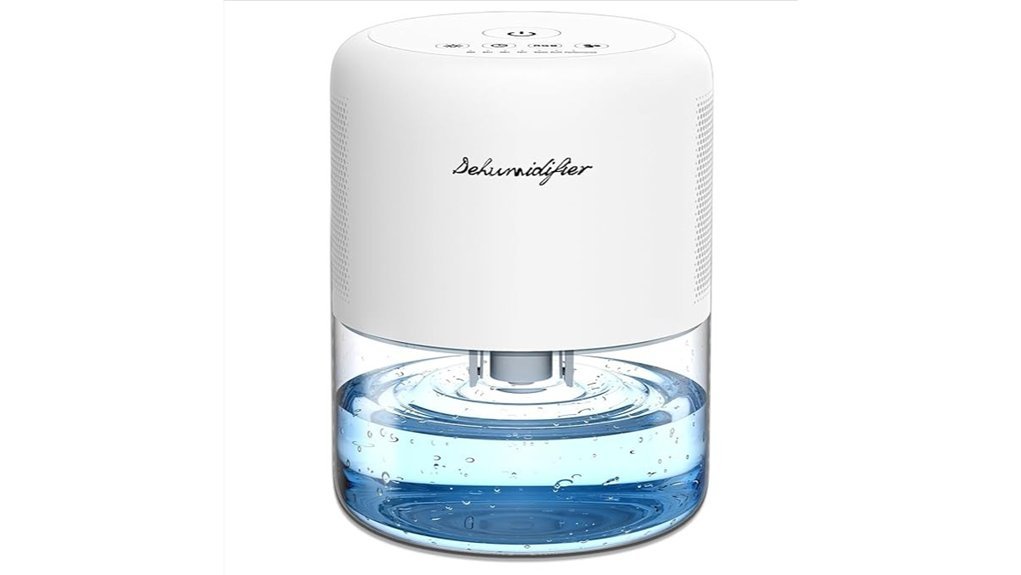
Best powered option: The NeedDuck unit is the only active electric dehumidifier in this list. The current Amazon listing identifies a 44-fluid-ounce tank, 28-watt power draw, automatic shutoff, automatic defrost, and three speeds. Listed dimensions are about 5.91 x 5.91 x 8.46 inches, with a listed weight of about 2.6 pounds. Confirm the current listing and manual before relying on these specifications.
This compact model is best used for supplemental active moisture collection in a warm, humid, enclosed van while parked. It can collect moisture gradually, but results depend on temperature, humidity, airflow, and how much moisture sleeping, cooking, wet gear, or leaks add to the space. A manufacturer’s floor-area figure should not be treated as a guarantee of moisture-removal performance in a particular van.
Why you may like it:
- Actively moves air and collects moisture instead of absorbing it only in one small zone.
- Compact, lightweight body fits more easily on a counter or stable shelf.
- Automatic shutoff helps reduce overflow risk when the tank reaches its shutoff condition.
Who should buy this: Van owners with dependable shore power, a suitable portable power station, or a properly sized battery-and-inverter setup who want supplemental active moisture collection while parked.
Who should avoid it: Van owners without dependable electricity, anyone camping mainly in conditions where a small thermoelectric unit performs poorly, or anyone expecting full-size compressor performance.
Pros:
- Listed 44-fluid-ounce removable water tank.
- Listed 28-watt power draw.
- Compact dimensions and roughly 2.6-pound listed weight.
- Automatic shutoff, automatic defrost, and three listed speeds.
Cons:
- Lower-capacity class than larger compressor dehumidifiers.
- Needs continuous electricity for active operation.
- Real moisture collection varies substantially with temperature and humidity.
Ksend Moisture Absorbers, 12 Pack for Closet
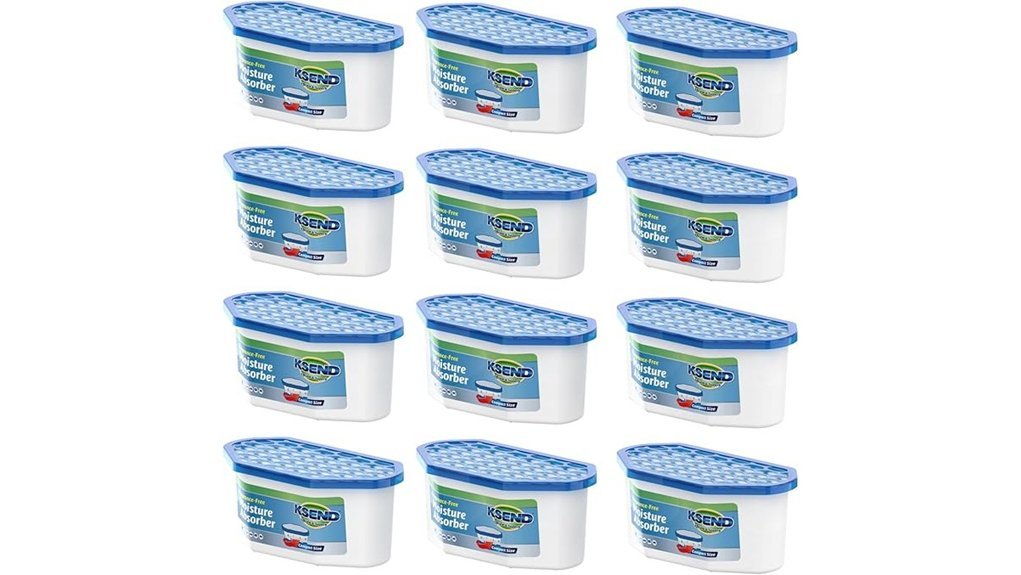
Best shelf-style multipack: The selected Ksend Moisture Absorber variation is currently listed as a fragrance-free 12-pack with a 300 ml capacity. It is intended for small spaces such as closets, cabinets, kitchens, and bathrooms, making it more suitable for individual van storage zones than for whole-cabin humidity control.
The low-profile boxes can work under a bed or inside a cabinet, provided they sit on a level, secure surface. Peel off the protective foil according to the product directions, leave the moisture-permeable cover in place, and monitor the reservoir. Even when a product is marketed as leak-resistant, a liquid collector should not be allowed to slide or tip during travel.
Why you may like them:
- Useful where there is no safe hanging point.
- Twelve-box pack can cover several small storage zones.
- Fragrance-free format with no electricity or operating noise.
Who should buy these: Van owners who want to spread passive moisture control across several flat cabinets, shelves, or under-bed storage spaces.
Who should avoid them: Buyers who cannot secure a flat shelf or who need active moisture removal from the whole cabin.
Pros:
- Selected variation is listed with 300 ml capacity.
- Simple peel-and-place format.
- Easy to distribute through multiple cabinets.
Cons:
- Single-use containers create recurring waste and cost.
- Must stay upright and secured.
- Results can be slow when ambient humidity is lower.
How to Choose a Dehumidifier or Moisture Absorber for a Van
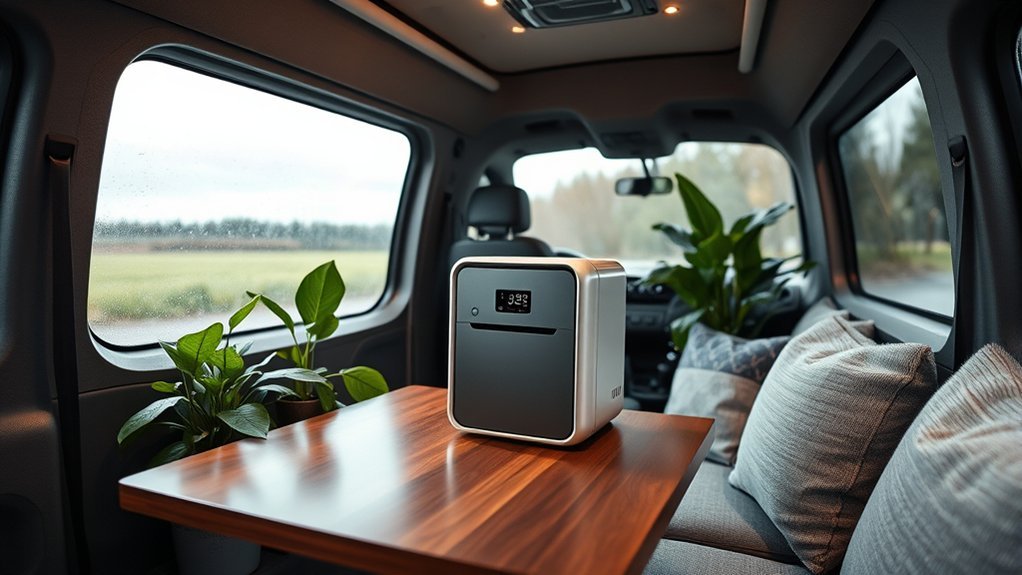
The right van moisture-control option depends on whether you need active cabin-wide moisture removal or passive protection for a small storage area. Start with a hygrometer, identify where condensation forms, and fix leaks or ventilation problems before relying on a dehumidifier or moisture absorber.
Powered Dehumidifier vs. Passive Absorber
A small electric dehumidifier uses power to move air and collect condensed moisture. It is the better choice for supplemental active collection when sufficient electricity is available. A passive moisture absorber works without power but acts more locally and is better suited to closets, cabinets, bathrooms, gear spaces, or stored vans. Do not compare a passive reservoir size directly with an electric dehumidifier’s daily moisture-removal capacity.
Measure Relative Humidity
Use a digital hygrometer instead of guessing. Persistent condensation, damp fabrics, or consistently high relative humidity signals that you need better moisture control. Ventilate during cooking and sleeping, dry wet gear promptly, investigate leaks, and use a dehumidifier or absorber as support rather than as the only solution.
Power and Off-Grid Use
Check the product’s wattage and calculate how many watt-hours it will use over the planned run time. A 28-watt unit running for eight hours uses about 224 watt-hours before inverter losses. Confirm that your battery, solar, alternator charging, shore-power system, or portable power station has enough reserve for the dehumidifier plus your other electrical loads.
Tank Size and Moisture-Removal Rate
A large tank reduces emptying frequency, but tank volume does not tell you how much moisture a powered unit removes per day. Look for a clearly stated moisture-removal rate when one is provided by the manufacturer. For passive products, treat milliliter figures as product or reservoir capacity unless the manufacturer clearly identifies them as a tested performance rating.
Temperature Performance
Small thermoelectric-style dehumidifiers can perform differently as temperature and humidity change, and passive absorbers also slow when there is less moisture in the air. In cool-weather van use, insulation, controlled ventilation, reducing cold-surface condensation, and drying wet materials may matter more than simply adding another small moisture absorber.
Spill and Driving Safety
Any product that collects moisture as liquid can leak if it tips, tears, or overfills. Place tubs and electric units on a flat surface, protect hanging bags from sharp edges, and keep collected liquid away from passengers, electronics, upholstery, fabrics, and metal surfaces. Before driving, empty, remove, or firmly secure each product according to its instructions.
Maintenance and Running Cost
Electric units need tank cleaning and clear air inlets. Refillable absorbers need replacement media. Disposable bags and boxes must be replaced when their media is spent or the liquid reaches the product’s replacement point. Compare ongoing electricity, refill, and replacement costs instead of looking only at the initial purchase.
Before you buy:
- Measure cabin and storage-area humidity with a hygrometer.
- Decide whether you need active cabin control or local storage protection.
- Confirm available power, voltage, plug requirements, and expected run time for an electric unit.
- Check whether a passive product is scented or fragrance-free if odors matter in your van.
- Choose a secure location that stays upright while the vehicle is parked.
- Plan how you will empty, refill, replace, remove, or store the product before driving.
- Verify current specifications, instructions, and buying options on the product listing.
Frequently Asked Questions
How Do I Maintain My Van’s Dehumidifier?
Empty and rinse an electric unit’s tank regularly, keep its air inlet and outlet clear, and follow the manual’s cleaning directions. For passive absorbers, check the liquid level, replace or refill them at the indicated point, and clean any spill promptly according to the product instructions. Inspect all moisture-control products before each trip.
Can I Use a Moisture Absorber While Driving?
It is safer to remove, empty, or firmly secure liquid-collecting products before driving. Hanging bags can swing, and tubs or boxes can tip. Follow the manufacturer’s placement instructions and do not position a moisture absorber where leaked liquid could reach passengers, electronics, upholstery, clothing, or metal parts.
What Size Dehumidifier Is Best for My Van?
Choose by moisture-removal performance, operating conditions, power draw, physical size, and measured humidity rather than tank size alone. A compact powered unit may suit a small van with moderate condensation and reliable electricity. Severe dampness, active leaks, saturated materials, or continuous high humidity requires source control, better ventilation, repairs, and potentially a more capable dehumidifier when adequate power is available.
How Often Should I Replace Moisture Absorber Bags or Boxes?
Replace them when their absorbing material is spent or the liquid reaches the product’s indicated replacement level. DampRid currently says its hanging absorbers may last up to 60 days depending on temperature and humidity, but actual service life varies substantially with conditions.
Are Electric Dehumidifiers Suitable for Off-Grid Use?
They can be when the power system can support the load. Multiply watts by operating hours to estimate watt-hours, then allow additional capacity for inverter losses and other appliances. A low-wattage unit is easier to support than a high-power model, but long run times can still consume a meaningful share of a small battery bank.
Will a Moisture Absorber Stop Window Condensation?
It may reduce moisture in a small area, but it may not stop condensation caused by breathing, cooking, wet gear, poor ventilation, leaks, or cold glass and metal surfaces. Address moisture sources, airflow, and insulation first, then use a dehumidifier or absorber as additional support.
Can Passive Moisture Absorbers Prevent Mold?
They can help reduce moisture in a small enclosed area, but they cannot guarantee mold prevention or solve leaks, soaked materials, or widespread high humidity. Keep the van ventilated, dry wet materials quickly, repair water entry, and monitor humidity instead of relying on an absorber alone.
Can I Run a Small Dehumidifier Overnight in a Van?
Only when the unit is placed securely, the electrical system can safely support it, the air inlet and outlet remain clear, and the manufacturer’s instructions allow the planned use. Maintain appropriate ventilation for occupants and do not rely on a dehumidifier to correct unsafe wiring, insufficient battery capacity, combustion-related ventilation needs, or an active water leak.
Conclusion
For regular van living with reliable electricity, the NeedDuck 44-Ounce Small Dehumidifier is the most practical powered option in this list. For storage or no-power use, the Camco Refillable Moisture Absorber offers a reusable container but currently includes lavender-scented media. Vacplus Hanging Bags fit narrow wardrobes and enclosed gear spaces, while DampRid Fragrance Free is the better hanging choice for buyers who want to avoid added fragrance. Ksend works best when you need several small shelf-style boxes.
Whichever option you choose, use a hygrometer, ventilate during moisture-producing activities, dry wet items quickly, repair water entry, and keep liquid-collecting products secure. The best camper-van moisture strategy combines source control, airflow, insulation, and the right powered or passive product for the specific space.
Final recommendation:
Choose NeedDuck for supplemental active moisture collection with reliable power, Camco for refillable storage protection when its lavender scent is acceptable, Vacplus for an unscented hanging closet option, or DampRid Fragrance Free when avoiding added fragrance is the priority. Choose Ksend when you need several passive boxes for flat storage zones. Do not use tank size or reservoir capacity alone to judge moisture-removal performance.