Affiliate disclosure: This article contains Amazon affiliate links. We may earn a commission from qualifying purchases at no additional cost to you.
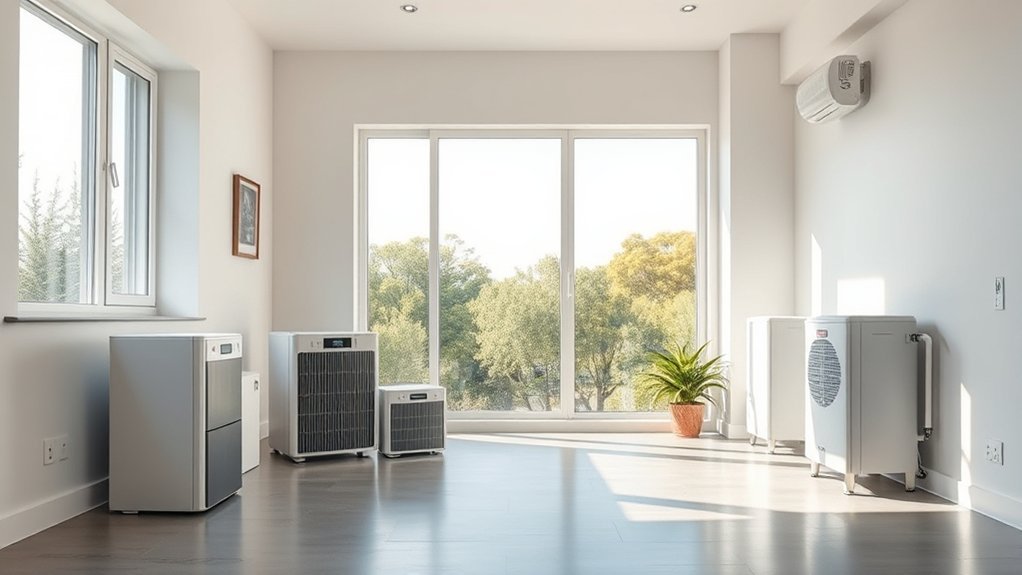
Choosing one of the best dehumidifiers for longevity requires more than comparing the largest capacity or coverage claim. No product listing can prove exactly how many years a dehumidifier will last in every home. A more dependable comparison looks at correct sizing, automatic defrost, drainage, filter access, warranty coverage, manufacturer support, and how easily the unit can be maintained.
After reviewing product type, specifications, drainage, maintenance features, and warranty information, three full-size compressor models remain in this guide. The AEOCKY RHEA-002 has the strongest overall longevity-focused feature set, the Waykar YDZ-80 offers a balanced combination of capacity and routine maintenance features, and the Tehanld 2026 Pro max001 is the more compact mid-size option.
Quick verdict
- Best overall for longevity-focused features: AEOCKY RHEA-002
- Best balanced large-room option: Waykar YDZ-80
- Best mid-size compressor option: Tehanld 2026 Pro max001
Capacity note: Maximum pint-per-day claims may be measured in very hot and humid test conditions. Real collection will normally be lower in a cooler basement or after the room approaches its target humidity. Compare test conditions, room dampness, drainage access, and operating temperature—not only the largest number in a product title.
How these products were evaluated
- Full-size compressor operation suitable for room-scale moisture removal.
- Continuous-drain capability for regular basement or large-room use.
- Automatic defrost for cooler operating conditions.
- Accessible, washable, or removable filtration.
- Humidistat-style controls and automatic shutoff.
- Warranty length and confidence in current support information.
- Honest limitations, including test conditions and coverage uncertainty.
Quick Comparison of the Best Dehumidifiers for Longevity
| Product | Advertised Maximum | Best For | Longevity-Supporting Features | Warranty or Support | Main Limitation |
|---|---|---|---|---|---|
| AEOCKY RHEA-002 | Up to 105 pints per day at 95°F and 95% RH | Large basements and open living areas | Automatic defrost, washable filter, metal cabinet components, gravity drain, humidistat | Stated three-year whole-machine coverage | Highest capacity and cost may be unnecessary for smaller rooms |
| Waykar YDZ-80 | Up to 80 pints per day at 95°F and 90% RH | Basements, laundry rooms, and large occupied spaces | Automatic defrost, self-drying, washable filter, gravity drain, adjustable humidity | One year, with an additional year available through registration | Shorter standard warranty than the AEOCKY |
| Tehanld 2026 Pro max001 | Up to 35 pints per day under the seller’s stated test conditions | Medium rooms, laundry areas, garages, and smaller basements | Automatic defrost, removable filter, drain hose, timer, multiple modes | Stated one-year warranty | Less-established support and limited long-term ownership history |
AEOCKY 5500 Sq.Ft Energy Star Dehumidifier
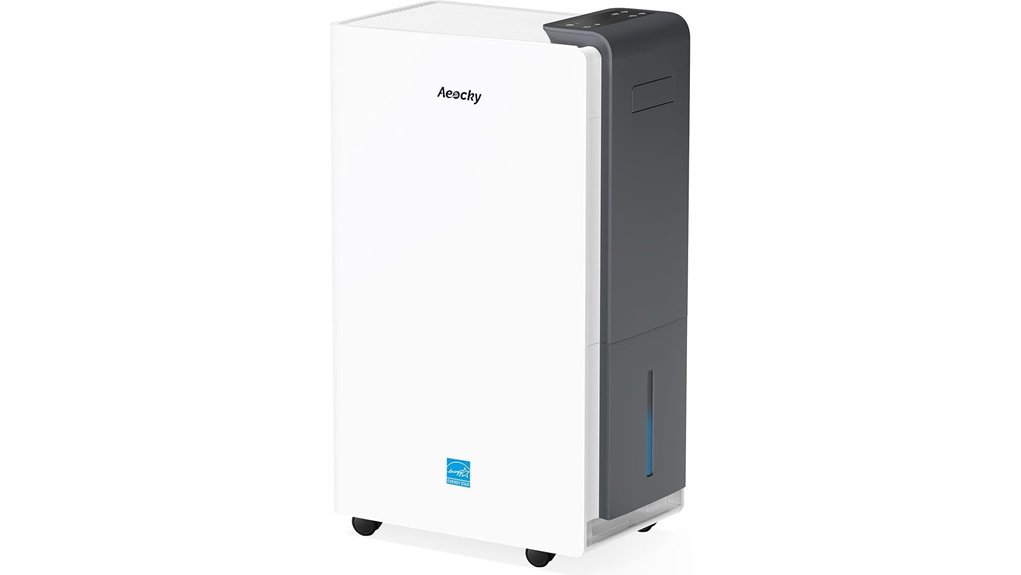
Best overall for longevity-focused features: The AEOCKY RHEA-002 offers the strongest combination of room-scale extraction, maintenance access, automatic defrost, continuous drainage, and stated warranty coverage among the retained products.
The manufacturer advertises moisture removal of up to 105 pints per day at 95°F and 95% relative humidity. That is an extreme-condition maximum rather than the amount most homeowners should expect every day. Output will decrease in cooler air and as the room approaches the selected humidity level.
Its more relevant ownership features include a washable rear filter, automatic defrost, adjustable humidity control, gravity drainage, a large removable tank, and metal cabinet components. The manufacturer currently states that the complete machine receives three years of warranty coverage, subject to its warranty terms.
Continuous drainage makes this model more practical for a persistently damp basement because it can operate without repeated tank emptying. The drain hose must still run downhill to an appropriate drain unless a separate condensate pump is used.
Why you may like it: It combines high moisture-removal potential with the strongest stated warranty in this comparison and several components designed to reduce routine maintenance interruptions.
Who should buy this: Homeowners managing recurring humidity in a large basement, open living area, or several connected rooms with suitable airflow.
Who should avoid this: Buyers with a small bedroom, bathroom, or mildly damp space may pay for more capacity than they need.
Pros:
- Strong maximum extraction potential for large, persistently humid spaces.
- Stated three-year whole-machine warranty.
- Washable filter and accessible replacement filter options.
- Automatic defrost for cooler operating conditions.
- Tank or continuous gravity-drain operation.
- Metal cabinet components provide a more substantial exterior structure.
Cons:
- The 105-pint figure is based on unusually hot and humid test conditions.
- Its large-room coverage claim should not replace proper sizing.
- Heavier and less convenient to move than a mid-size unit.
- Its capacity and purchase cost may be unnecessary for mild humidity.
Waykar Max 80 Pint Energy Star Home Dehumidifier
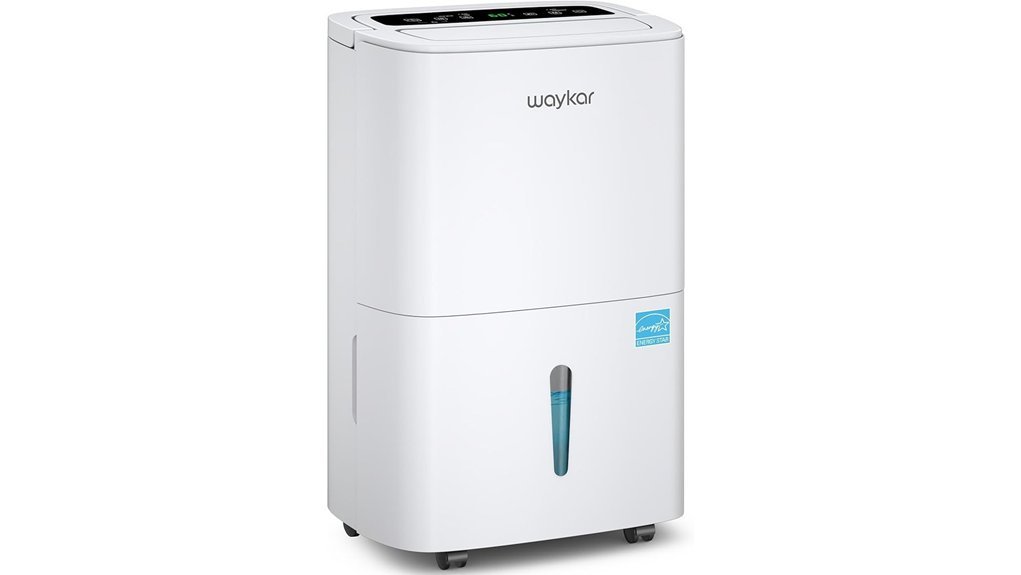
Best balanced large-room option: The Waykar YDZ-80 provides the maintenance and operating features most buyers need without requiring app connectivity or a complicated installation.
The current listing states that it removes up to 80 pints per day at 95°F and 90% relative humidity and approximately 62 pints per day at 86°F and 80% relative humidity. These figures are more useful when their test conditions are shown, but actual collection will still depend on room temperature, starting humidity, airflow, and moisture entry.
The Waykar includes automatic defrost, a self-drying shutdown function, a removable washable filter, tank-full shutoff, memory restart, adjustable fan speed, and continuous gravity drainage. Its humidity setting can be adjusted across a broad range, although a separate hygrometer is useful for confirming the room’s actual relative humidity.
The standard warranty is stated as one year. An additional year may be available when the product is registered according to the manufacturer’s instructions and deadline. Buyers should complete registration promptly and save the invoice and serial-number information.
Why you may like it: It balances high maximum extraction, simple controls, low-temperature features, and easy routine maintenance.
Who should buy this: Buyers who need a full-size compressor dehumidifier for a basement, laundry room, large living area, or other regularly damp space.
Who should avoid this: Buyers who place the highest priority on a longer standard warranty may prefer the AEOCKY.
Pros:
- Strong maximum capacity for larger humid spaces.
- Automatic defrost supports operation in cooler rooms.
- Self-drying function helps reduce moisture left inside after shutdown.
- Washable filter and continuous gravity drainage.
- Adjustable humidity, timer, automatic restart, and tank-full protection.
- Established manufacturer support and product documentation.
Cons:
- The 80-pint claim is based on hot, highly humid conditions.
- The standard warranty is only one year.
- The warranty extension may require registration within a limited period.
- The water tank can fill quickly when humidity is high and no drain is available.
Tehanld 2500 Sq.Ft Dehumidifier
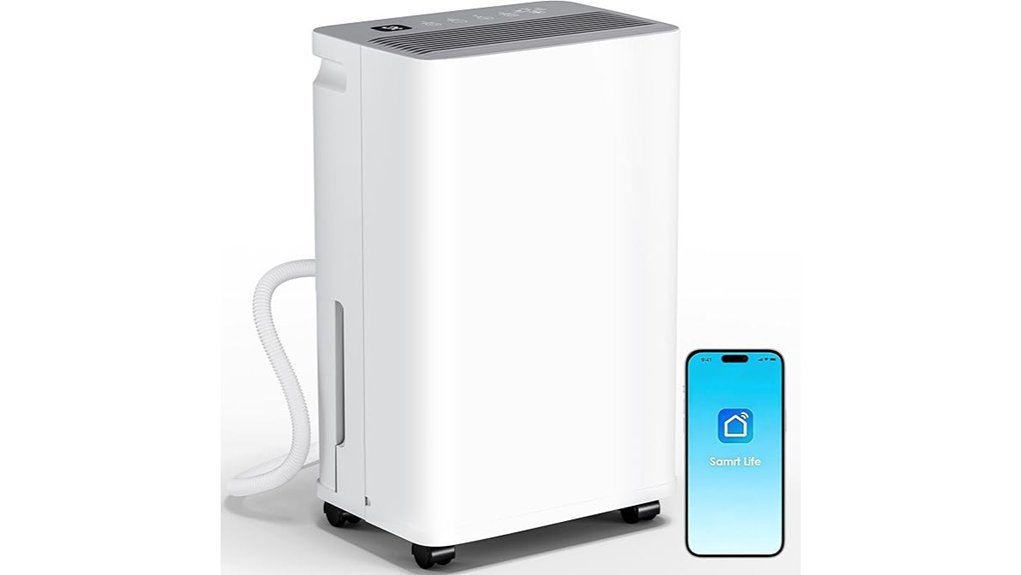
Best mid-size compressor option: The Tehanld 2026 Pro max001 is a more compact alternative for buyers who need substantially more extraction than a desktop thermoelectric appliance but do not require a large 80- or 105-pint maximum-capacity model.
The product information states a maximum removal rate of up to 35 pints per day under the seller’s specified test conditions. It also includes automatic and manual modes, a clothes-drying mode, two fan speeds, automatic defrost, a 24-hour timer, a removable filter, tank-full shutoff, and continuous drainage.
Its smaller body may be easier to position in a laundry area, garage, medium-size room, or smaller basement. However, the stated one-year warranty and less-established manufacturer support make it a lower-confidence longevity choice than the AEOCKY or Waykar.
Why you may like it: It offers a useful compressor-based feature set in a more manageable size.
Who should buy this: Buyers who need a mid-size dehumidifier with a drain hose, automatic defrost, adjustable operation, and a smaller footprint.
Who should avoid this: Buyers with a very large or severely damp basement, or those who want a longer, well-documented warranty, should choose another model.
Pros:
- Compressor-based extraction for medium-size damp areas.
- Continuous-drain option reduces tank-emptying work.
- Automatic defrost helps manage frost in cooler conditions.
- Removable filter, timer, multiple modes, and two fan speeds.
- More compact and lighter than the two large-capacity options.
Cons:
- Only a one-year stated warranty.
- Limited long-term ownership data for this newer model.
- Manufacturer service and replacement-part availability are less clear.
- The tank may fill quickly during continuous high-humidity operation.
- The maximum coverage claim may be optimistic in divided or severely wet spaces.
Factors to Consider When Choosing a Dehumidifier for Longevity
A dehumidifier’s actual service life cannot be predicted from its coverage number alone. Correct sizing, room temperature, drainage, maintenance access, electrical setup, warranty terms, and the amount of moisture entering the room all affect how hard the appliance must work.
Understand What Longevity Means
A longevity-focused product should be easy to clean, appropriately sized, protected against frost, and supported by usable warranty terms. Automatic defrost, a washable filter, continuous drainage, and accessible support can make ownership easier, but none of these features guarantees a specific lifespan.
Do not rely on vague claims such as “built to last,” “maintenance-free,” or “lifetime performance” unless the manufacturer provides clear warranty terms and service procedures.
Choose the Right Dehumidifier Type
A compressor dehumidifier is generally the most practical portable option for a damp basement, laundry area, garage, or large living space. It moves more air and removes substantially more moisture than a small thermoelectric appliance or passive absorber.
Compact thermoelectric models may be suitable for mild, localized humidity in a small bedroom, bathroom, RV, or closet. Renewable desiccant absorbers are intended for small enclosed compartments. Neither should be compared directly with a room-scale compressor model based only on tank size or marketing coverage.
Compare Capacity Under Realistic Conditions
Pints-per-day figures depend on temperature and relative humidity. A machine tested in very hot, saturated air can display a much larger headline number than it would receive under cooler standardized test conditions.
For a useful comparison, check:
- The temperature and relative humidity used for the capacity claim.
- Whether the room is slightly damp, very damp, or actively wet.
- The total area, ceiling height, and number of closed rooms.
- How frequently doors and windows open.
- Whether water is entering through a leak, foundation, or plumbing problem.
- The lowest temperature the room normally reaches.
A larger unit may reach the target humidity faster, but buying far more capacity than the room requires can increase cost, size, noise, and storage difficulty.
Check Low-Temperature Operation
Compressor dehumidifiers can lose extraction performance as air temperature falls. Frost may develop on the evaporator coil, causing the compressor to pause while the appliance defrosts.
Automatic defrost is useful in a cool basement, but it does not mean the unit will remove the same amount of water at 45°F as it does at 80°F. Check the manufacturer’s minimum operating temperature and expect slower collection in cooler air.
Build Quality and Serviceable Components
Look for a stable cabinet, protected controls, an accessible filter, a secure tank, a well-positioned drain connection, and available warranty support. A washable filter and removable tank make regular cleaning easier.
Exterior material alone does not determine durability. The compressor, fan motor, humidity sensor, control board, coil, refrigerant system, and drainage components must also remain reliable.
Continuous Drainage
A continuous-drain hose can reduce interruptions in a persistently humid room. For gravity drainage, the hose must slope downward from the dehumidifier to the drain without rising, sagging, or becoming kinked.
Check the hose regularly for:
- Loose connections or leaks.
- Algae, slime, dust, or mineral buildup.
- Kinks or low spots that trap water.
- Movement that creates a tripping hazard.
- Water running near electrical cords or outlets.
If the drain is higher than the dehumidifier outlet, a compatible condensate pump may be required.
Maintenance and Care
- Inspect the filter regularly and clean it according to the manual.
- Keep intake and exhaust openings clear of walls, curtains, boxes, and furniture.
- Wash and dry the tank before slime, mold, or odor develops.
- Inspect the drain hose for blockage, algae, leaks, and loose connections.
- Keep dusty workshop equipment away from the air intake.
- Unplug the appliance before cleaning or moving it.
- Keep the unit upright while it is operating.
- After transporting a compressor model on its side, follow the manual before restarting it.
- Store the unit clean, dry, and upright when it will not be used for an extended period.
- Retain the receipt, serial number, manual, and warranty-registration confirmation.
Energy Efficiency
An efficient dehumidifier can reduce operating costs, but efficiency must be considered together with capacity. An undersized unit that runs continuously without reaching the target humidity may not be the most economical choice.
A built-in humidistat allows the compressor to cycle after reaching the selected humidity. ENERGY STAR certification can help identify more efficient models, but electricity use will still vary with temperature, humidity, fan speed, runtime, and room conditions.
Warranty and Customer Support
Compare more than the headline warranty length. Check:
- Whether registration is required.
- The registration deadline.
- Whether coverage applies to the whole machine or selected parts.
- Who pays return shipping.
- Whether proof of purchase is required.
- Whether replacement filters, tanks, or drain accessories are available.
- Whether marketplace purchases qualify for manufacturer service.
Warranty terms can change by seller, country, and purchase date. Review the current policy before ordering and save a copy with your receipt.
Electrical and recall safety
Connect the dehumidifier to a properly grounded outlet and follow all electrical instructions in its manual. Keep drain water and hoses away from plugs, outlets, extension connections, and other electrical devices. Before using an older or secondhand dehumidifier, check its exact brand and model number against current CPSC recall information.
Before you buy
- Measure the actual room and note whether connecting doors remain open.
- Estimate whether the room is slightly damp, very damp, or actively wet.
- Check the lowest expected operating temperature.
- Decide whether gravity drainage is possible.
- Confirm that the filter is washable or replaceable.
- Review the warranty, registration deadline, and return-shipping terms.
- Use a separate hygrometer if accurate humidity monitoring is important.
- Repair plumbing leaks, foundation seepage, or structural water entry.
- Check the exact model against current safety-recall information.
Frequently Asked Questions
Which Type of Dehumidifier Usually Lasts the Longest?
No dehumidifier type always lasts longest. A correctly sized compressor model can provide years of room-scale moisture control when its filter, tank, coil, and drainage system are maintained. Warranty length, operating temperature, runtime, build quality, and access to service can matter as much as the basic technology.
Which Features Can Support a Longer Service Life?
Useful features include automatic defrost, an accessible washable filter, secure continuous drainage, automatic humidity control, replacement-part availability, clear error indicators, and a meaningful manufacturer warranty. These features improve maintainability but do not guarantee a specific lifespan.
How Often Should I Clean My Dehumidifier?
Inspect the filter and tank at least monthly during regular use and more frequently in dusty or highly humid conditions. Clean the drain hose whenever flow slows, odor develops, or visible buildup appears. Follow the product manual because designs and maintenance intervals vary.
What Humidity Level Should I Use?
Indoor relative humidity between approximately 30% and 50% is a practical target for many homes. A setting around 45% to 50% is a reasonable starting point in many basements and living areas. Avoid excessive drying and use a separate hygrometer if the built-in reading appears inaccurate.
Does Continuous Drainage Improve Longevity?
Continuous drainage does not directly guarantee longer compressor life. It prevents tank-full shutdowns and makes regular operation more convenient. The hose must still be installed correctly and inspected for kinks, blockage, algae, leaks, and loose fittings.
Is a Larger Dehumidifier Always More Durable?
No. A larger model may control a wet room faster, but size alone does not prove better construction. Choose enough capacity for the moisture load while also comparing warranty coverage, filtration, defrost, drainage, service access, and manufacturer support.
Why Does My Dehumidifier Collect Less Water Than Advertised?
Maximum capacity may be measured in warmer and more humid air than the conditions in your home. Collection decreases as the room becomes cooler or drier. Restricted airflow, a dirty filter, frost, closed connecting doors, incorrect sizing, or an inaccurate humidity sensor can also reduce output.
Can a Small Dehumidifier Dry a Basement?
A small thermoelectric or passive moisture absorber is generally not suitable for a damp full-size basement. A compressor dehumidifier sized for the area and moisture load is more practical. Persistent seepage, leaks, or standing water must also be corrected at the source.
When Should I Replace My Dehumidifier?
Replacement may be appropriate when the unit no longer reduces humidity despite correct setup and cleaning, repeatedly freezes or overheats, leaks from the cabinet, produces a burning odor, trips electrical protection, or requires an uneconomical repair. Stop using it immediately if it shows signs of overheating, smoke, damaged wiring, or a safety recall.
Final Recommendation
Best overall recommendation
For a large basement or open living area, the AEOCKY RHEA-002 is the strongest longevity-focused option in this comparison. Its combination of automatic defrost, continuous drainage, washable filtration, metal cabinet components, adjustable humidity control, and stated three-year warranty gives it the most complete ownership package.
The Waykar YDZ-80 is the better balanced alternative for buyers who want high maximum capacity, straightforward controls, self-drying, automatic defrost, and established support. Register it promptly if you want to qualify for the additional warranty year described by the manufacturer.
Choose the Tehanld 2026 Pro max001 for a medium-size room where a smaller compressor unit is easier to position. Its feature set is useful, but its one-year warranty and less-established support make it a lower-confidence choice for buyers who place longevity above initial cost or compact dimensions.
Whichever model you choose, correct sizing and maintenance are more important than the largest advertised coverage number. Keep the filter and drain system clean, follow the operating-temperature limits, repair water entry at its source, and review the warranty and recall status before long-term use.