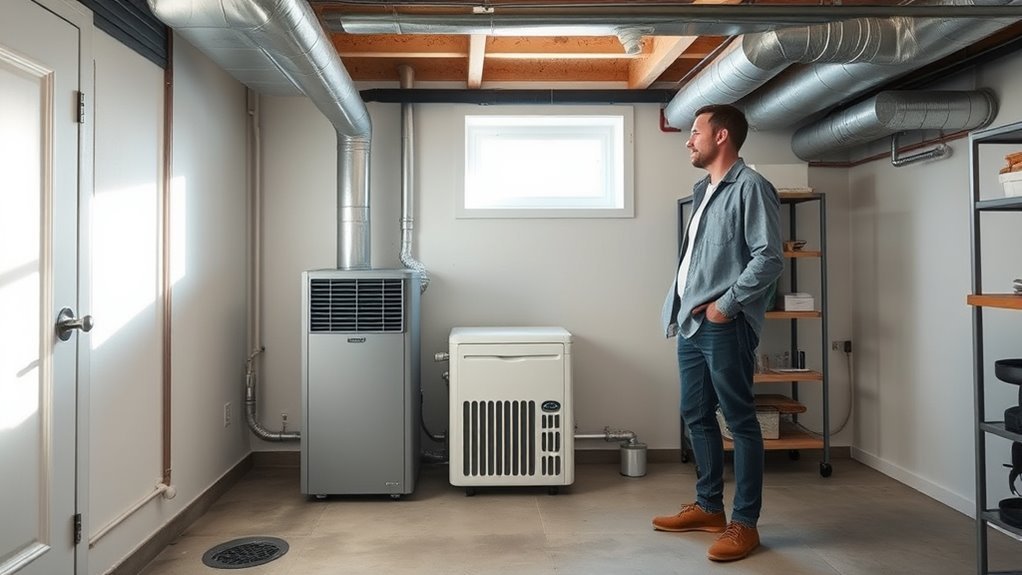
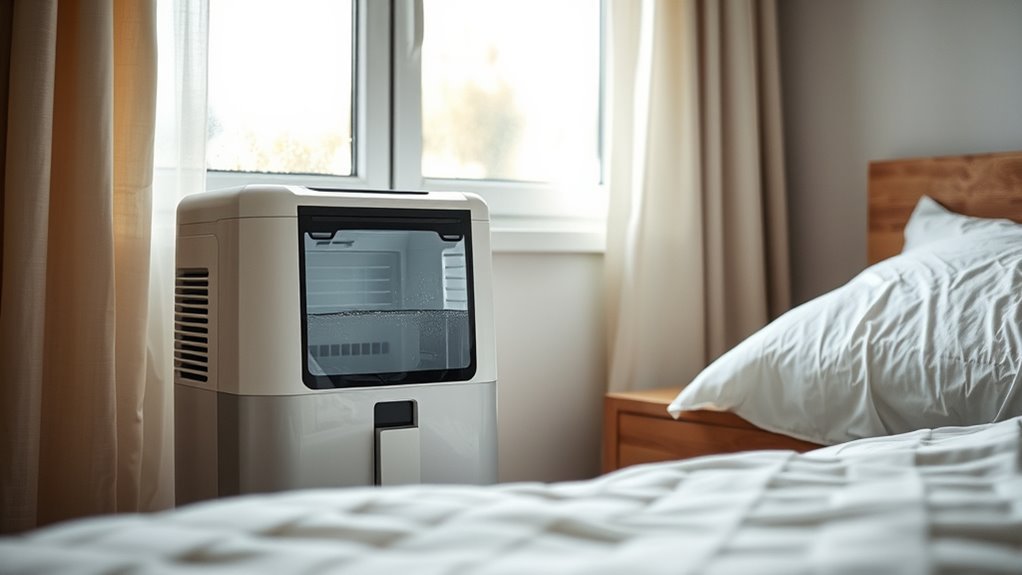
A damp basement needs more than a tiny desktop dehumidifier. For meaningful moisture control, prioritize a compressor dehumidifier with enough pint capacity for the basement’s size and dampness, plus a drain hose or pump for continuous operation. The AEOCKY 4500 Sq.Ft model is the strongest all-around pick here for a large basement, while the Avylo pump model is more convenient when water must be lifted to a sink or higher drain. For a smaller basement, the Midea 22 Pint offers a simpler ENERGY STAR-certified option.
Quick Comparison
| Product | Best For | Moisture Rating | Drainage | Main Limitation | Amazon |
|---|---|---|---|---|---|
| AEOCKY 4500 Sq.Ft | Best overall for a large basement | Advertised up to 80 pints/day* | Tank or gravity hose | No built-in lift pump | Check Price |
| Avylo with Pump | Best for unattended drainage | Advertised up to 90 pints/day* | Tank, gravity hose, or pump | Larger and more complex | Check Price |
| AEOCKY 50 Pint | Best balanced mid-size option | Advertised up to 50 pints/day* | Tank or gravity hose | Small tank for heavy moisture loads | Check Price |
| VEAGASO 2500 Sq.Ft | Best value for moderate dampness | Advertised up to 34 pints/day* | Tank or gravity hose | No pump or verified ENERGY STAR claim | Check Price |
| SEMKAP 32 Pint | Best compact compressor pick | Advertised up to 32 pints/day* | Tank or gravity hose | Short included drain hose | Check Price |
| Midea 22 Pint | Best for a smaller basement | 22 pints/day | Tank or gravity hose | May be undersized for very damp spaces | Check Price |
*Maximum advertised ratings may use hotter and more humid test conditions than the DOE standardized capacity used for ENERGY STAR comparisons. Confirm the current listing’s test conditions before comparing models directly.
AEOCKY 4500 Sq.Ft Dehumidifier with Intelligent Humidistat — Best Overall
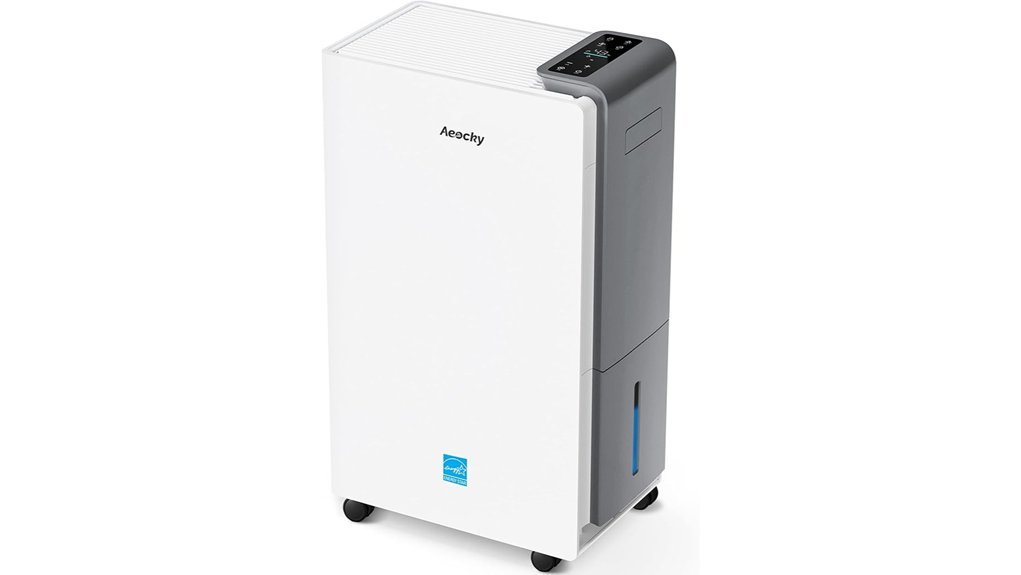
The AEOCKY 4500 Sq.Ft Dehumidifier is the most complete all-around option in this shortlist for a large, persistently damp basement. Its compressor design, adjustable humidistat, drain-hose support, auto defrost, and ENERGY STAR-focused efficiency make it more appropriate for sustained basement moisture than a compact semiconductor unit.
The listing advertises moisture removal of up to 80 pints per day under hot, very humid conditions. That headline should not be treated as a standardized basement-condition rating, but it still signals that this model is intended for heavier residential moisture loads. The included hose is useful when a floor drain or sump is available.
Best For: Large basements with regular dampness, musty odors, condensation, or a need for long daily run times.
Who Should Avoid It: Buyers who need water pumped upward to a sink or window should choose a built-in pump model instead.
Pros:
- Designed for larger residential areas and heavier moisture loads.
- Adjustable humidistat, timer, auto defrost, and continuous drainage support.
- Efficiency-focused design and a three-year warranty program stated by the brand.
Cons:
- The 80-pint figure is a maximum-condition claim, not a like-for-like DOE capacity comparison.
- No built-in condensate pump.
- The water bucket may fill quickly if the hose is not used.
Avylo 5000 Sq.Ft Dehumidifier with Pump — Best for Pump Drainage
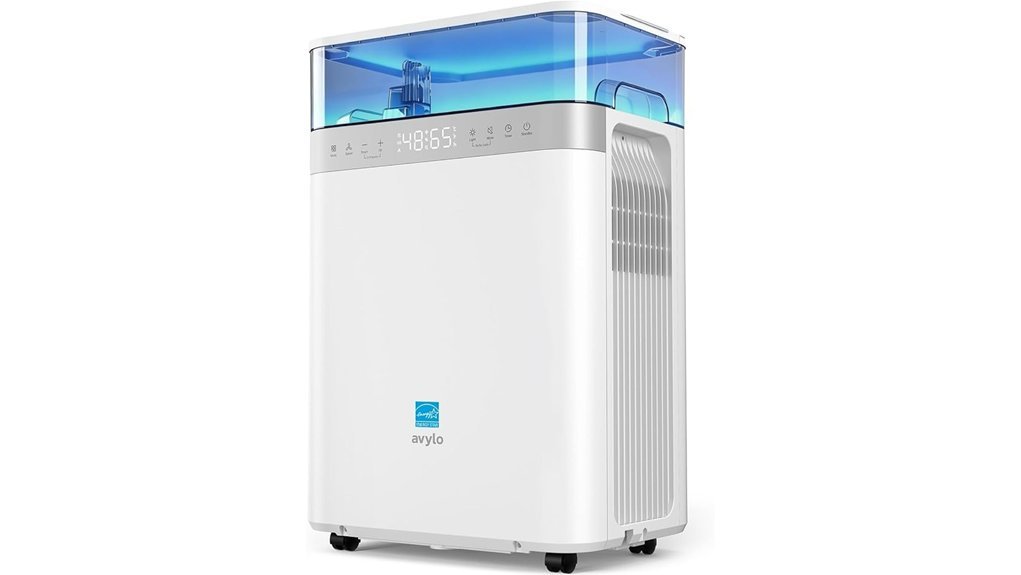
The Avylo stands out when gravity drainage is not practical. Its built-in pump can move collected water upward through the included hose, which is useful when the available sink, standpipe, or discharge point sits above the dehumidifier. It also offers a large top-mounted tank and gravity-drain option.
The listing advertises up to 90 pints per day at hot, high-humidity conditions and identifies the model as ENERGY STAR Most Efficient 2025. Treat the 90-pint figure as a maximum-condition number and confirm the exact ENERGY STAR model number on the current product page before purchase.
Best For: Large basements without a convenient low floor drain, especially when continuous unattended operation matters.
Who Should Avoid It: Buyers with an easy gravity drain may not need the added cost and maintenance of a pump system.
Pros:
- Three drainage choices: tank, gravity hose, and built-in pump.
- Large-capacity design for demanding residential spaces.
- Automatic humidity control, timer, auto defrost, and safety protections.
Cons:
- Pump systems add complexity and should be checked periodically for clogs or leaks.
- Larger footprint than many 22- to 34-pint models.
- Maximum advertised capacity is not the same as standardized basement-condition capacity.
AEOCKY 50 Pint Compressor Dehumidifier — Best Balanced Pick
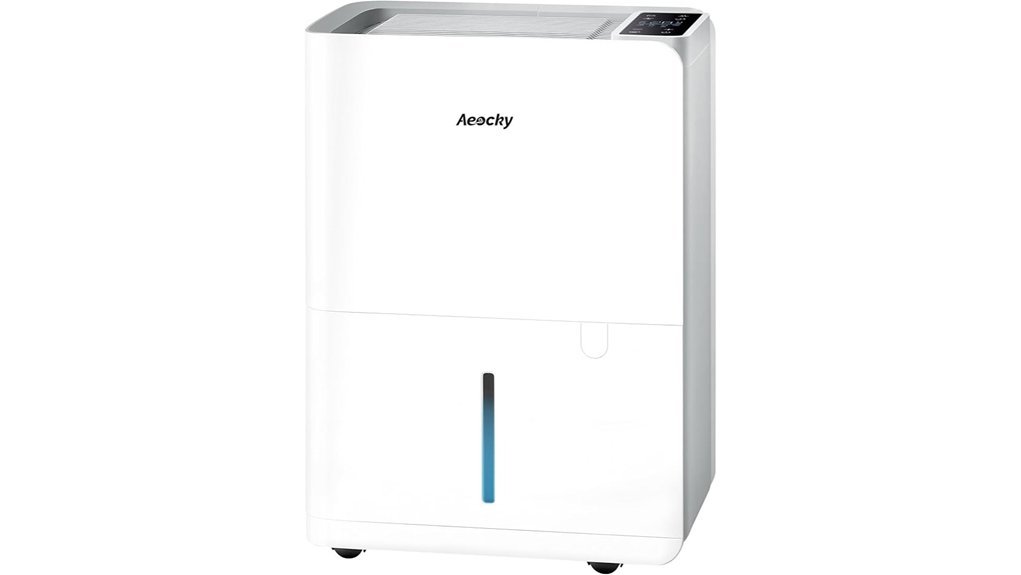
The AEOCKY 50 Pint Compressor Dehumidifier is a practical middle ground for buyers who want more moisture-removal power than a small 22-pint unit without stepping up to the largest pump-equipped model. It includes an intelligent humidistat, drain-hose support, caster wheels, and a compact 0.8-gallon bucket.
The listing describes 50 pints per day as the hot-condition maximum and about 38 pints per day in warm, damp basement conditions. That second figure is more useful when estimating real-world basement performance, although actual collection still depends on temperature, starting humidity, airflow, and moisture entering the space.
Best For: Medium to large basements with moderate or heavy dampness and access to a gravity drain.
Who Should Avoid It: Buyers who plan to rely only on the small bucket in a very damp basement may find themselves emptying it often.
Pros:
- Useful balance of capacity, portability, and continuous drainage.
- Automatic humidity control and low-temperature protection features.
- Three-year warranty program stated by the brand.
Cons:
- Small internal bucket relative to its moisture-removal potential.
- No built-in pump.
- The 50-pint headline uses different conditions from standardized DOE ratings.
VEAGASO 2500 Sq.Ft Dehumidifier for Large Rooms — Best Value
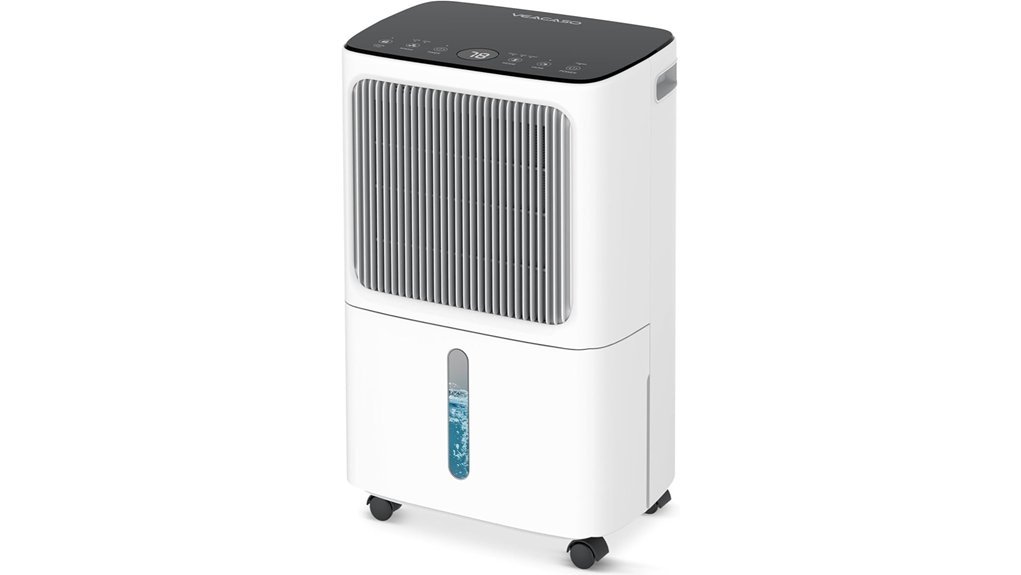
The VEAGASO 2500 Sq.Ft Dehumidifier is a straightforward compressor model for a moderately damp basement. It offers adjustable humidity control, dehumidify, continuous, and clothes-drying modes, plus a 24-hour timer and both bucket and gravity-drain operation.
Its listing advertises up to 34 pints per day at 95°F conditions. Because a basement is often cooler, actual daily collection may be lower. The unit makes the most sense where its hose can run downhill to a floor drain, sump, or other approved discharge point.
Best For: Moderate basement humidity, laundry areas, or buyers seeking a simpler compressor model.
Who Should Avoid It: Very wet basements or spaces with active seepage may need a higher standardized capacity and water-source repairs.
Pros:
- Three useful operating modes and adjustable humidity control.
- Continuous gravity drainage option.
- Portable design with casters and a washable filter.
Cons:
- No built-in pump.
- The manual bucket is relatively small for a damp basement.
- The maximum 34-pint rating is based on hotter conditions than many basements.
SEMKAP 32 Pints Dehumidifier with Drain Hose — Best Compact Compressor Pick
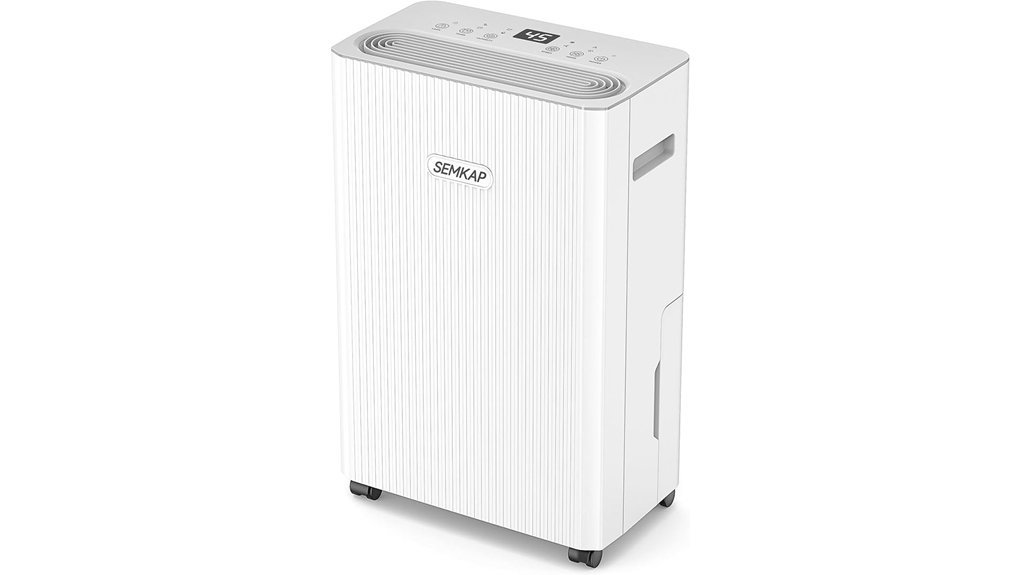
The SEMKAP 32 Pint Dehumidifier is a compact compressor option for buyers who have limited floor space but still need substantially more moisture removal than a desktop thermoelectric model. Its 2.5-liter tank, adjustable humidity control, timer, washable filter, auto defrost, and included drain hose cover the main needs of a smaller or moderately damp basement.
The advertised 32-pint maximum should be compared with other models only after checking test conditions. For continuous drainage, the hose must slope downward without kinks because this model does not include a lift pump.
Best For: Smaller basements, utility rooms, and moderate moisture loads where compact placement matters.
Who Should Avoid It: Large, wet basements may need a higher standardized pint capacity or more than one moisture-control measure.
Pros:
- Compact compressor design with automatic humidity control.
- Includes a drain hose and washable filter.
- Auto defrost, auto restart, timer, and portable casters.
Cons:
- The included hose is only about 3.28 feet long.
- Small tank may fill quickly without continuous drainage.
- No built-in pump.
Midea 22 Pint Energy Star Dehumidifier (White) — Best for Smaller Basements
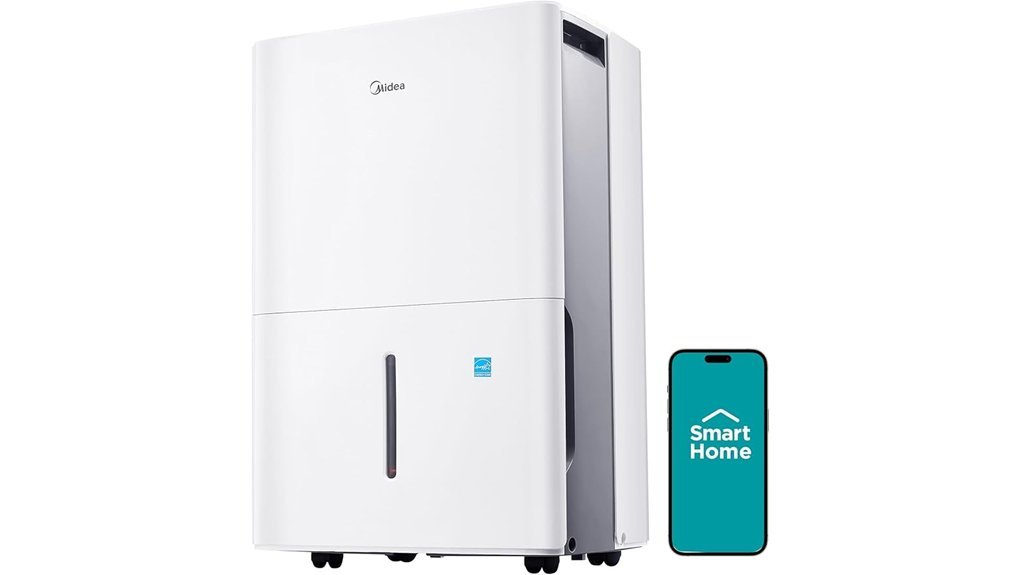
The Midea MAD22C1AWS is the clearest fit for a smaller basement with light to moderate dampness. Its standardized capacity is about 22 pints per day, and it is ENERGY STAR certified. Adjustable humidity settings, auto defrost, auto restart, a timer, reusable filter, and caster wheels make it easy to manage.
The 0.8-gallon bucket is convenient for occasional use, but continuous gravity drainage is preferable in a consistently damp basement. A compatible hose is generally required separately. This model is not the best choice for a wet basement with seepage or humidity that stays near 80%–90%.
Best For: Smaller basements, finished lower-level rooms, bathrooms, and offices with moderate humidity.
Who Should Avoid It: Large or very damp basements that need 40 or more standardized pints per day.
Pros:
- ENERGY STAR certified with a standardized 22-pint capacity.
- Adjustable humidistat, auto defrost, auto restart, timer, and washable filter.
- Easy mobility with handles and 360-degree wheels.
Cons:
- May be undersized for very damp or large basements.
- Small bucket requires frequent emptying under heavy use.
- Continuous-drain hose is not included.
Factors to Consider When Choosing a Dehumidifier for a Damp Basement
The right unit depends on the basement’s square footage, starting humidity, temperature, water source, and drainage access. A coverage number alone cannot tell you whether a dehumidifier will keep up with a wet space.
Match Capacity to Dampness, Not Just Floor Area
ENERGY STAR recommends considering both room size and moisture severity. For a space under 2,000 sq. ft., a slightly to moderately damp room may need roughly 20–30 pints per day, a very damp room 25–40 pints, and a wet room 30–50 pints. Larger rooms generally need at least 30, 40, or 50 pints respectively. Oversizing slightly is usually safer than undersizing.
Understand Capacity Test Conditions
Do not assume an advertised “80-pint” maximum is directly comparable with a standardized 50-pint rating. Some listings use conditions such as 90°F–95°F and very high relative humidity, which let the machine collect more water than it may in a cool basement. Look for the DOE or ENERGY STAR capacity whenever available.
Choose the Right Drainage Method
Manual drainage works for occasional use but requires regular bucket emptying. Gravity drainage is reliable when the hose can run continuously downhill to a floor drain or sump. A built-in pump is worth considering when water must travel upward to a sink, standpipe, or window.
Consider Basement Temperature
Compressor coils can frost in cool conditions. Choose a model with auto defrost and check the manufacturer’s operating-temperature range. Do not block the air intake or exhaust, and leave the clearance required by the manual.
Energy Efficiency Ratings
ENERGY STAR certification indicates that a model meets current efficiency requirements for its capacity class. Compare the Integrated Energy Factor (IEF) when available; a higher IEF means more water removed per kilowatt-hour. Avoid unsupported promises of a fixed dollar saving because electricity rates and run time vary widely.
Noise and Placement
Noise matters in a finished basement, bedroom, or home office, but advertised decibel figures may be measured at different fan speeds and distances. Place the unit on a level surface, avoid enclosing it in a closet, and use the lower fan setting when maximum extraction is not needed.
Maintenance and Filter Needs
Clean the reusable filter on the schedule in the manual, inspect drain hoses for kinks or buildup, and keep the bucket clean. Before buying or using any dehumidifier, confirm the exact model number and check current manufacturer and CPSC recall information.
Frequently Asked Questions
What Is the Ideal Humidity Level for a Basement?
The U.S. EPA recommends a practical target of about 30% to 50% relative humidity. Keeping humidity below 60% helps reduce conditions that support mold growth, but avoid over-drying the space unnecessarily.
What Size Dehumidifier Do I Need for a Damp Basement?
Use both floor area and moisture severity. A smaller moderately damp basement may be served by a 20- to 30-pint standardized unit, while a very damp or wet basement often needs 40 to 50 pints or more. Increase capacity for open stairways, laundry drying, water intrusion, or a larger connected area.
Are Small Semiconductor Dehumidifiers Good for Basements?
Usually not for a genuinely damp basement. Many compact thermoelectric models remove roughly 1 to 3 pints per day under favorable test conditions, so they are better suited to closets, bathrooms, RVs, or small enclosed spaces. A compressor model is normally the better choice for basement-scale moisture loads.
Do I Need a Pump or a Drain Hose?
Use a gravity hose when a drain sits below the outlet and the hose can slope downward. Choose a pump when the water must move upward. If neither is possible, expect to empty the bucket frequently during humid weather.
How Often Should I Empty the Dehumidifier’s Water Tank?
Empty it whenever the full-bucket indicator activates. In a damp basement, that may be once or several times per day, depending on tank size and moisture load. Continuous drainage is more practical for regular operation.
Can a Dehumidifier Remove Mold?
No. It can help control the moisture that allows mold to grow, but existing mold must be cleaned appropriately and the underlying leak or water source must be corrected.
Can I Use a Dehumidifier in a Garage?
Yes, provided the garage temperature stays within the model’s operating range and the unit is protected from rain, freezing conditions, dust buildup, and physical damage. Check the manual before using it in an unconditioned space.
Final Recommendation
Best overall: Choose the AEOCKY 4500 Sq.Ft Dehumidifier for a large damp basement with a convenient gravity drain.
Best drainage convenience: Choose the Avylo with Pump when water must be lifted to a higher discharge point.
Best for a smaller basement: Choose the Midea 22 Pint when the space is under about 1,500 sq. ft. and the dampness is moderate rather than severe.
Whichever model you choose, compare standardized capacity, set a target near 45%–50% RH, use continuous drainage when possible, and correct any leak or seepage that keeps adding water to the basement.