
Affiliate disclosure: This article contains Amazon affiliate links. If you buy through these links, we may earn a commission at no extra cost to you.
Quick Verdict: If you want a continuous-run dehumidifier for a damp basement, garage, laundry room, RV, or large living area, focus first on moisture-removal capacity, realistic room size, and continuous-drain support. In this guide, “continuous run” means a model that can operate in a continuous mode or keep managing humidity without repeated bucket emptying when connected to a suitable drain. It does not mean the compressor should run nonstop regardless of the humidity setting.
Best overall large-space pick: Waykar 120 Pints Energy Star Dehumidifier. Best ENERGY STAR large-room pick: Vellgoo 64 Pint Energy Star Dehumidifier. Best straightforward continuous-drain pick: VEAGASO 2500 Sq.Ft Dehumidifier with Drain Hose.
If you’re looking for the best continuous run dehumidifiers in 2026, the right model can help you control damp air, musty smells, condensation, and basement moisture with less bucket emptying. Options like the Waykar 120 Pints and Vellgoo 64 Pint models target larger spaces, while 1,500 to 2,500 sq. ft. models are easier to place in bedrooms, bathrooms, laundry areas, apartments, and RVs. Treat manufacturer coverage numbers as a starting point because real performance also depends on temperature, starting humidity, airflow, and how open the space is.
For longer run times, do not look only at the headline pint number. Check whether the unit supports gravity drainage, includes or accepts a drain hose, has auto restart, offers auto defrost for cooler spaces, and gives you easy filter access. Features like ENERGY STAR certification, quieter operation, automatic humidity control, washable filters, auto shutoff, and flexible drainage options can make a dehumidifier easier to live with day after day.
How We Chose These Picks: We prioritized dehumidifiers that match the buyer intent for longer run times, basement moisture control, drain-hose use, practical coverage, clear humidity settings, and everyday maintenance. We also favored models that are easy to compare by room size, tank size, noise level, and drainage setup.
Important: Continuous run does not mean maintenance-free. You still need to clean the filter, check the drain hose, keep the air vents clear, and make sure water drains safely away from floors and electrical areas.
Continuous-Run Clarification: Continuous drainage and continuous operation are related but different features. A drain hose prevents the bucket from filling, while the humidistat or operating mode determines when the compressor cycles. For normal home use, cycling on and off around your target humidity is expected.
Waykar 120 Pints Energy Star Dehumidifier
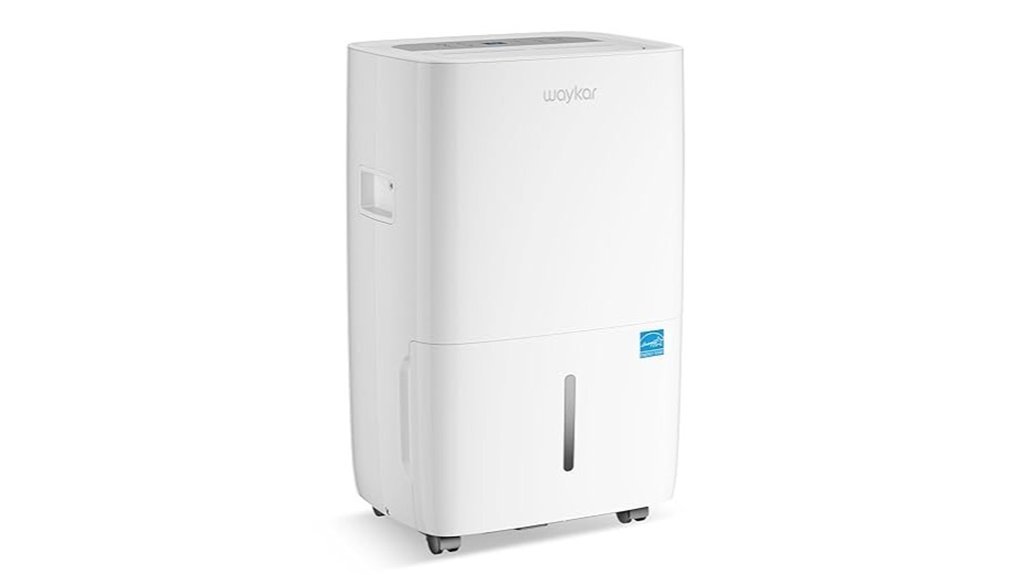
Best Overall Large-Space Pick: If you need a powerful solution for excessive humidity, the Waykar 120 Pints Energy Star Dehumidifier is a strong choice for large spaces up to 6,000 sq. ft. It is designed to remove up to 120 pints of moisture daily, making it a practical option for basements, garages, storage rooms, or larger open areas where damp air keeps coming back.
The 90° auto swing airflow helps distribute dry air more evenly, while the smart humidity control lets you adjust settings between 30% and 80% RH. It also supports flexible drainage options, which matters if you want the dehumidifier to run for long periods without constant tank emptying. For best results, place it near a suitable drain if you plan to use it as a continuous-run basement dehumidifier.
Why You’ll Like It: This model makes the most sense if you want strong moisture removal first and convenience second. It is especially useful for homes where humidity returns quickly after rain, flooding, laundry drying, or poor basement ventilation.
Best For: Those seeking an efficient and powerful dehumidification solution for large spaces, such as basements, garages, or commercial-style storage areas.
Who Should Buy This: Choose this if your space is large, damp, and difficult to keep dry with a smaller machine.
Who Should Avoid This: Skip it if you only need light humidity control in a small bedroom, closet, or apartment room.
Pros:
- High Capacity: Removes up to 120 pints of moisture daily, making it suitable for heavy moisture problems.
- ENERGY STAR Design: Useful for shoppers who expect frequent or seasonal use and want an efficiency-focused model.
- Drain-Hose Friendly: Supports longer run times when connected to a safe drainage point.
Cons:
- Size and Weight: May be bulky for smaller areas or homes with limited storage space.
- Max-Capacity Context: The 120-pint figure is a manufacturer-listed maximum, so compare standardized capacity when sizing the unit.
- Setup Matters: Continuous drainage works best only when the hose slopes correctly to a drain.
Vellgoo 64 Pint Energy Star Dehumidifier for Home
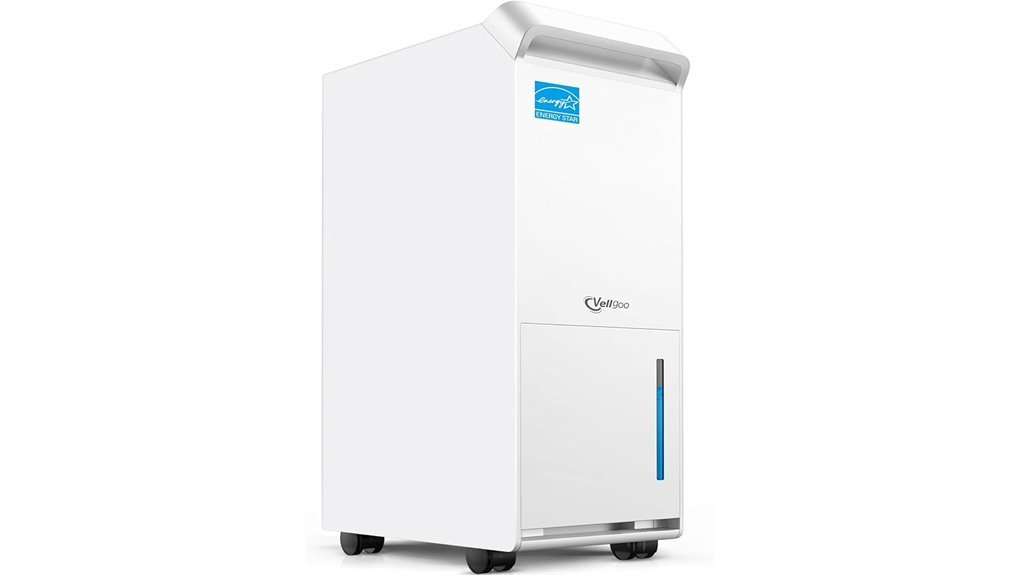
Best ENERGY STAR Large-Room Pick: The Vellgoo 64 Pint Energy Star Dehumidifier is a strong fit for homeowners seeking efficient humidity control in larger everyday spaces. With a listed capacity of up to 64 pints per day and coverage up to 4,000 sq. ft., it is well suited for basements, bathrooms, garages, laundry rooms, and open living areas where moisture can make the air feel heavy.
Its Energy Star positioning is useful if you plan to run your dehumidifier often, because energy use becomes more important with continuous operation. The unit also includes practical features such as a washable filter, 24-hour timer, smart humidity control, and drain hose support. That combination makes it appealing if you want a large-room dehumidifier without stepping all the way up to the biggest 80-pint or 120-pint class.
Buyer Tip: If your space has a floor drain nearby, use the continuous drainage option. It can make a big difference during humid seasons because you will not need to empty the tank as often.
Best For: Homeowners looking for an efficient and reliable solution to control humidity in large spaces like basements, bathrooms, and garages.
Who Should Buy This: Choose it if you want a balance of capacity, efficiency-focused design, and simple day-to-day operation.
Who Should Avoid This: Avoid it if you need an ultra-compact unit for a very small room.
Pros:
- Covers up to 4,000 sq. ft., making it suitable for many large household spaces.
- Includes drain hose support for easier long-run operation.
- Washable filter and timer features help reduce day-to-day hassle.
Cons:
- May be too large for smaller bedrooms, closets, or compact apartments.
- The 64-pint headline capacity is a manufacturer-listed maximum and should be compared with standardized capacity data when available.
- Still needs routine filter cleaning and drain hose checks.
BANABIE 2500 Sq.Ft 32 Pint Dehumidifier
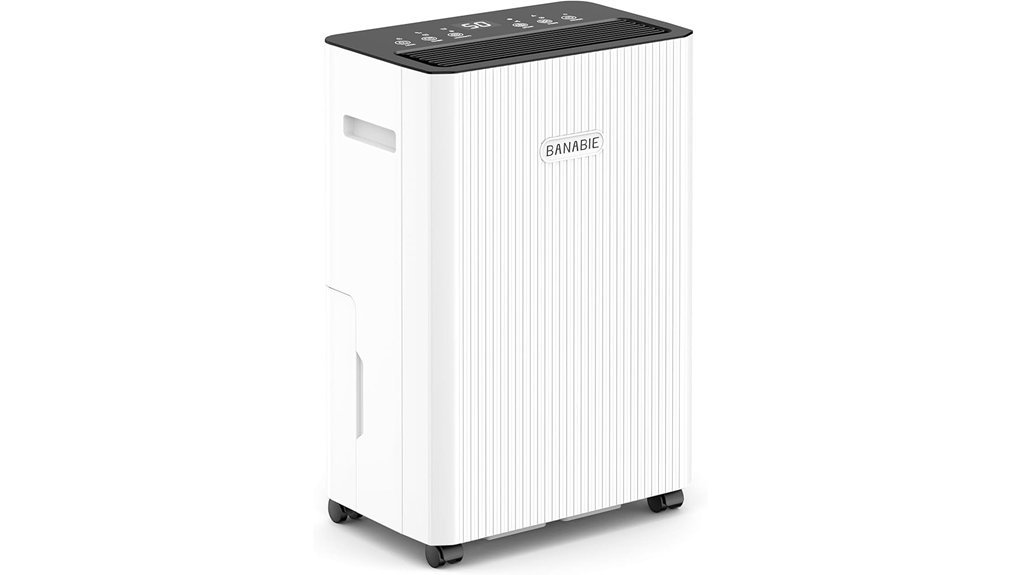
Best Quiet Medium-Room Pick: The BANABIE 2500 Sq.Ft 32 Pint Dehumidifier is designed for homeowners who want a manageable compressor-style unit for medium-size damp spaces. Its Amazon listing identifies it as a 32-pint model for spaces up to 2,500 sq. ft., with drain-hose support, automatic humidity control, a 24-hour timer, and quiet-operation positioning. It can fit basements, bedrooms, bathrooms, RVs, and other areas where damp air tends to collect.
With flexible drainage options, including drain-hose use and a manual tank, maintenance can be simpler than with a tank-only design. The listing also advertises smart humidity control and a very low 32 dB noise figure. Treat that noise number as a manufacturer-listed claim because real sound can vary with fan speed, floor surface, and room acoustics. Its portable design makes it easier to use in bedrooms, bathrooms, and shared living spaces.
Why You’ll Like It: This is a practical choice if you want a manageable size, quiet operation, and enough capacity for a medium damp area without stepping up to a very large unit.
Best For: Homeowners seeking an effective solution for humidity control in medium to large spaces like basements, open floor plans, and RVs.
Who Should Buy This: Buy it if you want a quiet dehumidifier for everyday household use and flexible operating modes.
Who Should Avoid This: Avoid it if your space is much larger than 2,500 sq. ft. or has severe moisture problems.
Pros:
- Moisture extraction of up to 32 pints daily, suitable for many medium household areas.
- Smart humidity control with customizable modes for easier operation.
- Quiet operation can make it easier to live with in bedrooms and shared spaces.
Cons:
- Manual tank may require regular emptying if you do not connect the hose.
- May not be enough for severe basement moisture or very large spaces.
- The listed noise figure may vary with fan speed, flooring, placement, and room acoustics.
Midea 1,500 Sq. Ft. Energy Star Dehumidifier
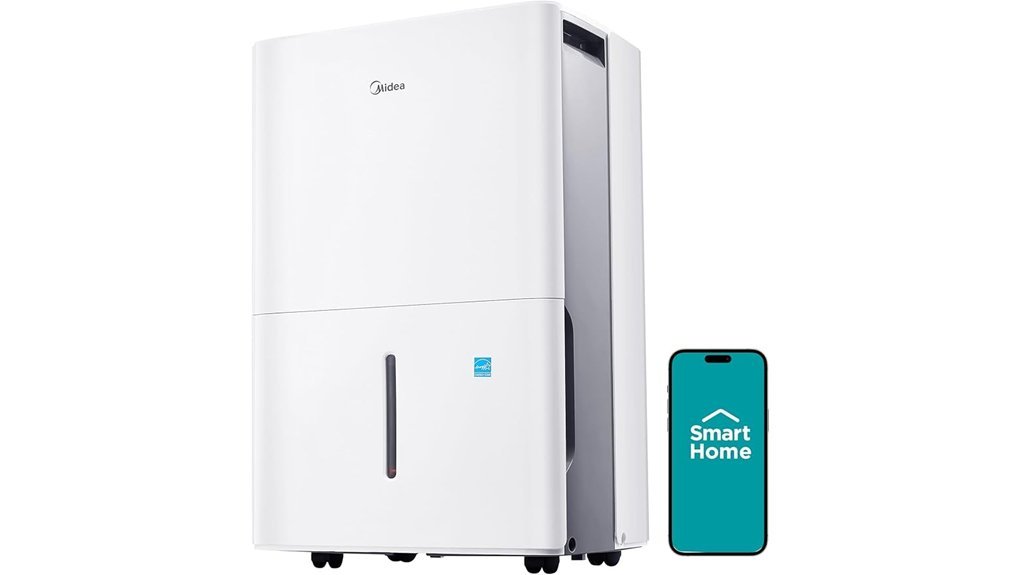
Best Compact Energy Star Pick: For those needing efficient moisture control in spaces up to 1,500 square feet, the Midea Energy Star Dehumidifier stands out as a compact and practical choice. It removes up to 22 pints of moisture daily, making it suitable for basements, bathrooms, bedrooms, offices, and smaller living spaces where humidity needs steady control.
You can adjust humidity levels from 35% to 85%, which gives you useful control for different rooms and seasons. Weighing just over 33 pounds, its 360° rotatable wheels help with portability. It’s also listed at 47 dBA, making it a better fit for rooms where noise matters. Features like turbo mode, auto shutoff, and continuous drainage support can help reduce daily hassle when the unit is placed near a suitable drain.
Best Use Case: This model works best when you want a familiar brand, Energy Star positioning, and a compact size for a bedroom, office, bathroom, or smaller basement.
Best For: Those seeking effective moisture control in medium-sized spaces like basements, bathrooms, and offices.
Who Should Buy This: Choose it if quiet operation, adjustable humidity, and compact placement matter to you.
Who Should Avoid This: Skip it if you need very high pint capacity for a large basement or garage.
Pros:
- Energy Star certified design for everyday home humidity control.
- Adjustable humidity range from 35% to 85% for flexible comfort.
- Quiet operation at 47 dBA makes it suitable for many living areas.
Cons:
- Tank volume of 0.8 gallons may require frequent emptying in high humidity conditions.
- A standard drain hose is not included with the verified listing.
- Not the right choice for very large or severely damp spaces.
Gasbye Energy Star Dehumidifier for Large Rooms
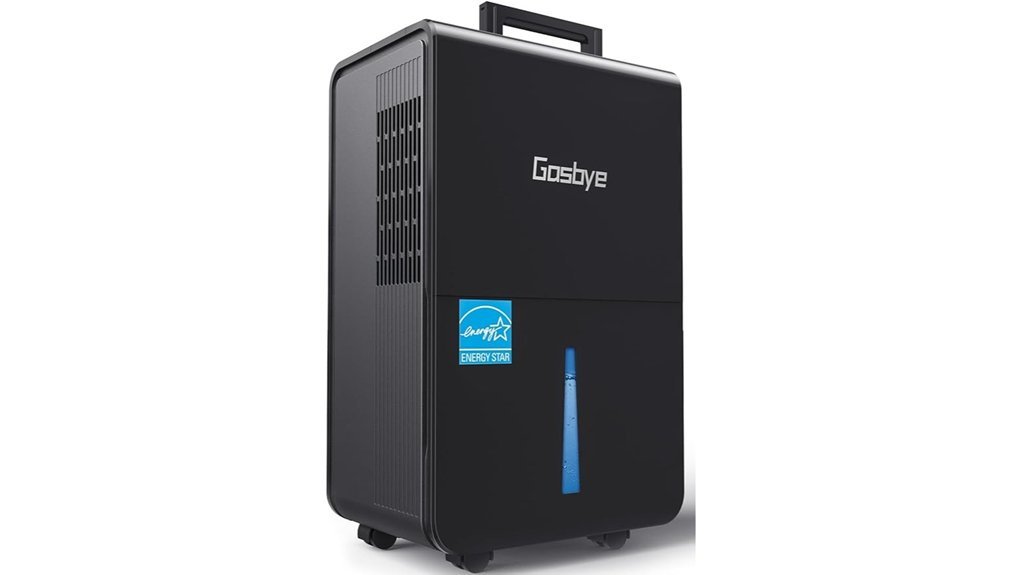
Best Quiet High-Capacity Pick: The Gasbye Energy Star Dehumidifier is built for large spaces up to 4,500 sq. ft. It is listed to remove up to 115 pints of moisture daily, making it a strong option for homes with high humidity, damp basements, larger living rooms, or garage spaces that need reliable moisture control.
With a compact high-capacity design and a listed weight of about 43 pounds, it may be easier to move than some bulkier large-room options. Its listed 45 dB operation is helpful for basements or living rooms where loud fan noise would be annoying. The 1.7-gallon tank and versatile drainage options also make maintenance more flexible, especially if you can set up a drain hose for longer run times.
Why You’ll Like It: This model gives you large-room performance without making the article feel limited to only basement use. It is a good fit when you need strong moisture removal but still care about noise and portability.
Best For: Those seeking an efficient and quiet solution to control humidity in large spaces up to 4,500 sq. ft.
Who Should Buy This: Buy it if you need strong capacity for a larger room but do not want a machine that feels overly industrial.
Who Should Avoid This: Avoid it if you want the smallest possible unit or only need light seasonal humidity control.
Pros:
- High listed capacity for large rooms, basements, and high-humidity areas.
- Quieter listed operation than many shoppers expect from a large-room model.
- Manual and continuous drainage options give you more setup flexibility.
Cons:
- The 1.7-gallon tank may require frequent emptying in very humid conditions.
- Noise may still be noticeable in ultra-quiet rooms.
- Performance can vary based on temperature, humidity level, airflow, and room layout.
Aiusevo AS280 21 Pint Dehumidifier
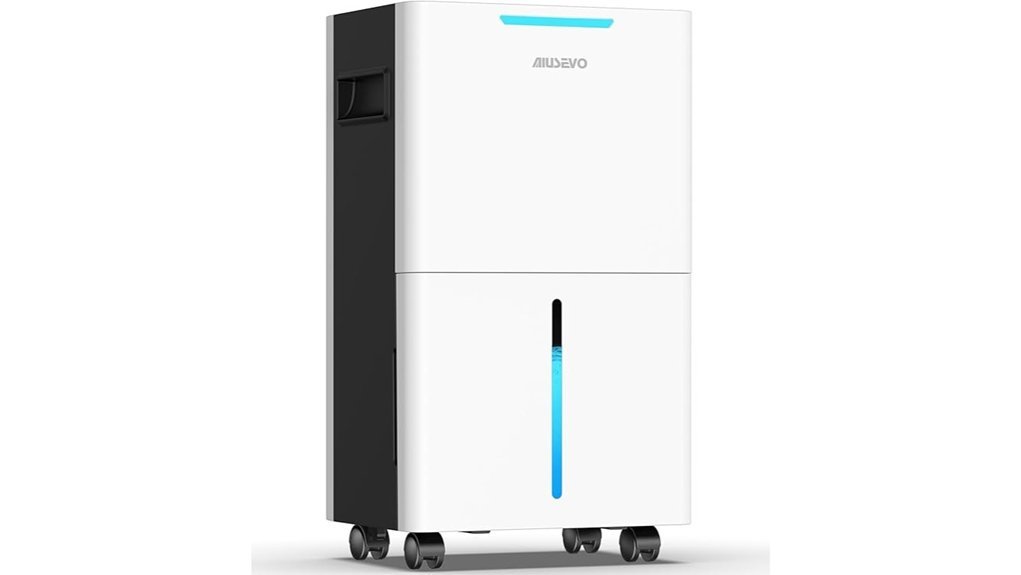
Best Simple Room Pick: The Aiusevo AS280 is designed for homeowners needing efficient humidity control in spaces up to 1500 sq. ft. With a listed moisture removal capacity of 21 pints per day, it can help reduce dampness in basements, bedrooms, laundry rooms, bathrooms, RVs, and other smaller household areas.
You can choose from multiple modes, including DEHU for adjustable humidity and DRY for quick laundry drying. Its smart control system is designed to manage humidity automatically, while the continuous drainage option helps reduce the need for manual emptying. The sleek design, lift-up handles, digital display, and portability make it easy to move and simple to use.
Best Use Case: This is a practical pick for rooms where humidity is annoying but not extreme. It is better for bedrooms, smaller basements, and laundry areas than for very large open spaces.
Best For: Homeowners seeking efficient humidity control in spaces up to 1500 sq. ft., such as basements, bedrooms, and living areas.
Who Should Buy This: Choose it if you want a portable everyday dehumidifier with multiple modes and straightforward controls.
Who Should Avoid This: Skip it if you need high-capacity performance for large basements or severe dampness.
Pros:
- Multiple operational modes: Offers DEHU, DRY, and continuous settings for different needs.
- Smart control system: Helps manage humidity levels with less manual adjustment.
- Portable design: Lift-up handles and 360° wheels make room-to-room movement easier.
Cons:
- Tank capacity: The 2L tank may require frequent emptying in very damp conditions.
- Limited coverage: Best suited for spaces up to 1500 sq. ft.
- Not for severe moisture: Larger or wetter basements may need a stronger unit.
Waykar 34 Pints Energy Star Dehumidifier
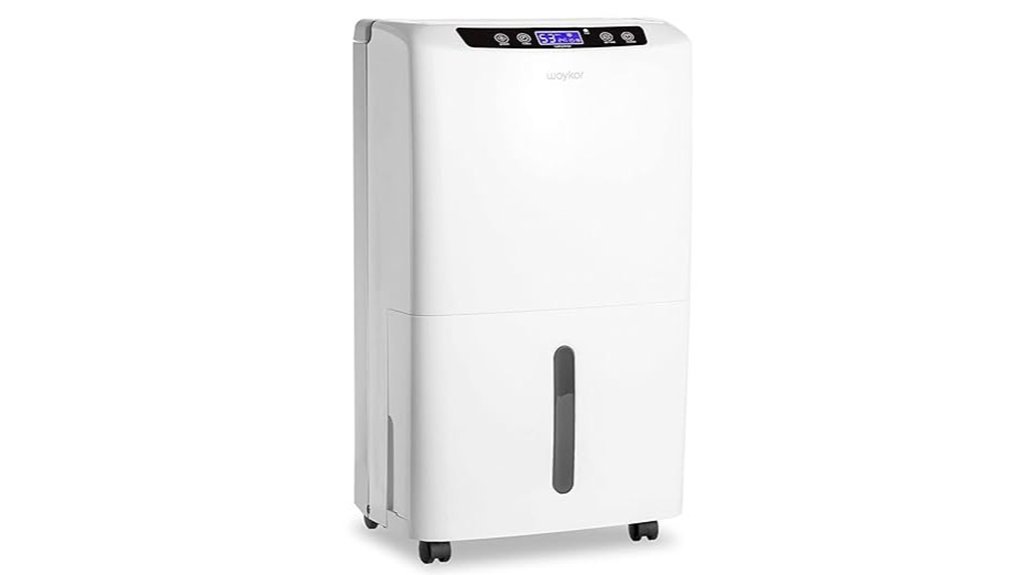
Best Mid-Size Energy Star Pick: If you need an efficient solution for damp spaces, the Waykar 34 Pints Energy Star Dehumidifier is a strong contender for medium-sized rooms. It removes up to 34 pints of moisture daily and covers areas up to 2,000 sq. ft., making it suitable for basements, garages, bedrooms, laundry rooms, and storage spaces.
With smart humidity control, it automatically adjusts to maintain your desired level, while the 24-hour timer adds convenience for daily use. You’ll also appreciate the quiet operation and adjustable airflow for tailored comfort. Its ENERGY STAR certification helps support energy efficiency, which matters if you expect to run the unit for long hours.
Why You’ll Like It: This model offers a useful middle ground. It is more capable than small room dehumidifiers but not as large or bulky as high-capacity basement units.
Best For: Those seeking an efficient and reliable dehumidifier for damp spaces like basements, garages, bedrooms, and laundry rooms.
Who Should Buy This: Buy it if you need reliable humidity control for a basement, garage, or medium-sized room.
Who Should Avoid This: Avoid it if your home needs whole-basement coverage above 2,000 sq. ft.
Pros:
- Energy-efficient design with ENERGY STAR certification.
- Smart humidity control adjusts automatically to maintain desired moisture levels.
- Drain hose support helps with longer run times and fewer tank-emptying trips.
Cons:
- The water tank may require frequent emptying in very humid conditions.
- Limited coverage may not be enough for extremely large or interconnected spaces.
- Some users may find the fan noise noticeable on higher settings.
Waykar 80 Pints Energy Star Dehumidifier for Home
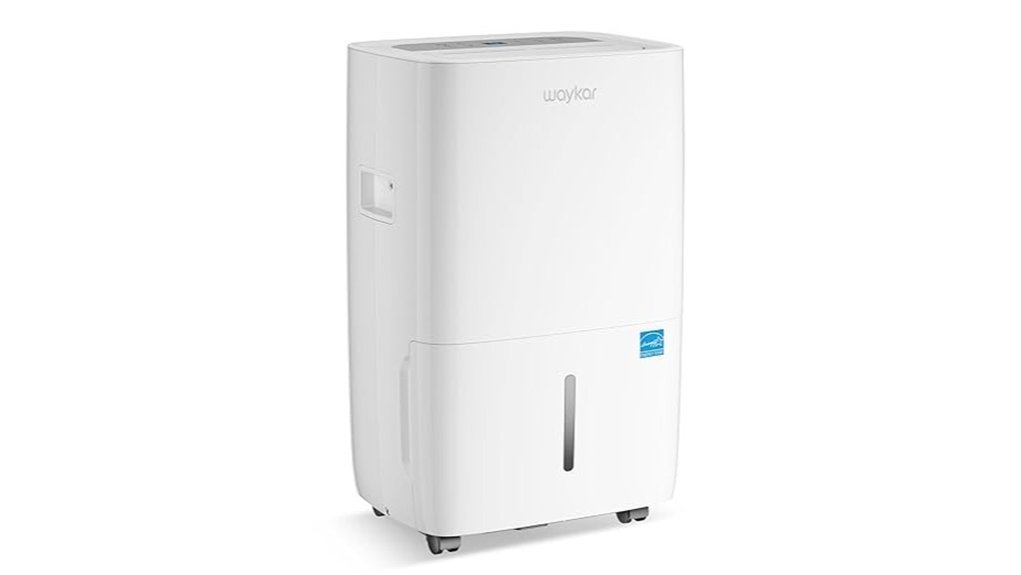
Best Large-Home Pick: Looking for an efficient way to manage humidity in large spaces? The Waykar 80 Pints Energy Star Dehumidifier is built for homes that need stronger moisture removal than a compact unit can provide. With a capacity of 80 pints per day and coverage for up to 5,000 sq. ft., it tackles excess moisture in larger basements, garages, and open-plan areas.
The 90° auto swing helps move air across the room, while the quiet-home design makes it more practical for residential use than many industrial-style units. Its ENERGY STAR certification can help reduce energy waste during longer run times. You can adjust humidity control between 30% and 80% RH, and choose between manual and continuous drainage options depending on your setup.
Best Fit: This model is a good match if the 34-pint class feels too small but the 120-pint model feels bigger than you need.
Best For: Those seeking an efficient dehumidifier for large spaces up to 5,000 sq. ft. with efficiency-focused features.
Who Should Buy This: Choose it if you need large coverage and want a quieter, home-friendly design.
Who Should Avoid This: Skip it if frequent manual tank emptying would bother you and you cannot use continuous drainage.
Pros:
- ENERGY STAR certified design for longer household run times.
- Large 5,000 sq. ft. listed coverage for basements and open living areas.
- Flexible humidity control range of 30%-80% RH for customized comfort.
Cons:
- Water tank capacity may require frequent emptying if you do not connect a drain hose.
- Weight could make it less portable for some users.
- Initial setup may require attention to drainage options for optimal use.
PLUSCENT 32 Pint Dehumidifier for Home
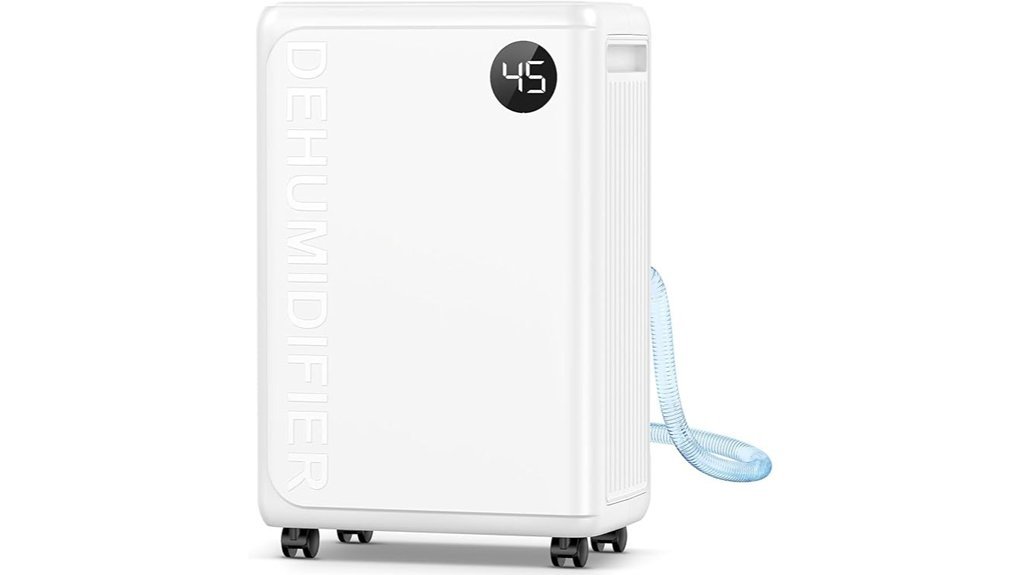
Best Portable Laundry-Room Pick: For homeowners battling excess humidity, the PLUSCENT 32 Pint Dehumidifier is a practical contender. It removes up to 32 pints of moisture daily, covering areas up to 2,500 square feet. That makes it useful for basements, large living spaces, laundry rooms, bathrooms, and RVs where damp air can build up quickly.
With three modes, including a laundry drying option, you can customize its operation to suit your needs. The integrated 24-hour timer adds convenience, while the quiet operation at 39-42 dB helps reduce disruption. The child lock, washable filter, included drain hose, 360° wheels, and ergonomic handles make it easier to use in changing locations around the home.
Why You’ll Like It: This model is appealing if you want a portable dehumidifier for changing use cases, such as laundry drying one day and basement humidity control the next.
Best For: Homeowners looking to manage humidity levels in basements, large living areas, laundry rooms, or RVs.
Who Should Buy This: Buy it if you want quiet operation, simple maintenance, and a room-friendly size.
Who Should Avoid This: Avoid it if you need a very high-capacity whole-basement machine.
Pros:
- Efficient Moisture Removal: Capable of removing up to 32 pints of moisture daily.
- Quiet Operation: Runs at a listed noise level of 39-42 dB, making it suitable for bedrooms and quiet environments.
- User-Friendly Features: Includes a 24-hour timer, child lock, drain hose, and washable filter.
Cons:
- Limited Coverage: Best for areas up to 2,500 sq.ft.; may not suit larger spaces.
- Requires Regular Drainage: The 2L tank may need frequent emptying in high humidity if you do not use the hose.
- Noise Varies: The listed 39-42 dB figure can change with fan setting, floor surface, and room acoustics.
VEAGASO 2500 Sq.Ft Dehumidifier with Drain Hose
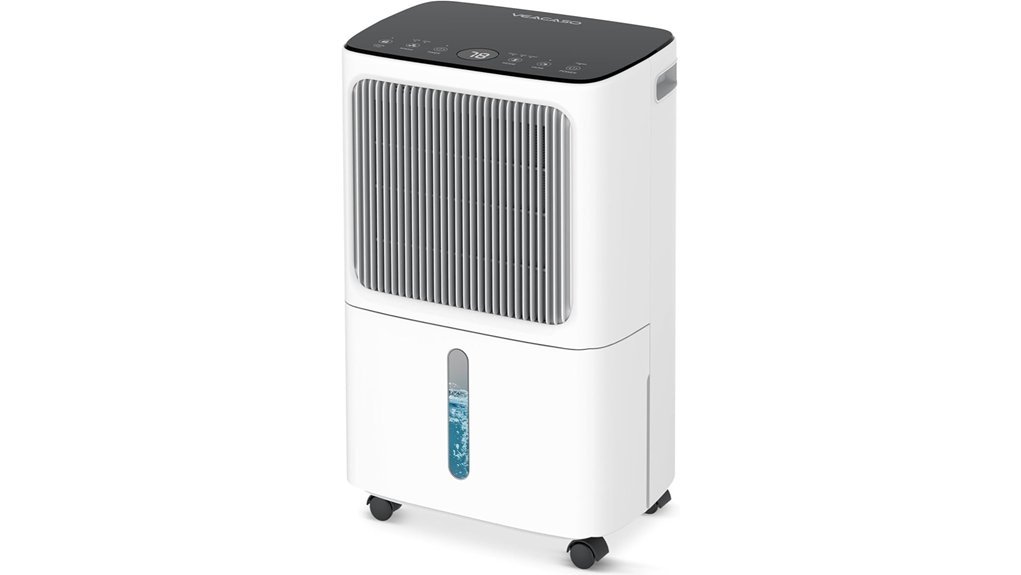
Best Continuous-Drain Convenience Pick: The VEAGASO 2500 Sq.Ft Dehumidifier is a strong option for homeowners needing efficient moisture control in medium-sized spaces. With a capacity of up to 34 pints per day, it effectively combats dampness in basements, laundry areas, bedrooms, bathrooms, and other rooms where humidity tends to linger.
The intelligent humidity control automatically adjusts levels, while the DEHU, DRY, and CONT modes cater to different needs. Portability is simple thanks to its slim design and 360° swivel casters. You can choose between manual drainage or continuous operation with a drain hose for easier use. Plus, the quiet operation at ≤40dB makes it suitable for many rooms where comfort matters.
Continuous Run Advantage: This is one of the easiest picks to understand for continuous use because the drain hose support directly solves the biggest frustration: emptying the tank again and again.
Best For: Homeowners looking for an efficient and portable solution to control humidity in medium-sized spaces.
Who Should Buy This: Choose it if you want a drain-hose-friendly dehumidifier for routine moisture control.
Who Should Avoid This: Avoid it if your space is larger than 2,500 sq. ft. or has severe basement moisture.
Pros:
- Effective Moisture Control: Capable of removing up to 34 pints of moisture per day in suitable conditions.
- Quiet Operation: Runs at a listed noise level of ≤40dB, making it practical for bedrooms and quiet environments.
- Flexible Drainage Options: Offers both manual and continuous drainage for convenience and longer run times.
Cons:
- Limited Capacity for Larger Spaces: May not be sufficient for areas beyond 2500 sq. ft.
- Plastic Material: Some users may prefer a heavier-duty exterior.
- Requires Regular Maintenance: The filter needs to be cleaned regularly for optimal performance.
Factors to Consider When Choosing a Continuous Run Dehumidifier
When choosing a continuous run dehumidifier, evaluate several key factors before you buy. Think about the capacity and coverage area that suits your space, along with energy efficiency to keep utility use reasonable. Also, assess drainage options, noise levels, smart features, maintenance needs, portability, and whether the unit fits the humidity problem you are trying to solve.
Before You Buy Checklist
- Measure the room or basement size before choosing pint capacity.
- Check whether you have a nearby floor drain for continuous drainage.
- Compare tank size if you cannot use a drain hose.
- Choose a lower noise rating for bedrooms, offices, and living rooms.
- Look for washable filters and easy-access maintenance panels.
- Check for auto restart if power outages are common in your area.
- Use a hygrometer if you want to monitor real room humidity more accurately.
Capacity and Coverage Area
Choosing the right continuous run dehumidifier starts with understanding two key factors: capacity and coverage area. Capacity is measured in pints of water removed per 24 hours under specified test conditions. Higher-capacity models generally suit larger spaces or heavier moisture loads, but headline “maximum pints per day” figures are not always directly comparable when brands use different temperature and humidity conditions.
Capacity Note: For the fairest comparison, check the standardized rated capacity shown in the current product documentation or ENERGY STAR listing when available, not only the largest marketing number. ENERGY STAR explains that dehumidifier capacity is measured in pints per 24 hours at defined test conditions: dehumidifier testing and capacity guidance.
Coverage area is equally important, but manufacturer square-foot claims should not be treated as guarantees. Match the dehumidifier’s capacity with your room size, starting humidity, airflow, temperature, and whether the area is open or divided into rooms. Controlling excess moisture can reduce condensation and musty conditions, while active leaks or visible mold still require source control and proper cleanup.
Energy Efficiency Rating
Considering energy efficiency is essential for selecting a continuous run dehumidifier, especially if you want to keep utility bills in check. Look for ENERGY STAR certification or energy-focused product details when available. These labels can help you compare models that are designed to remove moisture while using less electricity than less efficient options.
Pay attention to wattage, compressor design, and operating modes. Lower wattage can help reduce energy use, particularly during continuous operation. Regular maintenance also matters. Cleaning filters, keeping vents clear, and using the right humidity setting can prevent your unit from working harder than necessary.
Drainage Options Available
Energy efficiency is just one aspect of selecting a continuous run dehumidifier; drainage options play a significant role too. Most portable models use either manual tank emptying or continuous drainage via a hose connected to a floor drain. If you want the dehumidifier to run for long periods, drain-hose support should be near the top of your checklist.
Some units include a built-in water tank that automatically shuts off when full, which helps prevent overflow. Look for a standard garden hose connection or included drain hose for easy setup. Gravity drainage usually needs the hose to slope downward from the dehumidifier to the drain. If you need to move water up to a sink or window, you may need a model with a built-in pump instead.
Noise Level Considerations
When selecting a continuous run dehumidifier, noise level can affect your comfort. Dehumidifiers in this article typically list noise levels from the low 30 dB range to the upper 40 dB range, depending on the model and fan setting. If you’re sensitive to noise, compare the listed decibel figures carefully for bedrooms, offices, nurseries, and living rooms.
Many modern models feature low-noise compressors and optimized airflow to keep operational sounds down. Adjustable fan speeds can also help, allowing quieter operation during nighttime or in noise-sensitive areas. Always check the decibel rating and remember that real-world noise can vary based on floor surface, fan speed, and room acoustics.
Smart Features Integration
Smart features in continuous run dehumidifiers can make a significant difference in your experience. With automatic humidity control, these units maintain your selected humidity level without constant manual adjustment. Many models include a programmable timer, allowing you to set operation hours for added convenience and energy control.
If there’s a power outage, auto-restart capabilities can restore your settings on models that support the feature. Some units also offer app control or voice assistant compatibility, but do not assume every “smart humidity” model has Wi-Fi. Additional features like auto defrost can help reduce coil icing in cooler rooms.
Portability and Design
Choosing the right continuous run dehumidifier often depends on its portability and design features. Look for models equipped with 360° wheels and ergonomic handles if you plan to move the unit between rooms. A compact design is useful if you need it to fit in basements, bathrooms, laundry rooms, closets, or RVs while still controlling humidity levels.
Lightweight units are helpful for frequent repositioning, but larger capacity models may be heavier because of the compressor and tank size. User-friendly designs, such as LED touch panels and digital displays, allow for easy adjustments without complicated controls. A clean exterior also helps the unit blend better into bedrooms, offices, and living rooms.
Maintenance Requirements and Ease
Maintenance plays an essential role in the longevity and efficiency of your continuous run dehumidifier. Regularly cleaning or replacing the washable filter is key to keeping airflow strong and performance steady. Look for models with automatic shut-off systems that activate when the water tank is full; this feature helps prevent overflow and reduces your maintenance worries.
If you connect a hose to a floor drain, you’ll eliminate much of the hassle of manual emptying. Still, you should inspect the hose often for kinks, clogs, leaks, or poor slope. Keep an eye on humidity levels and make sure your unit is functioning properly to extend its lifespan. Some dehumidifiers even include alerts to notify you when it’s time for maintenance tasks.
Safety Note: Always place a dehumidifier on a stable, level surface. Keep the air intake and outlet clear, avoid overloading outlets, and check the drain hose regularly so water does not leak onto floors or electrical areas.
For very wet basements, active leaks, flooding, or visible mold, a dehumidifier can help manage moisture, but it should not replace fixing the source of the water problem.
Frequently Asked Questions
How Do I Maintain My Dehumidifier for Optimal Performance?
To maintain your dehumidifier, regularly empty the water tank, clean or replace the filter as recommended by the manual, and check for dust buildup around the intake and outlet. Make sure there is proper airflow around the unit and keep it on a stable surface. If you use continuous drainage, inspect the hose often to confirm it is not kinked, clogged, or leaking.
Can I Use a Dehumidifier in Colder Temperatures?
You can use a dehumidifier in colder temperatures, but it might struggle if it is not designed for cooler rooms. Make sure it’s rated for low-temperature operation if you plan to use it in a basement, garage, or crawl space. Auto defrost is especially useful because it helps reduce coil icing in cooler conditions.
What Is the Average Lifespan of a Dehumidifier?
Portable dehumidifier lifespan varies with build quality, run time, humidity level, maintenance, operating conditions, and storage. Regularly clean the filter, keep the coils free from dust, avoid blocking airflow, and use the unit within the temperature and humidity range specified by its manufacturer.
Do Dehumidifiers Reduce Heating Costs in Winter?
Do not assume a dehumidifier will reduce winter heating costs. It consumes electricity while operating, and whether it improves overall comfort or energy use depends on your climate, indoor humidity, insulation, and heating system. Use a dehumidifier primarily to correct excess moisture rather than as a heating-cost strategy.
Are There Any Safety Concerns With Using Dehumidifiers?
Yes. Regularly check for water leaks, make sure the unit has proper airflow, avoid blocking vents, and avoid overloading electrical outlets. Keep cords away from standing water, follow the manufacturer’s clearance and electrical instructions, and inspect any continuous-drain hose periodically.
Is Continuous Drainage Better Than Emptying the Tank?
Continuous drainage is usually more convenient if you plan to operate the dehumidifier for long periods or use it in a damp basement. It reduces the need to empty the tank and avoids tank-full interruptions when the drainage setup is working correctly. Manual tank emptying is still practical for occasional use, smaller spaces, or rooms without a suitable drain.
What Humidity Level Should I Set My Dehumidifier To?
For most homes, a practical target is about 30% to 50% relative humidity when possible. The U.S. EPA recommends keeping indoor humidity below 60% and ideally between 30% and 50% to help limit moisture-related problems. Avoid setting the humidity unnecessarily low because that can increase run time and make the air feel too dry. See the EPA’s mold and moisture guidance.
Final Recommendation
For the highest manufacturer-listed maximum moisture-removal figure in this roundup, the Waykar 120 Pints Energy Star Dehumidifier is the leading large-space option. For large-home use with a balance of coverage, drainage, and efficiency-focused design, the Vellgoo 64 Pint, Gasbye Energy Star, and Waykar 80 Pints models are also worth comparing closely.
For medium rooms, laundry areas, RVs, and smaller basements, models like the VEAGASO 2500 Sq.Ft, PLUSCENT 32 Pint, Waykar 34 Pints, BANABIE 2500 Sq.Ft 32 Pint, Aiusevo AS280, and Midea 1,500 Sq. Ft. may be easier to place and more practical for daily home use.
Conclusion
Choosing the right continuous run dehumidifier comes down to matching the machine to your space, moisture level, and drainage setup. A large basement usually needs more moisture-removal capacity, while a bedroom, bathroom, laundry room, or RV may work better with a quieter mid-size unit. Compare standardized capacity where possible, then consider energy efficiency, humidity controls, noise level, tank size, auto restart, auto defrost, and drain-hose support. With the right dehumidifier and a safe drainage path, you can manage humidity with less daily effort without expecting the compressor to run nonstop.



[…] Best Continuous Run Dehumidifiers 2026: Top Picks for Home […]
[…] Best Continuous Run Dehumidifiers 2026: Top Picks for Home […]