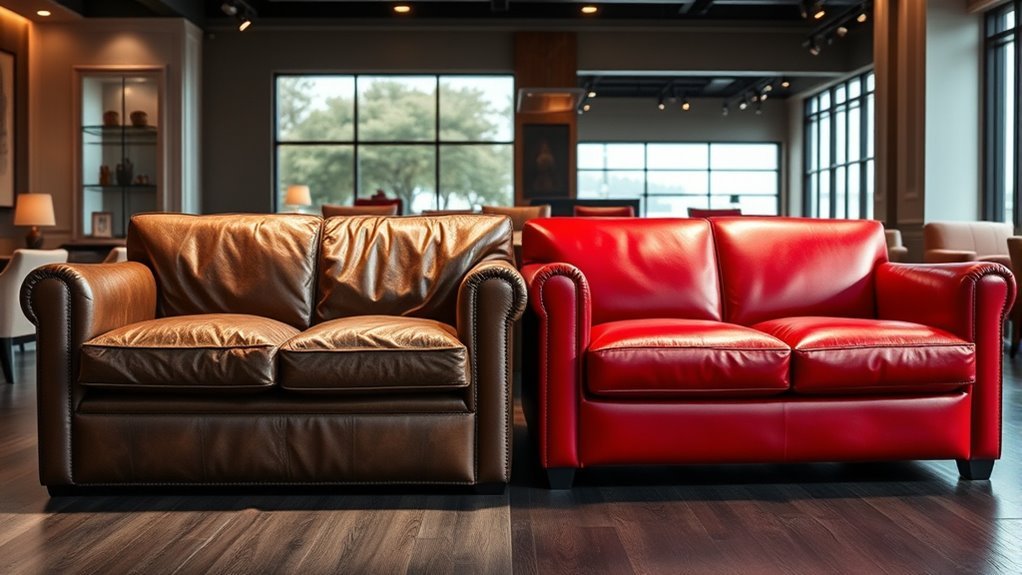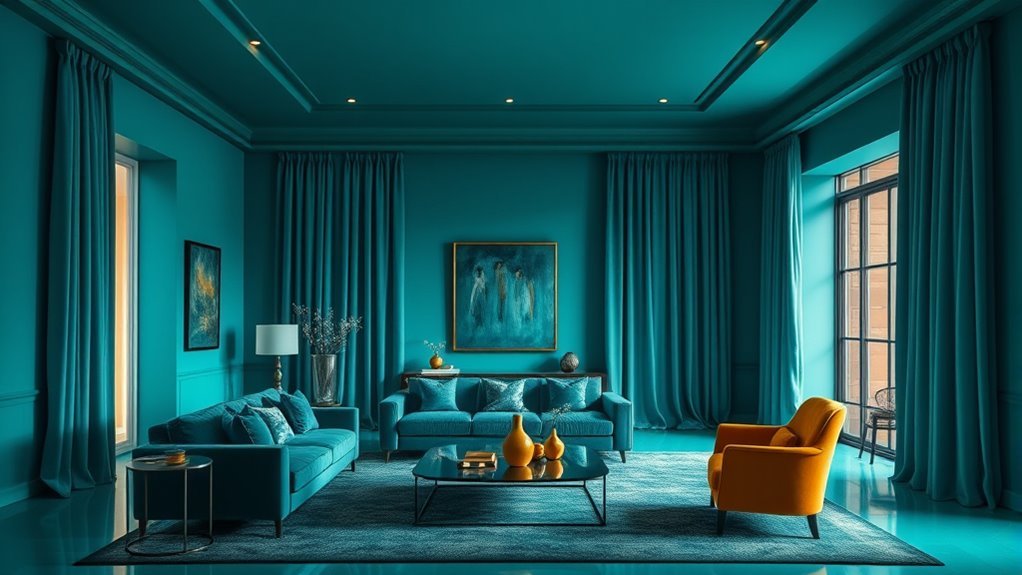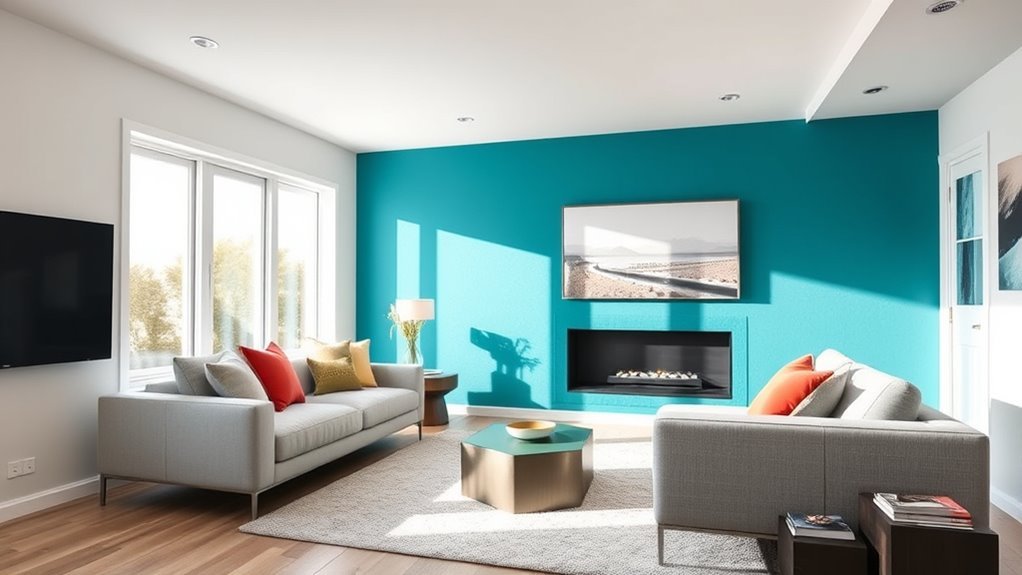
An accent wall is the fastest way to give a flat room a clear focal point without remodeling the entire space. By changing the color, pattern, texture, or surface material on one strategic wall, you anchor key furniture like a bed, sofa, fireplace, or dining table. The best designs stand out visually while echoing the undertones, lighting, and finishes already in the room.
Quick Answer
An accent wall is a single interior wall finished differently from the surrounding walls using paint, wallpaper, wood molding, limewash, tile, or stone. Choose the solid wall that naturally draws your eye upon entering, and select a color or texture that repeats at least two existing tones in your room.
At a Glance
| Time Required | Paint: 4–8 hours over 1 weekend (including 2–4 hours of drying between coats). Wallpaper, wood trim, plaster, or tile: 1–3 days. |
| Difficulty | Beginner for paint or peel-and-stick wallpaper; intermediate for wood slats, board and batten, limewash, tile, or stone veneer. |
| Tools Needed | Painter’s tape, drop cloth, 4-foot level, tape measure, pencil, 2-inch angled sash brush, 3/8-inch nap roller, spackling compound, 120–220-grit sanding sponge, primer, and finish material. |
| Cost | Paint: $50–$120 total for a 12-by-8-foot wall (96 sq. ft.). Wallpaper, wood molding, plaster, or stone veneer: $150–$800+ depending on material. |
What Is an Accent Wall and Why Use One?
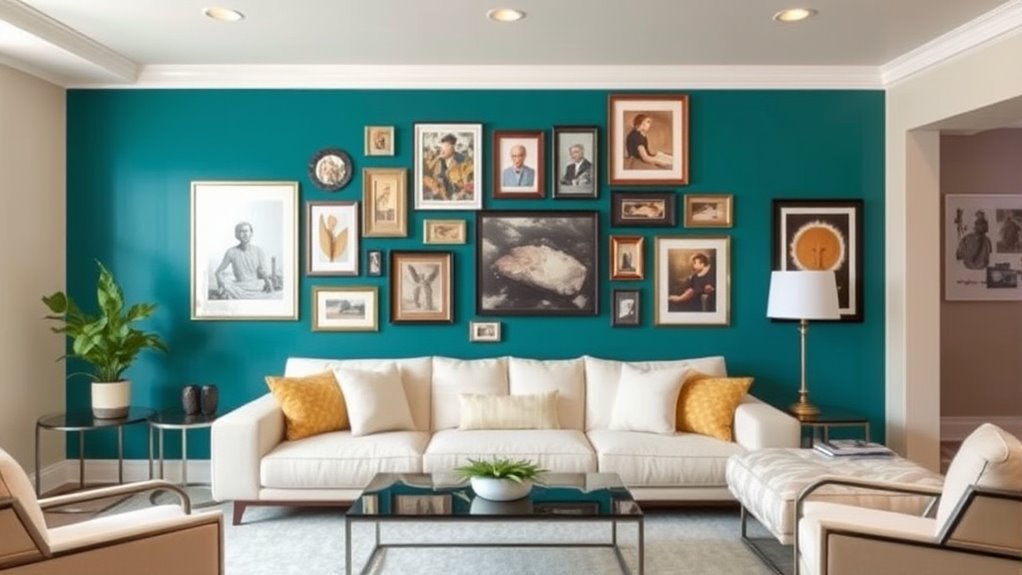
An accent wall is a single interior wall designed to stand apart from the three walls around it through a change in color, pattern, relief, or material. Rather than just making one wall look different, its purpose is to establish visual hierarchy, correct awkward room proportions, and anchor your furniture layout.
A well-planned wall may feature a saturated paint shade, patterned wallpaper, vertical wood slats, stone veneer, ceramic tile, limewash, Venetian plaster, or picture-frame molding. When a boxy room feels flat or lacks built-in architecture, changing one surface draws the eye immediately to the most important zone in the space.
In a bedroom, the wall behind the bed acts like a floor-to-ceiling headboard. In a living room, finishing the wall behind a sofa or fireplace grounds the main seating group. In an open-concept dining area, a rich color or textured panel separates the dining table from the kitchen or living zone without adding physical partitions.
A strategic accent wall helps you:
- Create an instant focal point in boxy or builder-grade rooms that lack architectural character.
- Add visual depth and dimension by contrasting matte, glossy, or three-dimensional surfaces.
- Frame key furniture or artwork so beds, sofas, shelving, and gallery pieces look deliberate.
- Test bold colors or luxury materials at a fraction of the cost and visual weight of covering four walls.
- Alter perceived room proportions by pulling a distant wall closer or drawing the eye upward toward the ceiling.
Note: An accent wall should support your room’s primary focal point, never compete with it. If your living room already has a stone fireplace on the north wall, painting the blank east wall a bright contrasting color will split the viewer’s attention and make the layout feel restless.
Essential Design Principles for Selecting the Perfect Accent Wall
Choosing the right wall matters more than picking a trendy paint color. A successful accent wall follows the room’s natural sightline from the main doorway, highlights an unbroken surface or architectural feature, and balances contrast using the 60-30-10 color rule and the room’s natural light.
Choose the Natural Focal Wall
Start by standing in the main entrance of the room and noting where your eyes land first. That natural sightline usually points to your strongest candidate, provided the wall anchors a major piece of furniture or architectural detail.
The most reliable walls to highlight include:
- The headboard wall in a primary or guest bedroom.
- The main sofa wall or media console wall in a living room.
- The fireplace surround wall, especially when flanked by symmetrical shelving or sconces.
- The buffet or dining table wall in a dining room or breakfast nook.
- The built-in bookcase wall in a home office, study, or family room.
- The far short wall in a long rectangular room, where a darker tone visually pulls the end wall closer and corrects a “bowling alley” layout.
Avoid choosing a random side wall simply because it is empty. Equally important, skip walls interrupted by two or more doors, asymmetrical windows, or off-center HVAC returns, unless you plan to paint the trim and doors the exact same shade to camouflage them.
Balance Contrast With the Rest of the Room
Interior designers rely on the 60-30-10 color rule to keep an accent wall from looking like an afterthought. In this framework, 60% of the room’s visual area uses a dominant neutral or base hue (usually the three surrounding walls and large flooring or rugs), 30% uses a secondary supporting color (upholstery, draperies, and wood furniture), and 10% delivers a punchy accent shade.
Your accent wall typically occupies either the 10% bold slot or part of the 30% supporting slot. To tie it into the room, repeat the wall’s exact hue or undertone in at least two or three smaller items—such as throw pillows, rug motifs, artwork frames, or ceramic lamps—placed across the opposite side of the space.
For a subtle, monochromatic look, select a paint shade two to three steps darker on the same paint strip as your surrounding walls. For high-contrast drama, pair a deep shade or large-scale patterned wallpaper against crisp neutral walls, making sure the undertones (warm yellow/red vs. cool blue/gray) match your flooring and fixed cabinetry.
Consider Room Size and Light
Natural daylight and bulb temperature change how wall colors read throughout the day. Before choosing a shade, check both your window direction and the paint’s metric for brightness, known as room orientation and Light Reflectance Value (LRV).
Light Reflectance Value (LRV) measures the percentage of light a paint color reflects on a scale from 0 (absolute black) to 100 (pure reflective white):
- Low LRV (0–35): Deep navies, charcoals, forest greens, and burgundies absorb most light. They create cozy, dramatic backdrops in bright rooms or spaces with layered lamps, but can make a dim room feel cave-like if used on the wrong wall.
- Medium LRV (36–60): Mid-tone sages, terracottas, warm taupes, and slate blues reflect moderate light, offering clear contrast without overpowering compact rooms.
- High LRV (61–90+): Soft creams, pale pastels, and warm off-whites bounce light back into the room. Use a high-LRV textured finish—like limewash or shiplap—when you want an airy focal point in a small or dark room.
Compass orientation also shifts undertones. North-facing rooms receive cool, bluish indirect light that mutes warm tones and makes cool grays look icy. South-facing rooms receive warm, bright light all day that intensifies saturated colors. East-facing rooms glow in the morning and cool down by afternoon, while west-facing rooms bathe walls in warm amber light late in the day.
Pro Tip: Never paint test swatches directly on your existing wall, because the old wall color surrounds the sample and distorts how your eye reads the new shade. Paint two coats onto a 12-by-12-inch white poster board, leave a 1-inch white border around the edge, and tape it to the wall in morning, midday, and evening lamp light.
Understanding Accent Wall Color Psychology
Color psychology helps narrow down palette families based on how you want a room to feel, from energizing dining areas to restful bedrooms. However, a 2014 Annual Review of Psychology study on color perception emphasizes that human reactions to color depend heavily on context, saturation (chroma), brightness (value), and personal associations rather than hue alone.
Color Influence on Mood
Instead of assuming every blue is calming or every red is aggressive, evaluate three properties together: hue (the color family), saturation (how pure or muted the pigment is), and value (how light or dark it is).
Warm color families—including terracotta, rust, clay, ochre, coral, and burgundy—advance visually toward the viewer. Because they make large spaces feel more intimate and social, desaturated warm tones work well on dining room, living room, and entryway focal walls.
Cool color families—such as slate blue, sage green, eucalyptus, teal, and dusty lavender—recede visually. Softer, gray-backed cool shades help wall surfaces feel farther away and support focus or relaxation in bedrooms, bathrooms, and home offices.
Earthy neutrals—including charcoal, espresso, warm greige, mushroom, and creamy plaster tones—build architectural contrast through light-and-shadow play rather than bright pigment. They suit open floor plans where a brightly colored wall might clash with adjacent rooms.
Warm Versus Cool Tones
Matching your accent wall’s temperature to your fixed finishes keeps the room harmonious:
- Warm undertones pair naturally with honey oak, walnut, brass hardware, travertine, and cream textiles.
- Cool undertones complement gray-washed wood, Carrara marble, polished chrome, black iron, and crisp white trim.
- Muted (low-chroma) shades mixed with gray, brown, or black undertones look calmer on a full wall than pure primary colors straight from the color wheel.
- Deep, low-LRV tones make light-colored furniture, metallic sconces, and white mat frames pop forward in sharp relief.
Contrast and Visual Impact
Strong visual impact comes from either luminance contrast (dark against light), hue contrast (complementary colors like navy and cognac leather), or tactile contrast (smooth drywall next to rough stone or ribbed wood). If you prefer a calm, low-contrast palette, keep the accent wall within 10 LRV points of the surrounding walls and let a 3D material—like vertical fluted wood panels, grasscloth, or picture-frame molding—create the focal point through shadow lines.
The most successful accent walls do two things at once: they stand out from the surrounding walls and still feel like they belong in the room.
Popular Materials and Techniques for Accent Walls
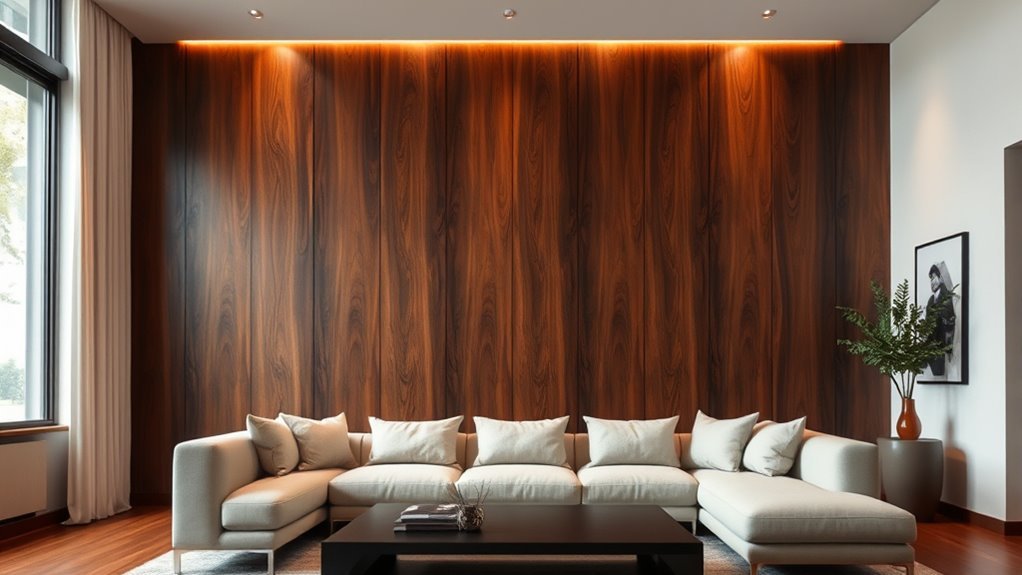
Interior paint is the fastest and lowest-cost way to finish an accent wall, but textured materials like wallpaper, wood molding, plaster, tile, and stone veneer add architectural depth that flat paint cannot replicate. Compare your budget, tools, room humidity, and desired permanence before buying supplies.
| Material Option | Typical DIY Cost (per Sq. Ft.) | Difficulty | Moisture Resistance | Best Room Match |
|---|---|---|---|---|
| Interior Latex Paint | $0.50–$1.25 ($50–$120 per wall) | Beginner | High (in satin or semi-gloss sheen) | Any room; color-blocking or painted arches |
| Peel-and-Stick Wallpaper | $1.50–$5.00 ($150–$480 per wall) | Beginner | Low (peels in steamy bathrooms) | Rentals, nurseries, bedrooms, home offices |
| Traditional Wallpaper / Grasscloth | $2.50–$10.00+ ($240–$960+ per wall) | Intermediate | Medium (scrubbable vinyl); Low (grasscloth) | Dining rooms, powder rooms, primary bedrooms |
| Wood Trim / Slats / Board & Batten | $2.00–$9.00 ($190–$860 per wall) | Intermediate | Medium (use PVC/polyurethane in damp areas) | Living rooms, entryways, behind beds |
| Limewash / Venetian Plaster | $1.00–$4.00 ($100–$385 per wall) | Intermediate | Medium to High (when sealed properly) | Fireplaces, living rooms, organic-modern bedrooms |
| Ceramic Tile / Stone Veneer | $5.00–$20.00+ ($480–$1,900+ per wall) | Advanced | Very High (waterproof when grouted/sealed) | Bathrooms, kitchens, fireplace surrounds |
Recommended Products

NEW CHANGE!The material has been upgraded. There is no tin foil layer and the viscosity has increased

Product Information: Brick peel and stick wallpaper. Size: 17.3"x78.8" ,with an area of 9.45 square feet. Material: PVC/Vinyl

【SIZE&MATERIAL】16.9in X118.1in=13.87sq.ft. Floral wallpaper,upgrading and thickening. Adopt vinyl and the latest removable glue, it has strong adhesion and can be easily applied to any smooth,Clean and dry surface. No residue after removal.
Paint
Paint remains the most versatile accent material because you can change it in an afternoon. One gallon of interior latex paint covers 350 to 400 square feet for a single coat, while one quart covers 85 to 100 square feet. For a standard 12-by-8-foot accent wall (96 square feet), two coats require roughly 192 square feet of coverage, making two quarts or a single 1-gallon can the ideal purchase with extra left over for future touch-ups.
Selecting the right finish is just as important as the color, particularly when using dark pigments that highlight drywall seams. According to the Sherwin-Williams paint sheen guide, flatter finishes absorb light and hide surface bumps, whereas higher-gloss finishes reflect light and resist scrubbing:
- Flat or Matte: Best for low-traffic bedrooms and ceilings, or when using ultra-dark charcoal or navy paint where glare would expose roller marks.
- Eggshell or Satin: The sweet spot for living rooms, dining rooms, and hallways, offering a velvety luster that wipes clean without looking shiny.
- Semi-Gloss: Ideal for wood trim, board-and-batten millwork, or moisture-prone bathrooms and laundry walls.
Wallpaper Options Available
Wallpaper introduces pattern, scale, and fine texture that hand-painting cannot easily match. Standard double rolls typically provide 50 to 56 square feet of usable coverage after accounting for pattern repeats, so a 96-square-foot wall usually needs two to three double rolls.
Match your wallpaper construction to the room’s wear and tear. Woven grasscloth adds rich, organic texture to bedrooms and home offices, but it stains easily if splashed with water. Scrubbable vinyl or non-woven pre-pasted wallpaper handles hallways, kids’ spaces, and dining rooms far better, while peel-and-stick panels give renters a removable option on smooth, primed drywall.
Natural Material Choices
Three-dimensional materials build shadow and acoustic warmth across flat drywall:
- Vertical wood slats and fluted panels: Narrow oak or walnut slats mounted over black acoustic felt dampen echo in living rooms and home offices while making 8-foot ceilings look taller.
- Board and batten or picture-frame molding: MDF or pine strips nailed into wall studs (spaced 12 to 24 inches apart) and painted the same color as the wall add classic architectural relief for under $200.
- Limewash and Venetian plaster: Applied in cross-hatched strokes with a block brush or trowel, mineral-based coatings create soft, cloud-like movement without busy geometric lines.
Tile, Stone, and Moisture-Prone Rooms
Full-shower bathrooms, laundry rooms, and mudrooms experience wide humidity swings that peel standard wallpaper and warp unsealed MDF molding. In damp zones, use glazed ceramic or porcelain tile, stacked stone veneer over cement backer board, PVC millwork, or mildew-resistant bathroom paint.
Always inspect the wall for past water damage before covering it. As outlined in the EPA guide to mold and moisture control, wet areas must be dried within 24 to 48 hours to prevent mold growth, and you should never paint or caulk over active mold or damp drywall because the new finish will trap moisture and peel.
Warning: Never sand, scrape, or disturb old paint in homes built before 1978 without testing for lead first; follow the EPA Lead Renovation, Repair and Painting (RRP) Program lead-safe rules. While modern household paints must meet the CPSC 90 ppm lead limit for household paint (0.009% lead), older base layers can release toxic dust when sanded. Also keep windows open and fans running: according to EPA guidance on volatile organic compounds (VOCs), indoor VOC levels average 2 to 5 times higher than outdoor air and can spike up to 1,000 times higher during painting or stripping.
Accent Wall Ideas for Different Rooms
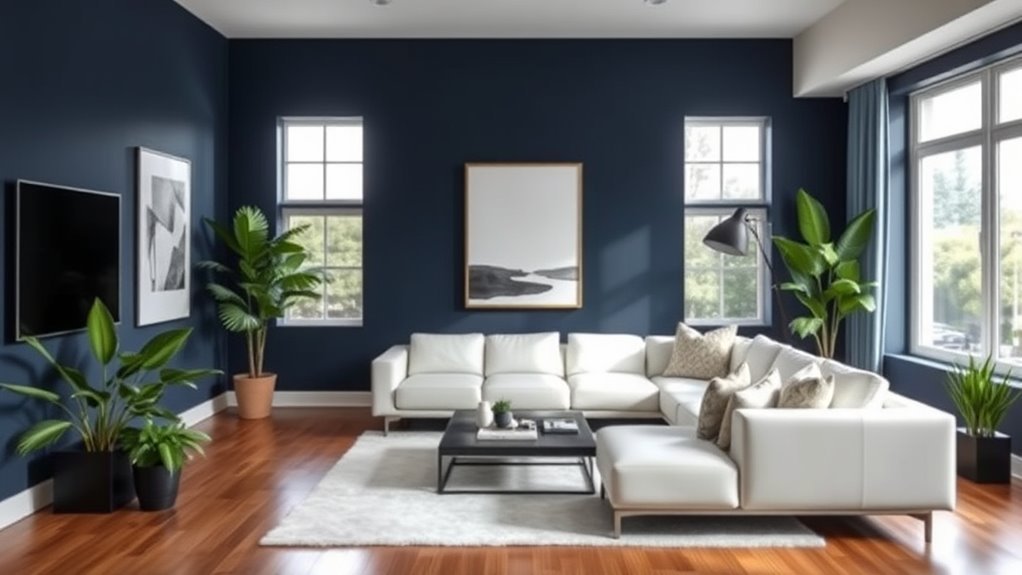
Every room has a different focal point, lighting schedule, and durability requirement. Match your accent wall design to how you actually use the space and the time of day you spend there most.
Bedroom Accent Wall Ideas
In a bedroom, place your accent wall directly behind the headboard so you see the focal point upon entering, while looking out at calmer neutral walls once you lie down in bed. Deep, low-LRV shades like midnight blue, olive green, warm charcoal, and cocoa brown help visually frame upholstered headboards and brass reading sconces. For a softer sanctuary, install half-height board and batten, woven grasscloth, or a beige limewash finish.
Living Room Accent Wall Ideas
Anchor the wall that organizes your main seating arrangement—typically the fireplace wall, the wall behind the primary sofa, or a built-in media wall. Painting built-in bookcases and the drywall behind a black television in a deep charcoal, slate, or forest green helps a large black screen blend into the background when turned off. If your living room lacks built-ins, add picture-frame molding or vertical wood slats to introduce architectural structure.
Dining Room Accent Wall Ideas
Because dining rooms are used primarily for evening meals and gatherings, they handle dramatic colors and oversized patterns better than all-day living spaces. Rich burgundy, terracotta, Prussian blue, emerald green, or a panoramic botanical mural looks warm and inviting under dimmable chandelier and sconce light. If the dining area sits inside an open floor plan, pull the accent shade directly from your living room rug or sofa pillows so the zones connect.
Home Office Accent Wall Ideas
In a home office, consider both your eyesight and your webcam frame. Finishing the wall behind your desk chair in muted sage green, dusty navy, or painted box molding gives you a polished, clutter-free background on video calls. Avoid high-gloss finishes or high-contrast micro-geometric wallpaper behind your monitor or camera, which can cause screen glare or visual moiré distortion on video.
Entryway and Hallway Accent Wall Ideas
Entryways and hallways take heavy scuffs from bags, coats, and shoes, so durability comes first. Use satin or semi-gloss paint, wainscoting, beadboard, or scrubbable vinyl wallpaper. At the far end of a long hallway, painting the terminal wall a warm mid-tone shade or hanging a bold mural with a picture light turns a dark corridor into an intentional destination.
Bathroom, Laundry, and Kids’ Room Ideas
In powder rooms (half-baths without showers), you can safely use bold floral or geometric wallpaper behind the vanity mirror for jewel-box drama. In full bathrooms and laundry rooms, stick to vertical stacked subway tile, glazed zellige tile, or moisture-resistant satin paint. For kids’ bedrooms and playrooms, use peel-and-stick decals, painted color-blocked arches behind the bed or desk, or washable matte paint that is easy to repaint as their tastes change.
How to Create Your Own Accent Wall
Building a professional-looking accent wall takes a single weekend when you spend as much time on surface preparation and edge sealing as you do on the final coat. Follow these seven steps in order to avoid crooked lines, uneven sheen, or bleeding edges.
Recommended Products

10 piece mini roller painting kit - Achieve professional painting perfection with this comprehensive set! 1 Mini Tray, 1 Each Mini Roller Frame, 8 Each 4" x 1/2" Mini Roller Covers

WHAT'S IN THIS 10 PIECE PAINT KIT FOR WALLS: includes one plastic paint tray; one 9 inch roller frame; one 4 inch mini roller frame; two 9 inch microfiber roller covers (1/2 inch nap); two 4 inch microfiber roller covers (1/2 inch nap); one 1 inch flat brush; one 1.5 inch angle sash brush; one 2 inch angle sash brush

3D Ocean Pearl Design Create a stunning ocean scene with shells, starfish, roses and pearls. This 3D pearl diamond painting adds layered texture and sparkling details, bringing elegant coastal charm to your home decor.
Step 1: Pick the Right Wall
Stand in the primary doorway and identify the wall that frames your room’s anchor furniture or architectural centerpiece. Measure the wall’s width and height in feet, multiply those two numbers to get total square footage, and add 10% for waste when ordering wallpaper, wood trim, or tile.
Step 2: Choose the Right Color or Material
Audit the room’s permanent elements first: wood floor undertones, stone countertops, window trim, and large upholstery pieces. Pick a paint shade or material that shares the same warm or cool undertone and repeats at least one existing color in your rugs or artwork. Choose low-VOC or zero-VOC latex paint (under 50 grams per liter of VOCs) to keep indoor odors low.
Step 3: Test Before You Commit
Brush two coats of your candidate paint colors onto 12-by-12-inch poster boards, or tape up 2-foot wallpaper swatches. Observe them against the target wall in bright morning daylight, afternoon shadows, and evening artificial light (2700K warm white bulbs make colors look yellower; 4000K cool LEDs make them look bluer).
Step 4: Prep the Wall
Turn off power at the breaker and remove outlet and switch plates. Wipe the wall with a damp microfiber cloth and mild detergent to remove grease and dust. Fill nail holes with spackling compound, sand smooth with a 180- to 220-grit sanding sponge once dry, vacuum the dust, and mask adjacent walls, baseboards, and the ceiling line with high-adhesion painter’s tape.
Step 5: Prime if Needed
Apply a dedicated coat of primer if you are covering patched drywall spots, painting over a glossy sheen, transitioning from a light wall to a deep low-LRV shade, or preparing drywall for peel-and-stick wallpaper. Ask the paint counter to tint your primer to 50% of your final dark paint color (or medium gray) so you achieve true color depth in two topcoats instead of four.
Step 6: Apply the Finish Carefully
For paint, use a 2-inch angled sash brush to cut in a 2- to 3-inch border along all taped edges, then immediately roll the main field in 3-by-3-foot sections using a “W” pattern and a 3/8-inch nap roller, keeping a wet edge to prevent lap marks. Wait 2 to 4 hours for the first coat to dry before applying the second coat. For wallpaper, strike a vertical plumb line with a 4-foot level before hanging your first strip so crooked corners do not throw off the entire wall.
Pro Tip: For razor-sharp corner lines where your accent wall meets white ceiling or side walls, brush a thin coat of the adjacent wall’s original paint color right over the edge of the painter’s tape first. Once dry, that invisible layer seals microscopic gaps in the drywall texture so your dark accent color cannot bleed underneath. Pull the tape back at a 45-degree angle while your final accent coat is still slightly wet.
Step 7: Style the Wall
Allow latex paint to dry for at least 24 hours before pushing furniture back near the wall, and wait 14 to 30 days for full curing before applying adhesive picture strips. Layer the finished wall with framed art, brass or matte-black sconces, a mirror, or textiles that echo the wall color elsewhere in the room.
Avoid These Common Accent Wall Mistakes
Most underwhelming accent walls fail during the planning or taping phase rather than the painting phase. Watch out for these seven pitfalls before opening a paint can or cutting wallpaper rolls:
- Highlighting an empty, meaningless wall: Painting a blank side wall that holds no furniture pulls the eye away from your bed, sofa, or fireplace.
- Creating multiple competing focal walls: Stick to one accent wall per room unless you are installing continuous wainscoting or a deliberate two-wall corner wrap behind a sectional sofa.
- Ignoring conflicting undertones: Putting a cool blue-gray wall next to warm honey-oak floors makes the wood look orange and the wall look icy.
- Skipping tinted primer under deep colors: Dark red, navy, and emerald pigments are semi-transparent and often look streaky over white drywall without a gray-tinted primer base.
- Mismatching pattern scale to room size: Tiny ditsy prints look like visual static on a 15-foot vaulted wall, while oversized murals can get chopped up if covered by tall bookcases.
- Letting paint dry completely before removing tape: Waiting until the next day to peel painter’s tape can tear dried latex paint right off the corner edge.
- Covering up structural or moisture defects: Never use thick wallpaper or wood paneling to hide active roof leaks, efflorescence, or foundation cracks.
Renter-Friendly Accent Wall Ideas
Renters can create a high-impact focal wall without losing a security deposit by choosing zero-damage, reversible materials. Peel-and-stick vinyl wallpaper, removable fabric wall murals, oversized framed tapestries, leaning floor mirrors, and modular freestanding bookcases all anchor a bed or sofa without altering the drywall underneath.
If you choose peel-and-stick wallpaper or lightweight acoustic wood-slat panels, check two details before installing: make sure the existing apartment wall has an eggshell or satin paint finish (adhesives struggle on chalky flat paint and can rip poorly primed drywall), and avoid heavily textured knockdown or orange-peel walls where air pockets prevent clean adhesion. When moving out, warm peel-and-stick panels gently with a hairdryer on low heat to soften the adhesive before peeling downward at a low angle.
Recommended Products

[Natural Pastoral Style] Inspired by natural pastoral scenes, this wallpaper features hand - painted - feeling small yellow flowers and green leaf patterns, with high - precision printing restoring the flowers’ simplicity and vividness, and high - quality, tough material resisting damage.

【Design】Floral and bird wallpaper overall use of blue and green with the birds fall in the blue flowers, more reflect a kind of natural serenity and beauty.

【Spring-Inspired Palette】The soft gradient of light pink, bean paste red, and rice white is like petals blooming on a spring day, paired with light gray green leaves, bringing a fresh spring atmosphere, visually warm and understated
Troubleshooting an Accent Wall That Feels Off
If your finished accent wall feels heavy, disconnected, or jarring, you rarely need to repaint or tear it down. Most visual imbalances come down to lighting, contrast, or missing color echoes that you can fix with targeted styling:
- The wall feels too dark and heavy: Hang a large light-matted artwork or brass-framed mirror in the center to break up the dark mass, and place a warm 2700K floor lamp or picture light nearby to wash the surface with light.
- The wall looks random or disconnected: Follow the 60-30-10 rule by repeating the exact wall shade in two throw pillows, an area rug border, or a vase on the opposite side of the room.
- A patterned wallpaper feels too busy: Swap patterned bedding, curtains, or throw pillows directly in front of the wall for solid, textured fabrics like linen, bouclé, or velvet.
- The wall color clashes with your flooring: Bridge the transition between the baseboard and the floor with a large neutral area rug that contains threads of both the floor tone and the wall color.
- Paint bled under the tape along the corner: Score the corner crease lightly with a sharp utility knife, then use a small artist’s angled brush dipped in the adjacent wall’s paint color to touch up a crisp straight line.
Key Takeaways
- Always highlight the room’s natural focal wall—behind the bed, sofa, fireplace, or dining table—and avoid walls broken up by multiple doors or off-center windows.
- Check a paint color’s Light Reflectance Value (LRV) and test 12-by-12-inch sample boards in morning, afternoon, and evening light before buying full cans.
- A standard 12-by-8-foot accent wall (96 sq. ft.) requires about two quarts or one gallon of paint for two coats, costing $50–$120 for DIY supplies.
- Integrate the wall using the 60-30-10 rule by repeating the accent color or texture in at least two accessories across the room.
- Fix moisture issues within 24–48 hours, ventilate well to limit VOC exposure, and follow EPA lead-safe practices in homes built before 1978.
Frequently Asked Questions
What is the rule for accent walls?
The golden rule for accent walls is to highlight only one intentional focal wall per room and connect it using the 60-30-10 color rule. Choose the solid wall that anchors your main furniture piece, then repeat that accent shade in two or three smaller decor items across the space.
What is the point of an accent wall?
The purpose of an accent wall is to create an immediate visual focal point, add depth, and define functional zones without remodeling the entire room. It draws the eye to a bed, fireplace, sofa, or dining table while letting you enjoy bold colors or textures on a manageable scale.
Which walls should be accent walls?
The best walls to make into accent walls are solid, unbroken surfaces behind a room’s anchor feature, such as a headboard, living room sofa, fireplace, dining buffet, or built-in bookcase. Avoid walls cut up by multiple doors, asymmetrical windows, or open hallways that break the visual plane.
What is the difference between an accent wall and a feature wall?
An accent wall typically uses a contrasting paint color or wallpaper to stand out from the surrounding walls, while a feature wall incorporates structural or architectural elements like a fireplace, built-in cabinetry, stone veneer, or custom millwork. In everyday interior design, most people use the two terms interchangeably.
Are accent walls still in style?
Yes, accent walls remain in style when they emphasize organic texture, architectural millwork, or cohesive earthy tones rather than random bright primary colors. Fluted wood slats, limewash plaster, picture-frame molding, and large-scale mural wallpapers are the most current approaches.
Should an accent wall be lighter or darker?
An accent wall is usually darker than the surrounding walls because deeper, low-LRV tones create stronger depth and make light furniture stand out. However, a lighter textured accent wall—such as white shiplap, pale limewash, or light grasscloth—works well in small or dark rooms.
How much paint do I need for a single accent wall?
You need about two quarts or one gallon of paint to apply two coats on a standard 12-by-8-foot accent wall (96 square feet). One gallon of interior latex paint covers 350 to 400 square feet per coat, leaving plenty of extra paint for touch-ups.
Should you paint baseboards and trim the same color as an accent wall?
Painting the baseboards, doors, and window trim the exact same color as your accent wall (typically in a satin or semi-gloss sheen) makes ceilings feel taller and camouflages visual interruptions. Keep the trim white only if you want crisp traditional framing that connects directly to the adjoining walls.
Conclusion
A standout accent wall succeeds when you pair the right architectural wall with a finish that complements your room’s light and existing palette. Before buying materials, stand in your doorway to confirm your natural focal wall, tape up 12-by-12-inch sample boards to check undertones from morning to night, and seal your edges carefully for a crisp, custom finish.
Sources
- U.S. Environmental Protection Agency: Lead Renovation, Repair and Painting Program: Supports lead-safe work rules for disturbing paint in homes built before 1978.
- U.S. Environmental Protection Agency: Volatile Organic Compounds’ Impact on Indoor Air Quality: Supports indoor VOC concentration multiples and ventilation safety during painting.
- U.S. Environmental Protection Agency: A Brief Guide to Mold, Moisture and Your Home: Supports 24–48-hour drying guidance and rules against painting over moldy or damp surfaces.
- U.S. Consumer Product Safety Commission: Lead in Paint: Supports the 0.009% (90 ppm) federal lead limit for household paint and surface coatings.
- Annual Review of Psychology: Color Psychology: Supports how context, saturation, and brightness shape human responses to color.
- Sherwin-Williams: How to Choose Paint Colors Based on Room Direction: Supports the 0–100 Light Reflectance Value (LRV) scale and compass orientation effects.
- Sherwin-Williams: How to Choose Paint Finishes (Sheen Guide): Supports matching flat, eggshell, satin, and semi-gloss finishes to room traffic and moisture levels.