Affiliate disclosure: This article contains Amazon affiliate links. If you buy through a link, we may earn a commission at no extra cost to you.
Last updated: August 2026. Product details and availability can change, so confirm the current listing and manufacturer instructions before ordering.
A parked horse trailer can trap condensation, humid air, and musty odors between trips. The best dehumidifier for a horse trailer depends mainly on whether the trailer has safe shore power. Passive moisture absorbers provide simple, cordless humidity control during storage, while a compact powered dehumidifier can collect water more actively when the trailer is stationary, unloaded, level, and connected to a suitable outlet.
These products are intended for controlling leftover humidity in a generally dry trailer. They cannot repair a leaking roof, damaged door seal, wet floor, soaked mat, clogged drain, or other source of water intrusion.
- Suitability for stationary horse-trailer storage.
- Need for electricity, stable placement, or a drain route.
- Listed collection capacity and number of placement points.
- Ease of checking, emptying, replacing, and removing the product.
- Spill, clearance, temperature, and trailer-movement limitations.
Quick Comparison
| Product | Type and Power | Listed Configuration | Best For | Main Limitation | Check Details |
|---|---|---|---|---|---|
| Vacplus Moisture Absorber Buckets, 4-Pack Best Overall for Storage |
Passive calcium-chloride buckets No power needed |
Four 2 lb buckets with a listed 2,200 mL collection capacity per bucket | Larger parked trailers and multi-point placement | Every bucket must remain upright and be removed before travel | Check Current Availability |
| CLEVAST Moisture Absorber Bags, 10-Pack Best for Tight Spaces |
Hanging calcium-chloride bags No power needed |
Ten bags with a listed 500 mL collection section per bag | Tack compartments, cabinets, and areas with little floor space | Lower capacity per unit and spill risk if a bag tears | Check Product Details |
| DampRid Hi-Capacity, 2-Pack Best Familiar Brand |
Passive bucket absorbers No power needed |
Two fragrance-free 2 lb 15.5 oz buckets with moisture-detection strips | Seasonal storage and straightforward fill checks | Service life varies with humidity and air leakage | Check Current Availability |
| Camco 5 lb Bucket Best Large Single Bucket |
Passive bucket absorber No power needed |
One five-pound, fragrance-free absorber bucket | RV-style trailer storage with one protected placement area | Bulky footprint and only one moisture-control point | Check Product Details |
| Vacplus 2 lb Bucket, 2-Pack Best Two-Pack Capacity |
Passive calcium-chloride buckets No power needed |
Two buckets with a listed 2,000 mL collection capacity per bucket | Front-and-rear placement without buying four buckets | Requires regular liquid checks and careful disposal | Check Current Availability |
| KeepGlad 98OZ Best Powered Control Panel |
Dual-semiconductor dehumidifier AC power required |
98 oz tank, three speeds, display, timer, automatic shutoff, and drain hose | Active stationary drying with humidity monitoring | Needs reliable power, airflow clearance, level placement, and warmer conditions | Check Product Details |
Vacplus Large Capacity Moisture Absorber Buckets (4-Pack)
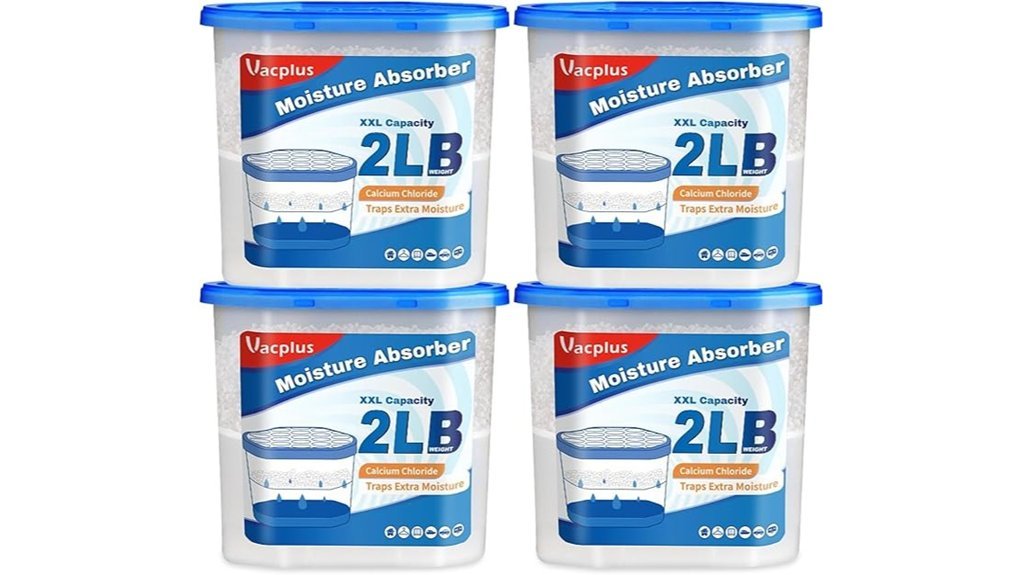
For a parked horse trailer without shore power, the Vacplus four-pack provides several moisture-control points without requiring cords, fans, or a drainage setup. Each two-pound bucket has a listed 2,200 mL collection capacity, allowing you to place units in separate areas rather than relying on one container to serve the entire trailer.
This arrangement is especially useful when the horse compartment, dressing area, tack space, or front storage section develops different humidity levels. The clear lower chamber helps you see when liquid is accumulating and when the bucket needs attention.
Why you’ll like it: Four separate buckets make it easier to address uneven moisture pockets and keep replacement units available.
Who should buy this: Owners storing a larger trailer in a humid location who want passive, fragrance-free moisture control.
Who should avoid this: Anyone who cannot provide several level, protected placement areas or who needs rapid drying after a leak or washdown.
Pros:
- High listed capacity with four separate placement points.
- No electricity, drain hose, controls, or setup tools required.
- Clear collection chamber simplifies routine checks.
- Useful for trailers with separate tack and horse compartments.
Cons:
- Passive absorption is slower than active mechanical drying.
- Collected calcium-chloride liquid can damage nearby materials if spilled.
- Four buckets require more protected floor or shelf space.
- Every bucket must be removed before towing or loading an animal.
CLEVAST Moisture Absorbers Packets (10 Pack)

The CLEVAST hanging packets are practical when buckets would take up too much floor or shelf space. The listing includes ten calcium-chloride bags with a stated 500 mL liquid-collection section per bag. Their hanging format can work in a closed dressing area, cabinet, tack compartment, or other protected storage zone.
The bags are sold for indoor and residential moisture control rather than specifically for horse trailers. Their trailer suitability therefore depends on using them only during stationary storage and hanging them where they cannot touch tack, sharp edges, wiring, metal, feed, animals, or shifting cargo.
Why you’ll like it: The hanging design preserves floor space and makes it easy to distribute several absorbers among small compartments.
Who should buy this: Owners who want quiet, cordless humidity control in cabinets, tack areas, or other enclosed storage sections.
Who should avoid this: Anyone who cannot hang the bags securely or inspect them regularly for tears, swelling, and collected liquid.
Pros:
- Compact design keeps the trailer floor clear.
- Ten bags provide several placement and replacement options.
- Visible lower section shows when liquid has collected.
- No power, noise, tank emptying, or drain hose required.
Cons:
- Less collection capacity per unit than a large bucket.
- A punctured or torn bag can release calcium-chloride liquid.
- Service life varies greatly with temperature and humidity.
- Every bag must be removed before towing or loading animals.
DampRid Hi-Capacity Moisture Absorber Bucket (2-Pack)
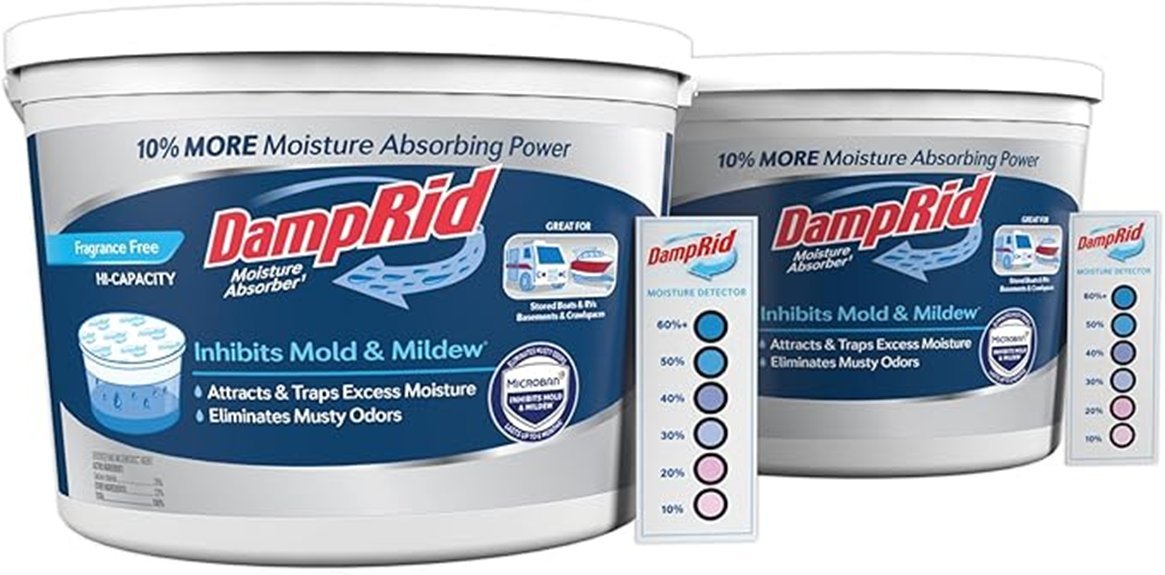
This DampRid listing includes two fragrance-free 2 lb 15.5 oz absorber buckets with moisture-detection strips. The two-bucket format suits a horse trailer that remains closed for seasonal or between-trip storage because you can place one unit near the front and another toward the rear.
The product collects moisture without electricity, but its replacement interval cannot be predicted from a maximum advertised lifespan alone. Humidity, temperature, ventilation, trailer leakage, and unresolved water intrusion all affect how quickly the absorbing material is consumed.
Why you’ll like it: The two-bucket configuration is simple to monitor and does not require electrical setup or a drain route.
Who should buy this: Owners who want an established passive moisture-control format with two placement points and clear replacement indicators.
Who should avoid this: Owners who need fast drying after washing, have an active leak, or cannot isolate the buckets from animals and stored equipment.
Pros:
- Two buckets support front-and-rear placement.
- No power supply, fan noise, controls, or hose is needed.
- Moisture-detection strips and visible liquid simplify checks.
- Fragrance-free configuration avoids adding a strong scent.
Cons:
- Not appropriate for use in a moving or occupied trailer.
- Collection rate and service life vary with conditions.
- Collected liquid requires careful handling and disposal.
- Two buckets may not provide enough distribution for a trailer with several isolated compartments.
Camco Moisture Absorber Bucket for RV Storage
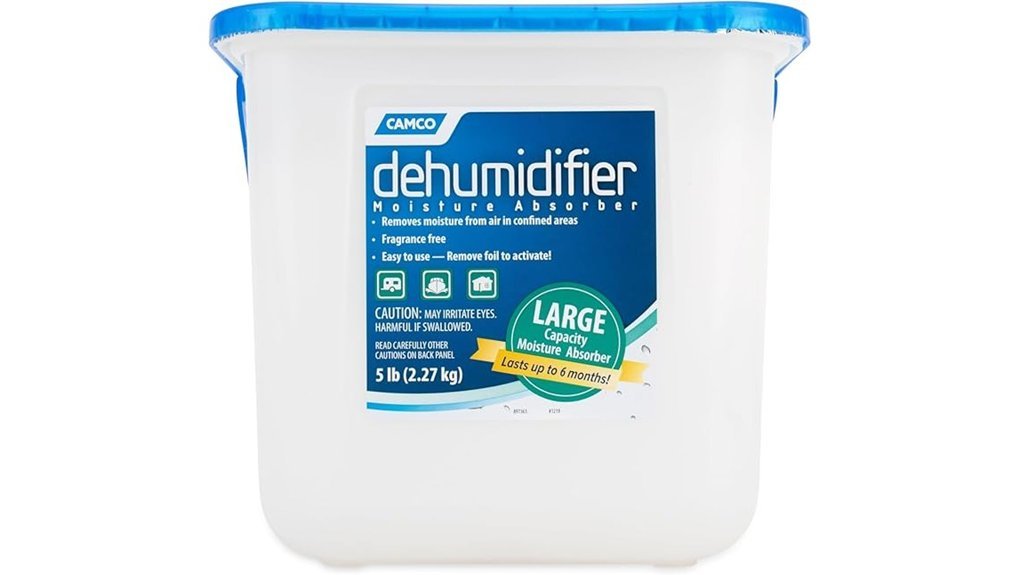
Camco’s five-pound moisture absorber is intended for RV and camper storage, making it a logical crossover option for a parked horse trailer. Its large single-container format is useful when you have one level, protected storage location and prefer not to distribute several smaller absorbers throughout the trailer.
A single large bucket is easier to track than several small units, but it provides only one moisture-control point. Measure the intended placement area and confirm that the container can remain upright, separated from tack, wiring, feed, animals, and frequently accessed walkways.
Why you’ll like it: One large bucket provides a straightforward storage setup with no electricity, controls, filter, or drain hose.
Who should buy this: Owners who want a higher-volume passive absorber in one stable and protected location.
Who should avoid this: Owners with limited floor space or trailers where humidity is divided among several closed compartments.
Pros:
- Large five-pound bucket for longer storage intervals.
- Designed for RV-style enclosed storage environments.
- No electricity, mechanical maintenance, or tank emptying.
- One unit is easy to include on a pre-trip removal checklist.
Cons:
- Larger footprint than hanging packets or smaller tubs.
- Only one placement point for the entire trailer.
- Cannot respond quickly to severe water intrusion or soaked materials.
- Must remain upright and be removed before travel.
Vacplus 2LB Moisture Absorber Bucket (2 Packs)
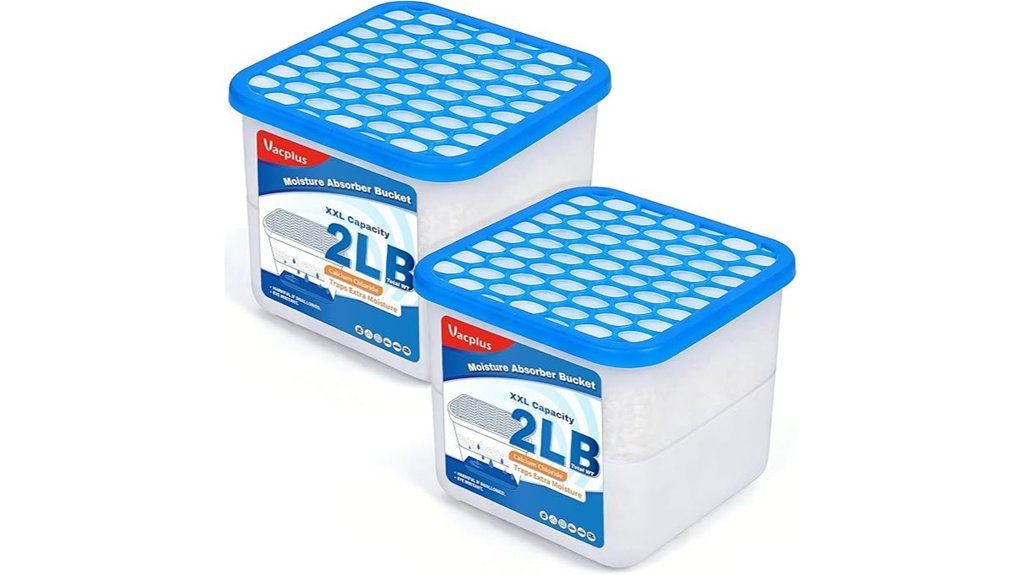
This Vacplus two-pack is listed with a 2,000 mL liquid-holding capacity per bucket. It also uses a broad exposed absorption area intended to bring more humid air into contact with the calcium-chloride material.
The two-bucket configuration is a practical middle ground between one large container and a four-pack. You can position one bucket near the front and one near the rear while avoiding the extra storage space required by four separate units.
Why you’ll like it: Two high-capacity buckets provide useful front-and-rear coverage without requiring several smaller containers.
Who should buy this: Owners who want two larger passive absorbers for separate zones in a parked trailer.
Who should avoid this: Anyone who needs a hanging solution, has no protected floor space, or needs active drying after washing.
Pros:
- Large listed capacity may reduce replacement frequency.
- Two units make front-and-rear placement straightforward.
- Broad base and top surface simplify stationary positioning.
- No electrical supply or drainage installation needed.
Cons:
- Requires regular visual checks as liquid accumulates.
- Passive operation may be too slow for serious dampness.
- Two large containers require protected placement space.
- Both buckets must be removed before the trailer moves.
KeepGlad 98OZ Dehumidifier for Home
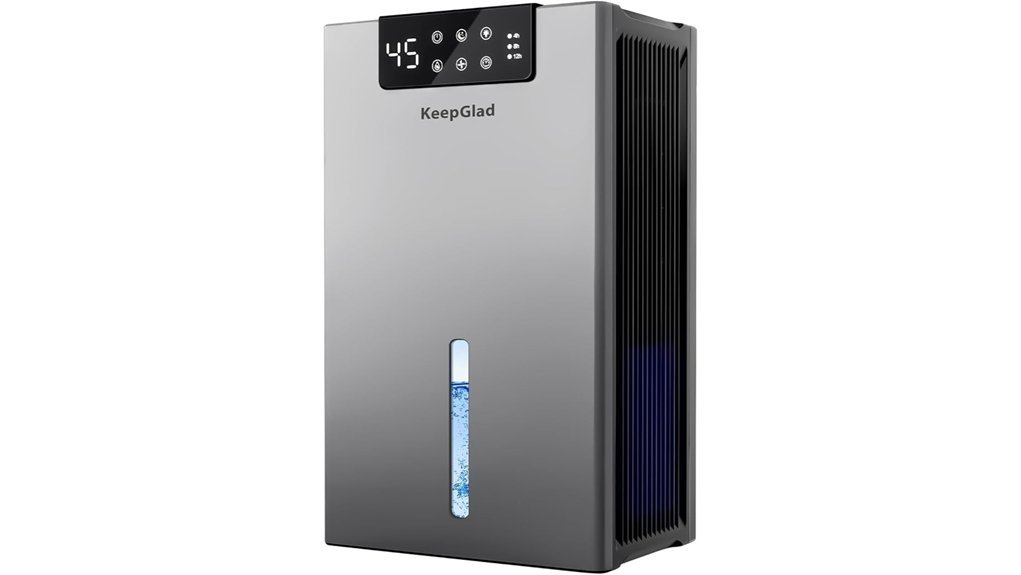
The KeepGlad 98OZ is the only powered product retained in this guide. Its listing includes a 98 oz tank, digital humidity display, timer, three speeds, washable filter, automatic shutoff, and continuous-drain option. These controls make it more useful than passive absorbers when you want to monitor conditions and collect water actively while the trailer is parked.
The seller advertises moisture collection of up to 40 oz and coverage up to 1,000 square feet. Treat these as maximum marketing figures rather than guaranteed horse-trailer performance. Actual collection depends on temperature, starting humidity, airflow, trailer leakage, and how much wet material remains inside.
This unit requires a stable, level surface, open airflow around its inlet and outlet, a dry power connection that follows the manual, and a safe route for the drain hose if continuous drainage is used. It should never operate while the trailer is moving or occupied by an animal.
Why you’ll like it: The display, timer, larger tank, three speeds, and drain option provide more control than a passive bucket.
Who should buy this: Owners with reliable shore power who want active humidity monitoring and water collection during stationary storage.
Who should avoid this: Owners without safe power, adequate clearance, warmer operating conditions, or a level and protected placement area.
Pros:
- Humidity display helps track changing trailer conditions.
- Three speeds and a timer provide more operating control.
- Automatic shutoff reduces the risk of tank overflow.
- Continuous drainage can reduce manual emptying when properly installed.
Cons:
- Maximum collection and coverage claims are not guaranteed in a trailer.
- Semiconductor performance generally falls in cooler conditions.
- Requires electrical power, airflow clearance, and more setup than passive absorbers.
- Must be unplugged and removed before towing or loading an animal.
Factors to Consider When Choosing a Dehumidifier for a Horse Trailer
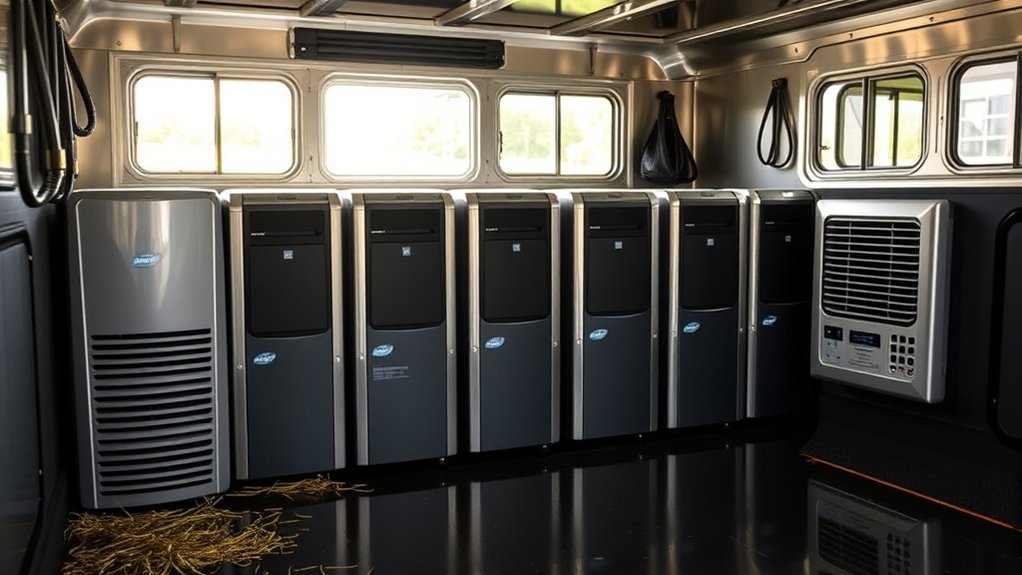
The right horse-trailer moisture-control product depends more on storage conditions than advertised floor coverage. Start by identifying the moisture source, whether electricity is available, how the trailer is divided, and where the product can remain protected and upright.
Storage Use Versus Travel Use
Use these products only while the trailer is parked, level, and unloaded. Before towing, remove every bucket, hanging bag, electric appliance, power cord, and drain hose. An item that is stable during storage can tip, swing, spill, disconnect, or become a projectile when the trailer moves.
Fix Water Entry First
A moisture absorber or small dehumidifier cannot compensate for a leaking roof seam, damaged door seal, wet bedding, clogged drain, soaked mat, or damp flooring. Locate and repair the source, remove wet materials, and dry the trailer promptly. Use absorbers afterward to manage leftover humidity and condensation.
Passive Versus Powered Dehumidification
Passive calcium-chloride absorbers require no electricity and are easy to distribute around a closed trailer. They work gradually and produce concentrated liquid that must be handled carefully.
Powered semiconductor dehumidifiers use a fan and condensation surface to collect water more actively. They may include a tank, display, timer, speeds, or drain hose, but they need electrical power, clearance, level placement, and suitable temperatures.
Maintenance Control Versus Active Drying
Passive products are best for maintenance humidity in a trailer that is already clean and dry. A powered unit can provide more active collection, but a compact semiconductor model is still not a substitute for repairing leaks, removing standing water, lifting wet mats, or using appropriately sized drying equipment after significant water intrusion.
Capacity and Placement
For passive products, compare the stated collection capacity, pack count, footprint, hanging method, and visibility of the fill level. Several smaller absorbers may work better than one large bucket when moisture is divided among the horse area, dressing space, cabinets, and tack compartment.
Place every product where air can circulate but where horses, pets, children, tack, feed, wiring, metal, doors, and shifting cargo cannot contact it.
Temperature and Humidity
Small semiconductor dehumidifiers generally collect more water in warm, humid air and substantially less in cool conditions. A separate hygrometer is useful even when the appliance has a display because it lets you check conditions in another section of the trailer.
As a practical moisture-control benchmark, try to keep relative humidity below 60% when possible. A range near 30% to 50% is commonly recommended for indoor mold control, but conditions can vary inside a metal trailer. Monitor condensation, odor, flooring, walls, and stored tack rather than relying on one number alone.
Ventilation and Air Leakage
A trailer that is completely sealed may hold moisture from wet materials, while a trailer with uncontrolled outdoor-air leakage may continually bring in humid air. Follow the trailer manufacturer’s ventilation guidance and avoid blocking permanent vents. Use ventilation strategically when the outdoor air is drier than the air inside.
Power and Electrical Safety
Use a powered dehumidifier only with the voltage, cord, clearance, and connection specified by its manufacturer. Keep the appliance, plug, cord, and outlet dry. Do not use damaged cords, overloaded adapters, improvised wiring, or unstable generator connections. Consult a qualified electrician when the trailer does not have an appropriate power setup.
Continuous Drainage
A drain hose must remain securely connected and slope downward to a suitable discharge point. Check for kinks, blocked outlets, leaks, freezing conditions, and water that could pool near the trailer. Test the system before leaving it to operate.
Maintenance and Replacement
Check passive absorbers weekly at first so you can learn how quickly they fill in your climate. Replace them when the collection chamber reaches its marked limit or the absorbing material is spent. Dispose of collected liquid according to the product label.
For an electric unit, unplug it before maintenance. Empty and wash the tank, dry it fully, clean the filter or air inlet as directed, inspect the cord and hose, and keep the air inlet and outlet unobstructed.
- Confirm whether safe shore power is available.
- Repair leaks and remove wet bedding, mats, and stored materials first.
- Measure the intended placement area and airflow clearance.
- Choose between passive storage control and more active powered collection.
- Plan how collected water or calcium-chloride liquid will be handled.
- Use a hygrometer to evaluate results instead of guessing.
- Create a pre-trip checklist that includes removing every moisture-control product.
- No shore power: Choose passive buckets or hanging bags.
- Little floor space: Choose securely hung CLEVAST packets.
- Several moisture pockets: Choose the Vacplus four-pack.
- One protected storage spot: Consider the Camco five-pound bucket.
- Safe shore power and active monitoring: Consider the KeepGlad 98OZ.
- Active leak or wet flooring: Repair and dry the trailer before relying on any product in this guide.
Frequently Asked Questions
Can I Use a Dehumidifier While Horses Are in the Trailer?
These household moisture-control products should be used only while the horse trailer is parked and unloaded. Remove passive buckets, hanging bags, electric units, cords, and hoses before loading an animal or towing the trailer.
Which Is Better for a Horse Trailer: Passive or Electric?
Choose passive absorbers for simple storage humidity control when electricity is unavailable. Choose a powered unit when the trailer is parked near safe shore power and you want more active collection, a tank, a timer, or a humidity display. Neither option will solve an active leak.
How Many Moisture Absorbers Do I Need?
Start with one or two placement points in a small trailer and monitor the result with a hygrometer. A larger trailer or one with separate tack, dressing, and horse compartments may need several units. Add capacity only after checking for leaks, wet materials, and ventilation problems.
Where Should I Place Moisture Absorbers?
Place them on level, protected surfaces or secure hanging points where air can circulate. Keep them away from doors, walkways, tack, feed, wiring, metal, flooring seams, sharp edges, animals, children, and anything that could knock them over or puncture them.
How Often Should I Replace Dehumidifier Packets or Buckets?
Replace them when liquid reaches the marked fill line, the crystals have dissolved, the bag is damaged, or the manufacturer’s stated service period ends. Warm and humid conditions may fill an absorber much sooner than its maximum advertised lifespan.
Can I Use a Dehumidifier in Winter Conditions?
Passive absorbers may continue working slowly in cool conditions. Small semiconductor dehumidifiers usually collect much less water as temperatures fall. Check the product’s operating-temperature guidance and use a hygrometer to confirm whether humidity is actually decreasing.
What Humidity Level Should I Aim For?
Try to keep the parked trailer below 60% relative humidity when practical. Roughly 30% to 50% is a common indoor benchmark, but a horse trailer’s metal surfaces and stored materials may behave differently. Monitor condensation, odor, tack, walls, and flooring instead of relying on one target alone.
Are Square-Foot Coverage Claims Important?
Not by themselves. Square-foot claims do not show how much water a unit can collect in your trailer’s temperature and humidity. Compare the collection method, tank or absorber capacity, power requirements, temperature range, airflow needs, drainage, and trailer leakage.
Can Calcium-Chloride Liquid Damage a Horse Trailer?
It can damage or stain some materials if a container leaks or spills. Keep passive absorbers away from metal, wiring, leather tack, flooring, feed, and other valuables. Follow the product label for handling, cleanup, and disposal.
How Do I Clean and Maintain an Electric Dehumidifier?
Unplug it first. Empty and wash the tank with mild soap, dry it fully, wipe the exterior, and clean the filter or air inlet according to the manual. Inspect the cord and drain hose before the next use.
Will a Dehumidifier Stop Mold in a Leaking Trailer?
No. Repair the leak, remove wet bedding or mats, dry the floor and walls, and address existing mold safely. A dehumidifier can help manage remaining airborne moisture, but it cannot replace repairs, cleaning, and proper drying.
Conclusion
For a parked horse trailer without power, the Vacplus four-pack is the most flexible option because it combines high listed capacity with four separate moisture-control points. The CLEVAST hanging packets are better when floor space is limited, while the DampRid two-pack, Camco five-pound bucket, and Vacplus two-pack offer useful alternatives with different container sizes and pack counts.
When safe shore power is available, the KeepGlad 98OZ offers the strongest control set in this guide, including a humidity display, timer, three speeds, automatic shutoff, and optional continuous drainage. Its advertised collection and coverage figures should still be treated as maximum claims rather than guaranteed trailer performance.