Choosing the right ceiling light for your living room comes down to three measurements: the room size, the ceiling height, and the amount of light you need. A fixture that looks perfect online can feel too small, too low, or too bright once it is hanging over your seating area. Use the simple sizing formula below as your starting point, then adjust for style, clearance, and how you actually use the room.
Quick Answer
For most living rooms, add the room’s length and width in feet, then use that total in inches as the approximate ceiling light diameter. A 15-by-20-foot room, for example, works well with a fixture around 35 inches wide. Keep the bottom of any hanging fixture at least 7 feet above the floor.
Key Takeaways
- Use the room-size formula as a starting point: length + width in feet = fixture diameter in inches.
- For 8-foot ceilings or lower, choose a flush mount or low semi-flush mount to preserve headroom.
- For open walking areas, keep at least 7 feet between the floor and the bottom of the fixture.
- Aim for about 10–20 lumens per square foot for general living-room lighting, then add lamps or sconces for reading and task light.
- Use warm white bulbs around 2700K–3000K for a cozy living room, and choose dimmable fixtures when possible.
At a Glance
| Time Required | 10–20 minutes to measure and choose a size; longer if comparing styles or installation needs. |
| Difficulty | Easy for sizing; professional help may be needed for wiring or heavy fixtures. |
| Tools Needed | Tape measure, calculator, ceiling-height measurement, and painter’s tape or cardboard for visualizing scale. |
| Cost | Usually $50–$1,000+ for the fixture, depending on size and style; electrician costs vary by location and installation complexity. |
Understanding Ceiling Lights: Why Size Matters
Size matters because a living room ceiling light has to do more than look pretty. It needs to fit the room’s proportions, provide comfortable brightness, and hang high enough that people can walk underneath it safely. A fixture that is too small can disappear into the ceiling. A fixture that is too large can dominate the room or make a low ceiling feel even lower.
The best approach is to treat fixture size as a starting point, not a final rule. First, calculate the ideal diameter. Then check ceiling height, fixture drop, furniture layout, and brightness. This gives you a ceiling light that feels balanced instead of random.
How to Calculate Ideal Fixture Diameter for Your Living Room
The most common rule of thumb is simple: add the room’s length and width in feet, then use that number in inches for the fixture diameter. This is a widely used chandelier and ceiling-light sizing method recommended by design sources such as Architectural Digest.
Here is the formula:
Room length in feet + room width in feet = approximate fixture diameter in inches
For example, a 15-by-20-foot living room gives you 35. That means a ceiling light around 35 inches wide is a strong starting point. If your room has a low ceiling, choose a shallower fixture in that width range. If your room has a tall ceiling, you may be able to use a taller chandelier or pendant.
| Living Room Size | Formula | Suggested Fixture Diameter |
|---|---|---|
| 10 x 12 feet | 10 + 12 = 22 | About 22 inches |
| 12 x 14 feet | 12 + 14 = 26 | About 26 inches |
| 15 x 20 feet | 15 + 20 = 35 | About 35 inches |
| 18 x 24 feet | 18 + 24 = 42 | About 42 inches, or multiple smaller fixtures |
Pro Tip: If the calculated size feels large, cut a cardboard circle or tape the diameter on the floor below the planned location. This helps you judge scale before buying.
Why Mounting Height Matters for Ceiling Fixtures
Mounting height affects safety, comfort, and how the light spreads through the room. A fixture can be the perfect diameter and still feel wrong if it hangs too low or sits too close to the ceiling. In open walking areas, keep the bottom of a hanging fixture at least 7 feet above the floor, a common clearance guideline for pendants and chandeliers noted by Better Homes & Gardens.
Optimal Height for Safety
For living rooms with standard 8-foot ceilings, flush mount and low semi-flush mount fixtures are usually the safest choices. They provide overhead lighting without interfering with walking paths, sightlines, or tall family members and guests.
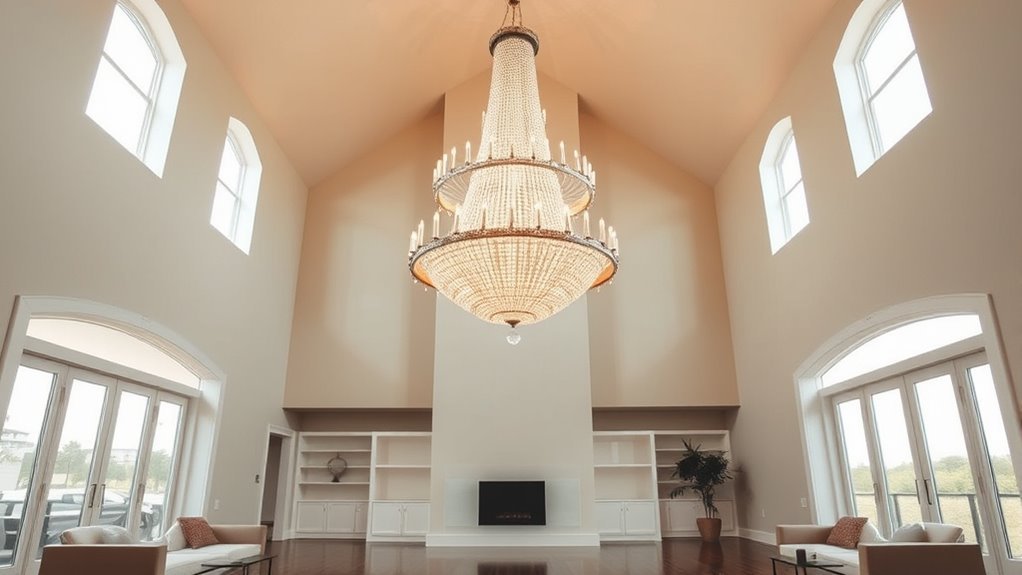
If your ceiling is 9 feet or higher, you can consider a chandelier, pendant, or taller semi-flush mount. Still, the fixture should not hang so low that it blocks views across the room or creates a head-bump hazard.
| Ceiling Height | Best Fixture Type | Clearance Goal |
|---|---|---|
| 8 feet or lower | Flush mount or low semi-flush mount | Keep the fixture tight to the ceiling and avoid long drops. |
| 9 feet | Semi-flush, short pendant, or compact chandelier | Maintain at least 7 feet below the fixture. |
| 10 feet or higher | Larger chandelier, pendant, or statement fixture | Use the extra height for scale while preserving comfortable clearance. |
Enhancing Visual Aesthetics
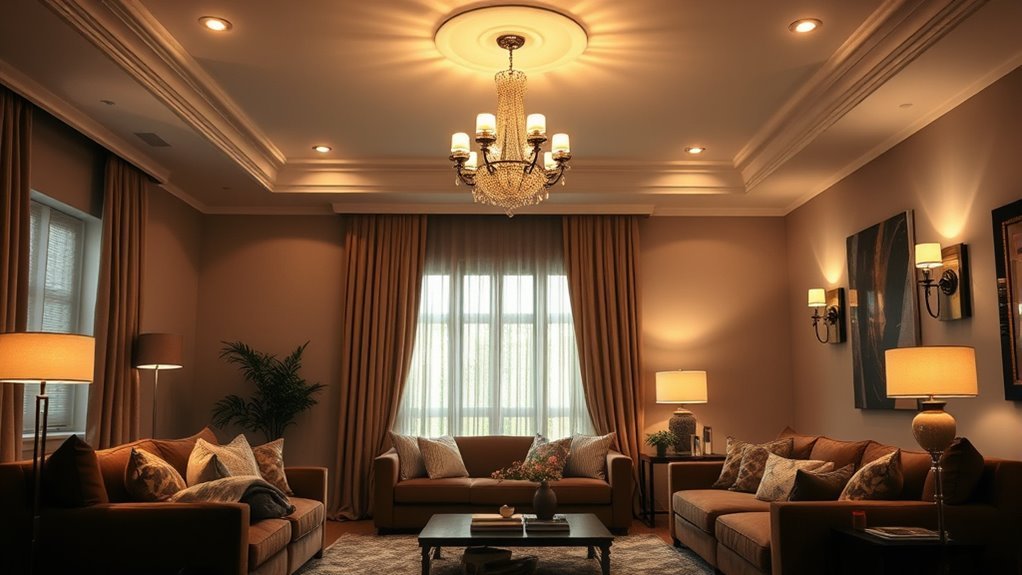
Height changes the mood of the whole room. A flush mount keeps a low ceiling feeling open. A chandelier in a tall living room adds presence and creates a focal point. A semi-flush mount sits between the two, giving you more visual interest than a basic dome light without the drop of a full chandelier.
The goal is visual balance. If the ceiling light is the only dramatic piece in the room, a sculptural fixture can work beautifully. If the living room already has bold artwork, patterned rugs, or large furniture, a simpler ceiling light may feel more polished.
Light Distribution Efficiency
Mounting height also affects light distribution. A fixture mounted too high may make the ceiling glow while leaving the seating area dim. A fixture mounted too low may create glare, harsh shadows, or an uncomfortable bright spot. This is why living rooms usually work best with layered lighting: one ceiling fixture for ambient light, plus lamps, sconces, or recessed lights for tasks and accent lighting.
What Style of Ceiling Light Fits Your Living Room Best?
The best ceiling light style depends on ceiling height, room shape, and decor. Size gives you the technical starting point, but style decides whether the fixture feels at home in the room.
- Flush mount: Best for low ceilings, small living rooms, apartments, hallways that open into living areas, and rooms where you want a clean look.
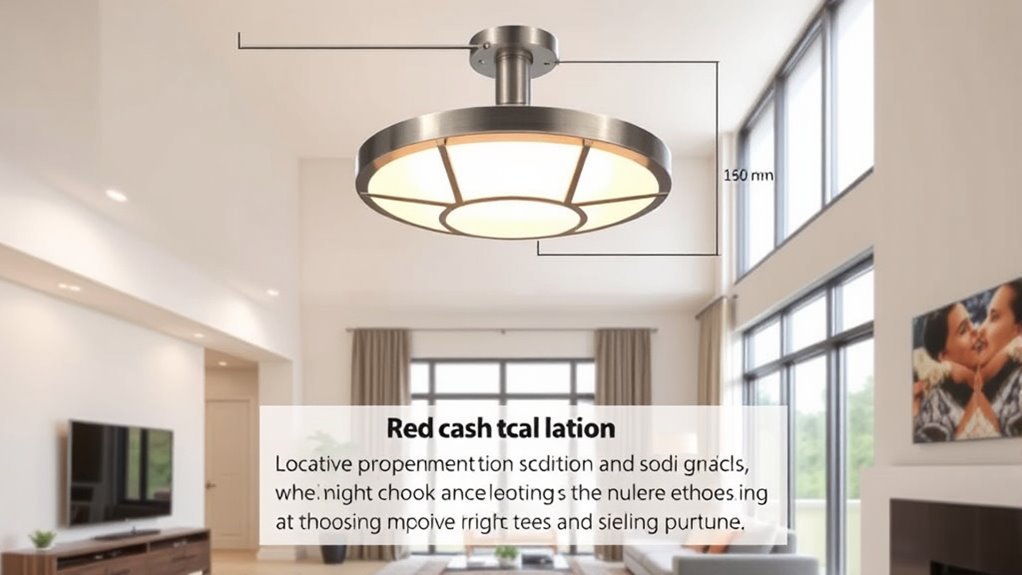
- Semi-flush mount: Best for 8- to 9-foot ceilings when you want more style than a flush mount without a long drop.
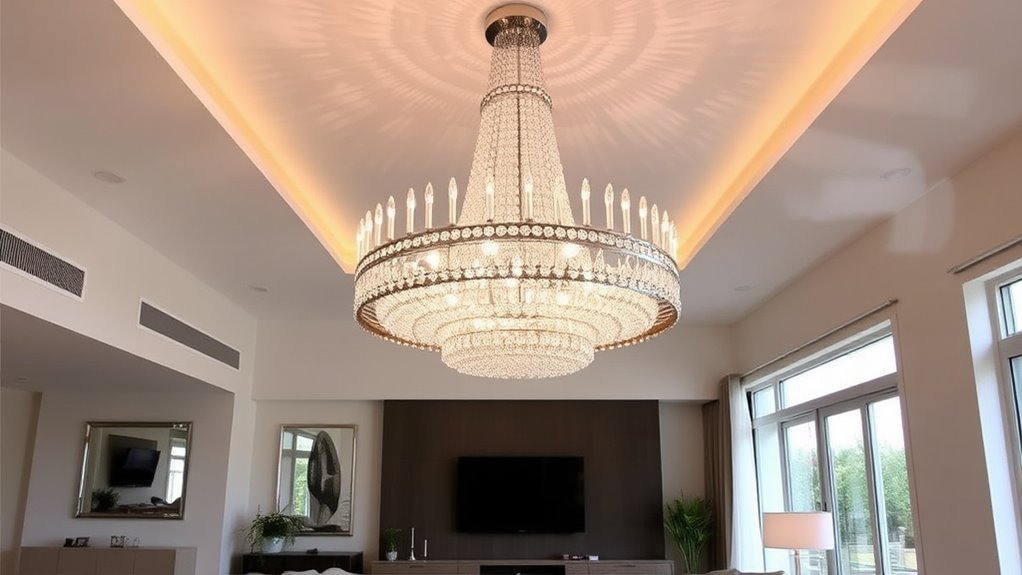
- Chandelier: Best for higher ceilings, formal living rooms, large seating areas, or rooms that need a strong focal point.
- Pendant light: Best for a defined seating zone, reading corner, or open-concept living area where the fixture helps mark a specific space.
- Linear fixture: Best for long, narrow living rooms or rectangular seating layouts.
- Recessed lighting: Best as support lighting, especially when paired with a decorative central fixture.
Recommended Products

💡Modern Minimalist Semi Flush Mount Design: This semi flush mount ceiling light features a matte black frame paired with a white drum-shaped shade, seamlessly blending modern and industrial aesthetics. It complements various decor themes, from coastal entryways and minimalist kitchens to cozy bedrooms and chic living rooms, adding a touch of elegance to any space

Warmth in Simplicity:This linen ceiling light embodies a minimalist and cozy design style, with its finely textured linen fabric adding a touch of natural charm, making it suitable for various interior spaces. The soft lines and simple silhouette of the shade allow the light to diffuse evenly, creating a warm, inviting glow that enhances a relaxing atmosphere.Whether paired with modern or classic interior décor, this light fixture ceiling mount seamlessly integrates, becoming a subtle yet noticeable accent in any space.

Newly Upgraded Large Size: 11.03" L x 11.03" W x 8.04" H. This ceiling light is of larger size, it can be used as a decoration light for wider areas, such as kitchen, bedroom, dining room, powder room, bathroom etc
Balancing Aesthetics and Functionality in Lighting
A ceiling light should support the way you live in the room. A beautiful chandelier that produces glare over the sofa is not a good fit. A practical flush mount that leaves the corners dark is not enough on its own. Choose a fixture that looks right and works with the room’s daily activities.
| Fixture Type | Ideal Ceiling Height | Best Use |
|---|---|---|
| Flush mount | 8 feet or lower | Keeps the room open and avoids headroom issues. |
| Semi-flush mount | 8–9 feet | Adds style without a dramatic drop. |
| Chandelier | 9 feet or higher | Creates a focal point in larger or taller rooms. |
| Dimmable fixture | Any | Lets the room shift from bright daytime use to soft evening light. |
Choosing the Right Ceiling Light Output and Brightness
Brightness should be measured in lumens, not watts. The U.S. Department of Energy explains that lumens measure how much light you get from a bulb, while watts measure energy use. The Lighting Facts label can also help you compare brightness, lifespan, energy cost, and light appearance.
For living rooms, a practical starting range is about 10–20 lumens per square foot for general ambient lighting. For a 200-square-foot living room, that means roughly 2,000–4,000 total lumens across your ceiling light and other light sources. If the room is used for reading, crafts, games, or detailed tasks, add table lamps, floor lamps, or sconces instead of forcing one ceiling light to do everything.
Note: A single fixture’s listed lumens are not the same as how bright the room will feel. Shade material, bulb direction, wall color, ceiling height, and dimmer settings all affect the final result.
Color temperature matters too. For most living rooms, choose warm white light around 2700K–3000K. This range feels cozy and flattering in seating areas. Cooler light can work for task zones, but it may feel harsh as the main evening light.
When possible, choose LED bulbs or integrated LED fixtures. The U.S. Department of Energy notes that residential ENERGY STAR-rated LEDs use at least 75% less energy and last up to 25 times longer than incandescent lighting, making them a practical choice for frequently used living rooms. You can read more in the DOE guide to LED lighting.
Recommended Products

5 CCT-in-1: 5 color temperature(2700K, 3000K, 3500K, 4000K, 5000K) is selectable to you, which successfully eliminates the hassle of returning or exchange products due to inappropriate color temperature. Just slide the switch on the side of the J-box and you will get the most-desired color that best fit in your room type.
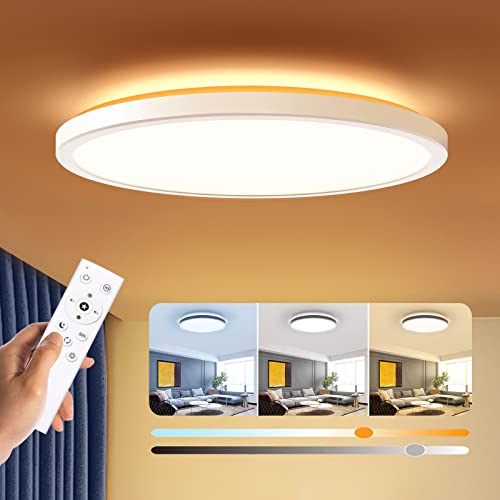
【3 CCT Change & Equipped Remote】BLNAN ceiling lights with remote control change the color temp. anytime and anywhere during use without repeatedly removing and installing. Using other hardwired flush ceiling lights on the market, you may need to pre-set the color before installation. 3-light-color option (3000K to 6500K) meets people's lighting needs. One same led flush mount ceiling light emits different light in different rooms, like bright cool light in the study or warm light in the bedroom.

5-in-1 CCT: Eliminate the Guesswork. Because this recessed ceiling light features a 5-color switch on the J-box, you can physically toggle between 2700K Warm White and 5000K Daylight before installation. This means no more return hassles for buying the wrong color, ensuring the perfect ambiance for any room from a cozy bedroom to a bright, functional kitchen. Versatility is proven by the built-in dip switch supporting 2700K, 3000K, 3500K, 4000K, and 5000K.
Special Considerations for Unique Living Room Designs
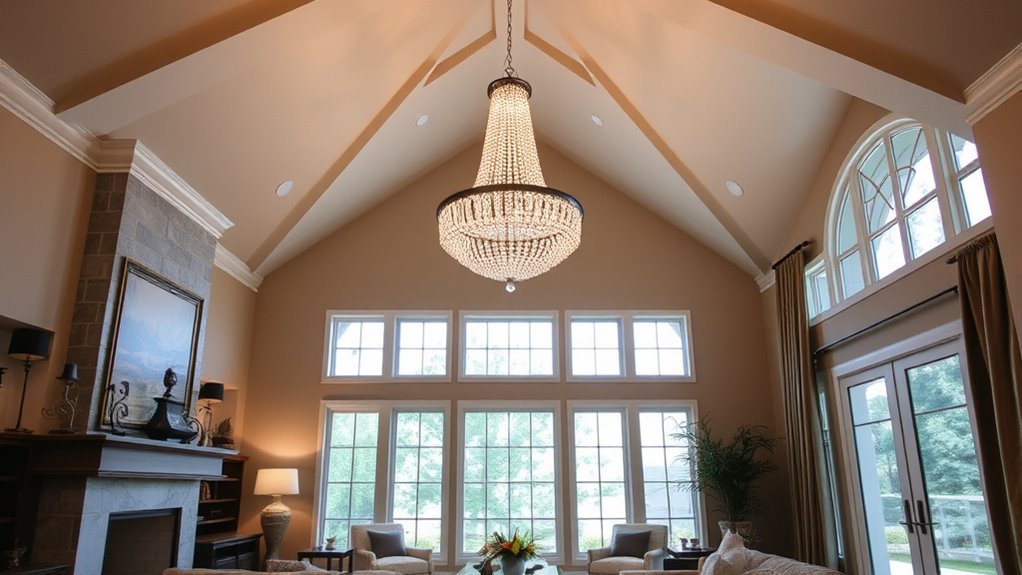
Not every living room is a simple rectangle with a centered ceiling box. Use the formula as your base, then adjust for the room’s architecture.
- Open-concept rooms: Size the fixture for the living zone, not the entire open floor plan. A chandelier over the seating area can define the space, while recessed lights or lamps support the rest of the room.
- Sloped ceilings: Look for fixtures rated for sloped ceilings, adjustable stems, or chain-hung designs that can hang straight.
- Low ceilings: Choose flush mounts, low-profile semi-flush mounts, or recessed lights. Avoid tall chandeliers unless they hang over a coffee table where people will not walk underneath.
- Long narrow rooms: Consider a linear fixture or two smaller fixtures instead of one oversized round fixture.
- Rooms with beams or ceiling details: Center the fixture within the visual zone, not necessarily the exact mathematical center of the room.
- Ceiling fans: If you need airflow, choose a ceiling fan with an integrated light sized for the room, or use recessed lights and lamps instead of crowding the ceiling.
Recommended Products

⭐【 Adjustable Height 】 The black semi flush mount ceiling light all metal round island light equipped with 2 different size metal rods: 11.81"/ 7.87" poles, it can be a semi flush chandelier or drum pendent light, you could adjust the hanging rods for your desired needs of heights. For more details, please refer to the picture. The kitchen island light is 12.59'' wide, a perfect size to a 2 to 4 person table.

Semi flush design & vintage style: The semi-flush mount light fixture features a unique green glass shade and a gold metal base, blending vintage and modern elements.

【Farmhouse Wagon Wheel Ceiling Fan with Light】This bladeless fandelier ceiling fan blends farmhouse rustic & vintage industrial aesthetics, doubling as both lighting fixture and ceiling fan. Equipped with quiet reversible DC motor, 6 wind speeds and timing function, this flush mount ceiling fan delivers practical airflow while seamlessly matching your home interior decor.
Common Mistakes to Avoid When Sizing Ceiling Lights
The most common sizing mistakes happen when shoppers focus only on style. A ceiling light also needs the right diameter, drop, brightness, and placement.
Ignoring Room Dimensions
Choosing a fixture by eye alone can lead to a light that looks tiny once it is installed. Measure the room first. Use the length-plus-width formula, then adjust based on ceiling height and furniture placement.
Overlooking Ceiling Height
A dramatic chandelier may look beautiful in photos, but it can feel intrusive under an 8-foot ceiling. For lower ceilings, keep the fixture close to the ceiling. For higher ceilings, use the extra vertical space to choose a fixture with more presence.
Disregarding Fixture Style
The fixture should work with the room’s existing design. A crystal chandelier can look elegant in a traditional room, while a simple drum semi-flush may suit a modern or transitional space. Match the finish to at least one other element in the room, such as curtain rods, cabinet hardware, door handles, or table lamps.
Relying on One Light Source
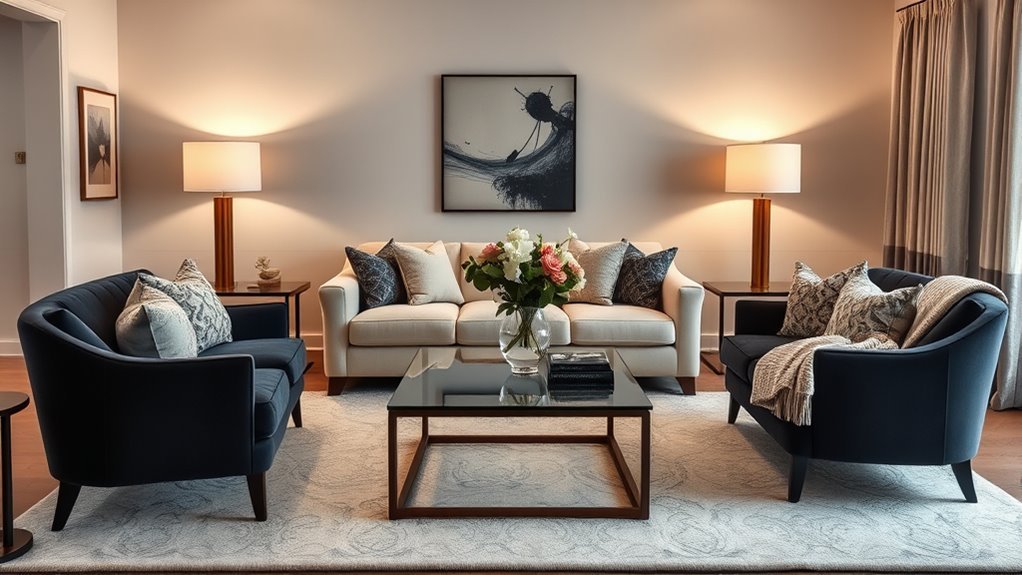
A single ceiling light rarely creates the best living-room atmosphere. Use the ceiling light for general illumination, then add lamps for reading, sconces for soft side lighting, and accent lights for art, shelves, or architectural details.
Warning: If the new fixture is heavy, the ceiling box may need to be rated for the load. Turn power off at the breaker before electrical work, and hire a licensed electrician if you are unsure about wiring, support, or local code requirements.
How to Create Mood With Living Room Lighting
Mood comes from control. A dimmable ceiling light lets the room shift from bright and functional during the day to soft and relaxed at night. Warm white bulbs around 2700K–3000K help create a comfortable evening glow, while lamps placed near seating areas make the room feel layered and inviting.
For the best result, combine three types of lighting:
- Ambient lighting: The ceiling light, recessed lights, or a large floor lamp that gives the room general brightness.
- Task lighting: Table lamps, reading lamps, or adjustable sconces near chairs and sofas.
- Accent lighting: Picture lights, shelf lighting, uplights, or small lamps that highlight decor and add depth.
This layered approach keeps the living room flexible. You can brighten the room for cleaning or games, dim it for movies, and use smaller lamps when you want a calmer atmosphere.
Frequently Asked Questions
What size light fixture should I use for a living room?
Add the room’s length and width in feet, then use that total in inches as your starting fixture diameter. For example, a 12-by-14-foot living room works well with a ceiling light around 26 inches wide. Adjust smaller for very low ceilings or larger for tall, open rooms.
How do I determine ceiling light fixture size?
Measure the room’s length, width, and ceiling height. Use length plus width to estimate diameter, then choose the fixture type based on ceiling height. Flush mounts work best for low ceilings, semi-flush mounts for standard ceilings, and chandeliers or pendants for taller rooms.
What size flush mount is best for a living room?
Use the same room-size formula for diameter, but choose a low-profile design. A 10-by-12-foot room may suit a flush mount around 22 inches wide, while a 12-by-14-foot room may suit one around 26 inches wide. Make sure the fixture provides enough lumens or pair it with lamps.
How do I know if a light fixture is too big for a room?
A fixture is probably too big if it blocks sightlines, hangs below safe clearance, visually overwhelms the seating area, or makes the ceiling feel lower. If you are unsure, tape the fixture diameter on the floor or make a cardboard mockup before buying.
How many lumens does a living room ceiling light need?
For general living-room lighting, plan for about 10–20 lumens per square foot across all light sources. A 200-square-foot living room usually needs about 2,000–4,000 total lumens, depending on wall color, natural light, fixture shade, and how bright you like the room.
Can I use a chandelier in a living room with an 8-foot ceiling?
Usually, a flush mount or low semi-flush mount is better for an 8-foot ceiling. A small chandelier may work only if it is installed over a coffee table or another area where people will not walk directly underneath it.
Conclusion
The right ceiling light can make your living room feel more balanced, comfortable, and finished. Start with the simple diameter formula, check the ceiling height, keep safe clearance, and choose brightness based on lumens rather than watts. Then layer the ceiling fixture with lamps, sconces, or accent lights so the room works for everyday living, reading, relaxing, and entertaining.
Sources
- Architectural Digest — chandelier and ceiling fixture sizing rule of thumb.
- Better Homes & Gardens — fixture sizing, hanging clearance, and installation considerations.
- Better Homes & Gardens — living-room lumen guidance and layered lighting by room.
- U.S. Department of Energy: Lumens and the Lighting Facts Label — lumens, brightness, and Kelvin/CCT label guidance.
- U.S. Department of Energy: LED Lighting — LED efficiency, lifespan, and energy-saving information.
- Electrical Safety Foundation International — home electrical safety and hazard-prevention context.