
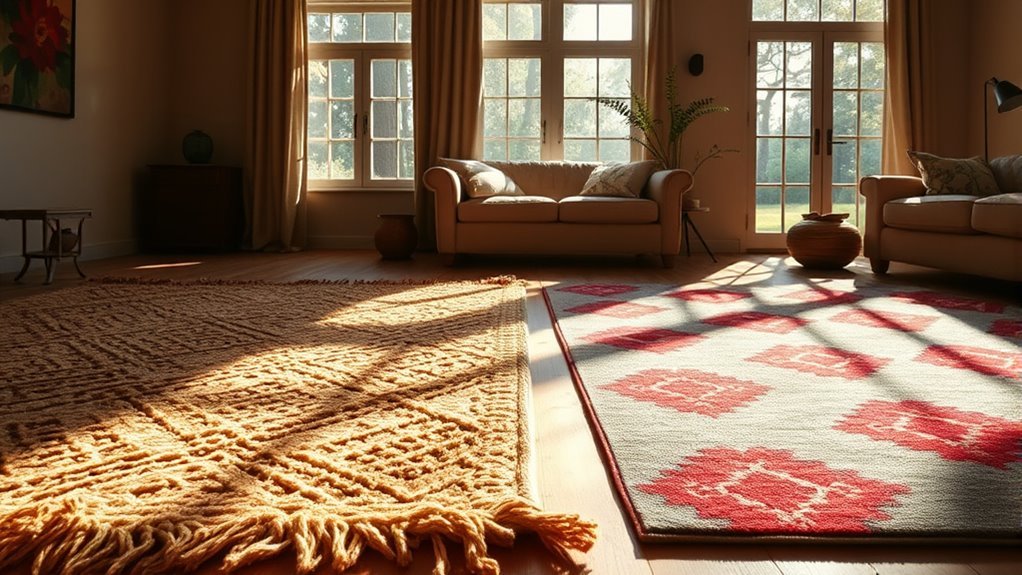
Choosing between wool and synthetic rugs for your living room comes down to how your space is used every day. When comparing wool vs. synthetic rugs, wool offers natural warmth, springy underfoot comfort, and a 20- to 50-year lifespan with proper care. Synthetic rugs—made from nylon, polypropylene, polyester, or triexta—cost less upfront, resist water-based stains, and offer machine-washable options built for pets, kids, and frequent spills.
Quick Answer
Choose a wool rug if you want a soft, flame-resistant, long-lasting centerpiece (20 to 50+ years) and do not mind 3 to 6 months of initial shedding and pH-gentle cleaning. Choose a synthetic rug if you want lower upfront cost, easy spot cleaning, or washable convenience for kids and pets.
Key Takeaways
- Wool rugs recover naturally from footsteps and furniture marks thanks to coiled keratin fibers, lasting 20 to 50+ years when properly maintained.
- Synthetic rugs typically last 3 to 20 years depending on the polymer: nylon leads for heavy traffic (15 to 20 years), polypropylene excels at moisture resistance on a budget, and polyester/rPET offers high softness for moderate traffic.
- Stain chemistry differs: Wool’s natural lanolin repels light surface droplets but absorbs lingering liquids, whereas polypropylene and polyester shed water-based spills yet attract oil and grease.
- Construction matters as much as fiber: A dense, low-pile (under 0.25 inch) flatweave or hand-knotted rug outlasts a high-pile tufted rug backed with latex glue.
Key Differences: Comfort, Durability, and Maintenance of Wool vs. Synthetic Rugs
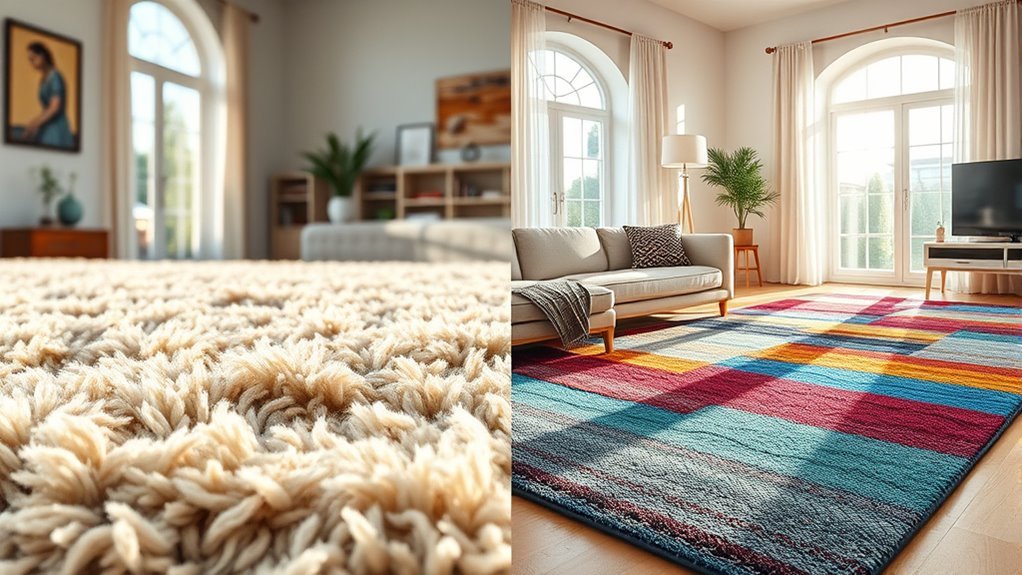
Wool and synthetic rugs solve different living room problems because their fibers behave differently under pressure, moisture, and light. Wool rugs are spun from natural sheep’s fleece, giving them microscopic crimp—a natural spring structure that bounces back after footsteps and absorbs room echo. Wool also contains trace amounts of lanolin, which beads up light water droplets briefly before they soak into the core.
Synthetic rugs are extruded from petroleum- or bio-based polymers such as nylon, polypropylene (olefin), polyester (PET), recycled PET (rPET), or triexta. Because synthetic filaments are non-porous plastics, they resist water-based staining and aggressive spot cleaners much better than wool, though cheaper synthetic piles flatten permanently along main walkways.
| Factor | Wool Rugs | Synthetic Rugs |
| Average Lifespan | 20 to 50+ years (hand-knotted or dense woven); 10 to 15 years (hand-tufted). | 15 to 20 years for nylon; 3 to 10 years for polypropylene and polyester. |
| Comfort & Texture | Warm, dense, matte, and naturally elastic underfoot. | Ranges from silky (polyester) to flat or slightly plastic-like (polypropylene). |
| Traffic & Crush Resistance | High; natural crimp helps fibers spring back from footsteps and chair legs. | High for nylon and triexta; low to moderate for polyester and polypropylene. |
| Stain & Moisture Behavior | Repels dry soil and brief droplets; vulnerable to hot liquids, pet urine, and alkaline stains. | Resists water-based stains and mildew; polyester and olefin can trap oily residue. |
| Cleaning & Shedding | Sheds for 3 to 6 months; requires suction-only vacuuming and pH-neutral cleaners. | Minimal shedding; easy spot cleaning, with select styles rated machine washable. |
| Fire & Heat Safety | Naturally flame-retardant and self-extinguishing; chars rather than melts. | Synthetic fibers can melt if exposed to fireplace embers, curling irons, or high heat. |
| Best For | Main living rooms, rooms with fireplaces, acoustic insulation, long-term design plans. | Homes with kids or pets, rentals, budget makeovers, sunny rooms, spill-heavy zones. |
Synthetic Rug Materials: Nylon, Polypropylene, Polyester, and rPET
Not all synthetic rugs perform the same way in a busy living room. Before comparing wool to a generic “synthetic” rug, check the exact fiber blend on the manufacturer’s specification tag. As Better Homes & Gardens’ carpet fiber overview explains, each man-made fiber balances resilience, softness, stain protection, and cost differently.
- Nylon (Polyamide): The strongest and most elastic synthetic fiber for high-traffic living rooms, typically lasting 15 to 20 years. Nylon bounces back from heavy sofa legs and foot traffic better than any other synthetic, though acid-dyed nylon needs a topical stain treatment unless you buy solution-dyed nylon (where color is locked into the molten fiber).
- Polypropylene (Olefin): A budget-friendly, hydrophobic fiber that repels water-based stains (coffee, soda, mud) and resists mildew, making it common in indoor/outdoor and family room rugs. However, polypropylene is oleophilic—meaning it attracts cooking and skin oils—and has poor compression recovery, so high-traffic paths can mat down within 3 to 5 years.
- Polyester, PET, and Recycled PET (rPET): Spun from new or recycled plastic bottles, polyester feels luxuriously soft and holds vivid, fade-resistant colors at an accessible price. Like polypropylene, it sheds water-based spills easily but holds onto oily stains and crushes faster than nylon or wool in busy walkways.
- Triexta (PTT) and Washable Performance Blends: Triexta bridges the gap between nylon and polyester, offering permanent built-in stain resistance and strong resilience. Machine-washable rugs usually combine a thin, low-pile polyester or chenille surface with a flexible waterproof barrier and a separate non-slip pad.
| Synthetic Fiber | Typical Lifespan | Bounce-Back (Resilience) | Key Watch-Out |
|---|---|---|---|
| Nylon | 15–20 years | Excellent | Costs more than other synthetics; choose solution-dyed for best stain and UV resistance. |
| Polypropylene (Olefin) | 3–7 years | Low to Fair | Attracts oil-based dirt (causing dark traffic lanes) and flattens under heavy furniture. |
| Polyester / PET / rPET | 5–10 years | Moderate | High-pile styles mat quickly in main walkways; holds onto greasy spills. |
| Triexta (PTT) | 10–15 years | Very Good | Dense pile requires strong vacuum airflow with adjustable height settings. |
Note: Avoid viscose, rayon, bamboo silk, or art silk if you want a durable synthetic rug. Although marketed alongside synthetics as affordable silk alternatives, these regenerated cellulose fibers weaken when wet, shed heavily, and turn yellow or stiff after water spills.
Cleaning and Maintenance of Wool and Synthetic Rugs
Proper rug maintenance preserves pile height, dye vibrancy, and backing integrity across both natural and man-made fibers. According to Carpet and Rug Institute (CRI) cleaning and maintenance guidelines, you should vacuum light-traffic rooms once a week, medium-traffic living rooms twice a week, and high-traffic entry paths daily. Rotate your rug 180 degrees every 6 months to equalize sun exposure and foot wear.
Recommended Products

Permanent Pet Stain Removal. Triple Action Cleaning System with oxy action.

INSTANT RESULTS: No rinsing, vacuuming or waiting to see results; Spots vanish before your eyes; Amazing surfactant action – instantly removes stubborn grease, dirt and grime

StainLift Technology. Lift and remove deep down dirt, stains and odors.
How to Care for Wool Rugs
New wool rugs shed loose short fibers left over from spinning for the first 3 to 6 months, especially in hand-tufted styles. Vacuum wool using suction only—turn off your vacuum’s rotating beater bar (brush roll) or raise the head to its highest setting so bristles do not fuzz the yarn or snag loops, and never run a beater bar over rug fringe.
When spills happen on wool, act within 60 seconds: scoop up solids with a spoon and blot liquids firmly from the outer edge inward using a plain white cloth or unprinted paper towel. Avoid alkaline cleaners (above pH 8.0), bleach, ammonia, or oxygen bleach, which chemically damage wool protein and strip dyes. Instead, use a WoolSafe-approved pH-neutral cleaner after testing a hidden corner, and schedule professional washing every 18 to 36 months, as recommended in Southern Living’s wool rug cleaning guide.
How to Care for Synthetic Rugs
Synthetic rugs tolerate water-based spot cleaning much better than wool, though construction dictates how much water you can use. For standard water-based stains on synthetic fibers, the CRI recommends mixing 1/4 teaspoon of mild, clear liquid dish soap per 1 cup of lukewarm water—never use laundry detergent, which often contains optical brighteners that can discolor rug fibers. Dab the solution onto the spot with a white cloth, blot up the lifted soil, and rinse thoroughly by blotting with plain cool water so sticky soap residue does not attract fresh dirt.
If your synthetic rug is labeled machine washable, shake it outdoors first to remove grit, then wash it in warm water (90°F to 105°F) on a gentle cycle with mild detergent, a method also supported by Architectural Digest’s rug-cleaning guide. Air-dry the rug flat or tumble dry on the lowest heat setting, as high dryer heat can shrink synthetic fibers and warp thermoplastic rubber backing.
Warning: Never hose down, soak, or steam-clean an indoor rug unless the care label explicitly states it is outdoor-safe or machine washable, and never use a hot steam cleaner on pet urine. Excess water can dissolve the latex glue on tufted backings, rot cotton warp threads, or warp hardwood floors underneath, while steam heat permanently bonds urine proteins and odors into the fiber.
How Each Material Performs in High-Traffic Areas
In a high-traffic living room, longevity depends on the combination of fiber elasticity, pile height, and weave density. Press your thumb into the rug face: if you can easily feel the backing or see wide gaps between tufts, the rug will flatten quickly regardless of whether it is wool or synthetic.
A densely woven or hand-knotted wool rug handles heavy daily foot traffic exceptionally well because its scaled, crimped fibers resist abrasion and hide fine dust rather than reflecting light off soiled surfaces. That makes wool ideal for main seating areas where shoes are mostly clean and spills are occasional.
Among synthetics, solution-dyed nylon is the top performer for busy family walkways and open-concept living rooms. Polypropylene works well in low-pile flatweaves (such as indoor/outdoor herringbone or basketweave styles) where there is no tall plush pile to crush, whereas thick polypropylene or polyester shag rugs mat down noticeably along sofa fronts and doorway paths.
Pro Tip: For busy living rooms, choose a low pile (under 0.25 inch) or medium-low pile (0.25 to 0.5 inch) rather than high pile or shag (over 0.5 inch). Low-to-medium piles let robot vacuums climb onto the rug easily, prevent living room doors from catching, and release pet hair in a single vacuum pass.
Comfort, Softness, and Style
Wool sets the benchmark for underfoot warmth and acoustic comfort. Because wool fibers trap microscopic pockets of air, a thick wool rug insulates cold hardwood or tile floors in winter and absorbs high-frequency sound in rooms with tall ceilings. Visually, wool absorbs dye deeply, producing rich, matte, multi-tonal hues that anchor Scandinavian, traditional, transitional, and organic modern spaces.
Synthetic rugs offer broader pattern variety at accessible prices, from distressed vintage motifs printed on low-pile polyester to chunky coastal loops made from recycled PET bottles. While budget polypropylene can have a slight plastic sheen under bright recessed lighting, higher-end polyester and triexta rugs mimic the luster and softness of natural fibers closely.
The softest rug on the showroom floor is not always the easiest to live with. In a living room, balance plushness with pile density, knot or tuft count, and how quickly you can clean up everyday messes.
Kids, Pets, Spills, and Sunlight
For households with toddlers, puppies, or older pets, synthetic rugs generally win on day-to-day practicality. A low-pile washable polyester or solution-dyed polypropylene rug handles juice spills, muddy paws, vomit, and craft messes without requiring specialized cleaners. For pets with sharp claws, choose a cut-pile rug rather than a looped Berber weave; claws can snag continuous loops and unravel a line across the rug, especially in synthetic machine-tufted styles.
Wool can still thrive in homes with kids and pets if you select a distressed or multi-color pattern in a medium tone, which camouflages pet fur and crumbs between vacuuming. However, repeated pet urine accidents are hard on wool: as urine dries, its pH turns alkaline, breaking down wool’s natural dye bonds and leaving permanent yellow stains and lingering odors in the porous core.
In sun-drenched living rooms with south- or west-facing windows, ultraviolet (UV) light fades both natural wool dyes and standard surface-dyed synthetics over time. Look for rugs made with solution-dyed acrylic, polypropylene, or nylon—where UV-stable pigment is mixed into the liquid polymer before extrusion—and rotate the rug every 6 months.
Indoor Air and Low-Emission Rugs
That sharp “new carpet smell” when you unroll a rug usually comes from synthetic latex adhesives, styrene-butadiene rubber (SBR) backings, and chemical stain treatments rather than the face yarn itself. The U.S. Environmental Protection Agency notes that volatile organic compounds, or VOCs, can come from building materials and furnishings, with indoor VOC concentrations averaging 2 to 5 times higher than outdoor levels.
To minimize off-gassing in your living room, look for independent low-emission labels when shopping:
- CRI Green Label Plus certification: Developed with the EPA, this program tests carpets, rugs, pads, and adhesives in environmental chambers (ASTM D5116) to verify ultra-low VOC emissions.
- OEKO-TEX STANDARD 100: Certifies that every thread, dye, and backing material has been laboratory-tested against a list of more than 1,000 harmful substances, including PFAS, formaldehyde, and heavy metals.
- Construction choice: Hand-knotted and flatwoven wool or cotton rugs use zero synthetic latex adhesive, whereas hand-tufted rugs (both wool and synthetic) rely on a layer of latex glue to hold tufts in place. Always unroll a new rug in a well-ventilated room with windows open or fans running for 48 to 72 hours.
How Much Should You Spend on Wool vs. Synthetic Rugs?
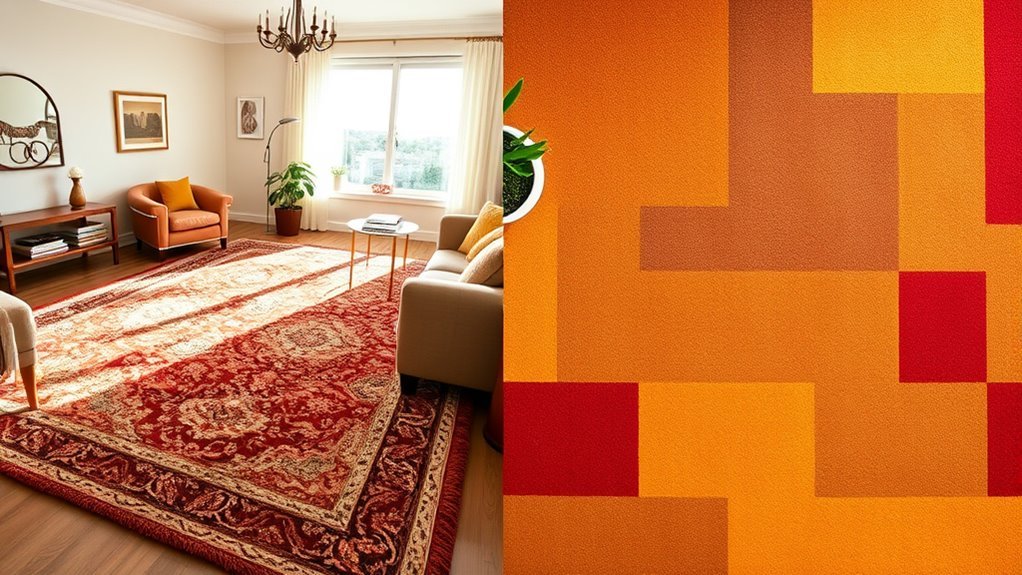
Evaluating rug prices by cost per year of use reveals why the cheapest upfront tag is not always the lowest long-term expense. For a standard 8×10-foot living room area rug, prices vary predictably by fiber and construction:
- Budget Synthetic ($100 to $400 for an 8×10): Typically machine-made polypropylene or printed polyester. Expect 3 to 5 years of crisp appearance in an active living room before high-traffic paths flatten—working out to roughly $30 to $80 per year.
- Mid-Range Performance Synthetic or Tufted Wool ($400 to $1,200 for an 8×10): Includes washable two-piece rugs, dense solution-dyed nylon, recycled PET, and hand-tufted wool rugs with canvas-and-latex backing. These usually last 7 to 15 years ($40 to $100 per year).
- Heirloom Hand-Knotted or Heavy Woven Wool ($1,200 to $4,000+ for an 8×10): Constructed without glue so the foundation never crumbles. Lasting 20 to 50+ years even with periodic professional washings, a $2,000 hand-knotted wool rug kept for 25 years costs about $80 per year while retaining resale value.
Remember to set aside $80 to $200 for a dedicated 8×10 rug pad. Match the pad to your flooring: choose a 100% recycled felt and natural rubber pad (1/8-inch to 1/4-inch thick) for hardwood, laminate, or luxury vinyl plank (LVP) floors. Avoid cheap PVC or synthetic latex waffle pads on polyurethane-finished hardwood or vinyl, as plasticizers can chemically react with the floor finish and leave permanent yellow grid marks.
Recommended Products
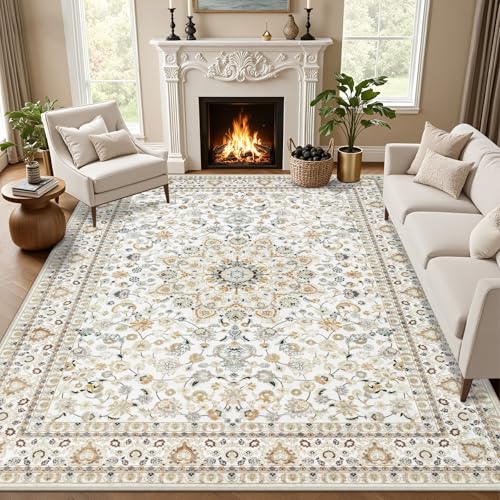
Timeless Classic Design Rug: Featuring an elaborate traditional pattern and harmonious color palette, these 5x7 area rugs bring artistic elegance to the interior. The versatile design works with various decor styles from vintage and bohemian to contemporary, making it suitable for living room, bedrooms, dining room, hallway, kids' playrooms, or home offices. Built to withstand daily use while maintaining its visual appeal, these rugs for living room 5x7 combines durability with timeless beauty

MACHINE WASHABLE: Our rug can be washed directly in washing machine in cold water and dried without heat. Daily maintenance is simple and convenient

Neutral Abstract Rug: This 8'×10' rug features a distressed abstract design in subtle tones, adding a modern, artistic touch to your space. It blends effortlessly with any home style, instantly enhancing your living room, bedroom, dining area, or office
How to Choose the Right Rug for Your Needs
Match your rug material to how your living room actually functions on its busiest day rather than how it looks in a styled catalog photo.
Recommended Products

Beautiful Design Abstract Rug:The 5x7 rug design is unique and trendy, the colors blend with nature, the abstract design complements the modern tones, it blends perfectly with your home decor, adding more warmth and comfort to your home. Suitable for living room, bedroom, dining room, study, home office, etc

STYLISH DESIGN: This trendsetting brushstroke inspired striped area rug design in a versatile color palette combination can be perfectly paired with a variety of home décor styles.

Elegant Floral Rug: This 8x10 area rugs vintage-inspired botanical rug blends rich dark greens, vibrant and delicate floral complements any decor style, from vintage and bohemian to farmhouse and modern. Perfect rugs for living room, bedrooms, dining room rugs for under table, entryways, kids' playrooms, or home offices, it adds warmth and charm to any space. Both durable and stylish, it withstands high-traffic areas while maintaining a cozy, inviting appeal
Choose Wool If…
- You want a naturally warm, sound-absorbing, flame-resistant rug with a rich matte texture.
- Your living room sees daily foot traffic and heavy furniture, but not frequent pet accidents or red wine spills.
- You prefer buying once for 15 to 30+ years rather than replacing flattened synthetic rugs every few years.
- You are comfortable vacuuming without a beater bar during the 3- to 6-month shedding window and using pH-neutral cleaners.
- You want a timeless piece for Scandinavian, traditional, or layered organic interiors.
Choose Synthetic If…
- You want an 8×10 or 9×12 living room rug under $500.
- You have puppies, elderly pets, toddlers, or an open-plan living/dining space where food and drink spills happen weekly.
- You need a machine-washable cover or a hose-safe indoor/outdoor polypropylene flatweave.
- You enjoy swapping out living room color palettes every 3 to 5 years.
- Your living room receives intense afternoon sunlight and you need solution-dyed fade resistance.
What to Check Before Buying
- Exact fiber percentage: Check whether a “wool blend” rug contains viscose/rayon (which weakens stain resistance) or nylon (an 80% wool / 20% nylon blend actually boosts abrasion resistance).
- Pile height: Choose under 0.25 inch for robot vacuums and dining-adjacent areas, or 0.25 to 0.5 inch for cushioned living room seating.
- Construction method: Hand-knotted and flatwoven rugs lack glue and last decades; hand-tufted rugs use latex adhesive that eventually dries out after 5 to 10 years.
- Backing and floor safety: Confirm whether the backing uses cotton canvas, jute, natural rubber, or synthetic latex, and pair it with a floor-safe felt-and-natural-rubber pad.
- Washability and drum capacity: Even if a rug is labeled machine washable, an 8×10 or 9×12 one-piece rug often requires a 3.8- to 4.5-cubic-foot impeller washer or a commercial laundromat machine.
- Ethical and safety labels: Look for OEKO-TEX STANDARD 100 or CRI Green Label Plus for indoor air safety, and GoodWeave certification to verify handmade rugs were produced without child or forced labor.
Frequently Asked Questions
Is a synthetic rug better than a wool rug?
A synthetic rug is better if you need a lower upfront price, easy water-based spot cleaning, machine-washable options, or protection against frequent pet and kid spills. A wool rug is better if you want natural underfoot warmth, superior crush recovery, flame resistance, and a 20- to 50-year lifespan.
What’s the best material for a living room rug?
Wool is the best overall material for a long-term living room rug because its crimped fibers spring back under furniture and foot traffic while insulating cold floors. For busy family rooms with frequent spills, solution-dyed nylon or a low-pile washable polyester rug is the most practical choice.
What are the downsides of wool rugs?
Wool rugs cost more upfront, shed loose fibers for the first 3 to 6 months, and require suction-only vacuuming and pH-neutral cleaners (pH 7 to 8). Because wool is an absorbent protein fiber, it is also vulnerable to alkaline pet urine, high humidity, and harsh household stain removers.
Are wool rugs good for living rooms?
Yes, wool rugs are ideal for living rooms because they dampen echo, insulate floors, resist fireplace embers, and hide dry dust well between vacuumings. They perform best for homeowners who vacuum weekly and address liquid spills promptly by blotting rather than scrubbing.
Are synthetic rugs safe for pets and kids?
Yes, synthetic rugs are safe and practical for pets and kids, especially when you choose low-emission rugs certified under CRI Green Label Plus or OEKO-TEX STANDARD 100. Unroll a new synthetic rug in a ventilated room for 48 to 72 hours so any initial backing odor dissipates, and choose a cut-pile weave so pet claws do not snag loops.
Which rug material is easiest to clean?
Machine-washable polyester performance rugs are the easiest to clean, followed by low-pile polypropylene and solution-dyed nylon rugs that clean up with 1/4 teaspoon of clear dish soap in 1 cup of lukewarm water. Wool is easy to vacuum day to day, but requires gentler pH-neutral spot treatment and periodic professional washing.
How long do wool rugs shed, and does it stop?
Most new wool rugs shed noticeably for 3 to 6 months as excess short fibers from spinning work their way to the surface, then shedding tapers off almost completely. Hand-tufted wool rugs shed more than hand-knotted or flatwoven wool rugs; vacuuming once or twice a week with the beater bar turned off clears loose fluff without pulling out intact tufts.
How long do wool vs. synthetic rugs last in a living room?
A well-made hand-knotted or woven wool rug lasts 20 to 50+ years, while a hand-tufted wool rug with latex backing typically lasts 10 to 15 years. Among synthetics, solution-dyed nylon lasts 15 to 20 years, triexta lasts 10 to 15 years, polyester lasts 5 to 10 years, and polypropylene usually lasts 3 to 7 years before high-traffic paths flatten.
Conclusion
Choosing between wool and synthetic rugs comes down to matching the fiber to your household’s daily reality. Pick a dense wool rug if you want decades of underfoot comfort, natural flame and crush resistance, and classic texture. Pick a synthetic rug—specifically nylon for heavy foot traffic or washable polyester and polypropylene for messy zones—when budget, pets, kids, or frequent spills take priority. Before ordering, check the exact fiber percentage, keep pile height under 0.5 inch for easy vacuuming, and pair your rug with a floor-safe felt and natural rubber pad.
Sources
- Better Homes & Gardens: Understanding Different Types of Carpet: Supports fiber performance differences across wool, nylon, polypropylene (olefin), and polyester.
- The Carpet and Rug Institute (CRI): Cleaning and Maintenance: Supports weekly vacuuming schedules, the 1/4-teaspoon dish soap spot-cleaning ratio, 90°F–105°F machine-washing temperatures, and avoiding steam on urine stains.
- Southern Living: How to Clean a Wool Rug Without Damaging It: Supports wool-safe pH-neutral cleaning, hidden dye testing, and professional washing intervals.
- Architectural Digest: How to Clean a Rug: Supports care-label checks, gentle washing, and drying precautions for area rugs.
- U.S. Environmental Protection Agency (EPA): Volatile Organic Compounds’ Impact on Indoor Air Quality: Supports indoor vs. outdoor VOC concentration data (2 to 5 times higher indoors) and ventilation guidance.
- The Carpet and Rug Institute (CRI): Green Label Plus: Supports ASTM D5116 low-VOC chamber testing for rugs, carpets, cushions, and adhesives.
- OEKO-TEX: STANDARD 100: Supports independent textile safety testing against more than 1,000 harmful substances.
- GoodWeave International: Supports ethical sourcing verification for handmade rugs.


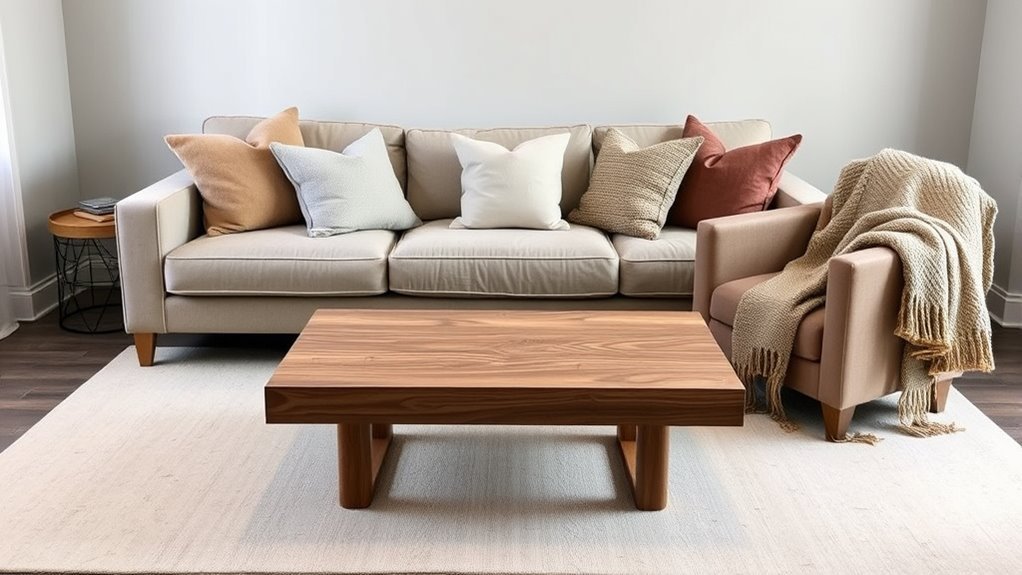

[…] Wool Rugs vs. Synthetic Rugs Explained for Living Rooms […]