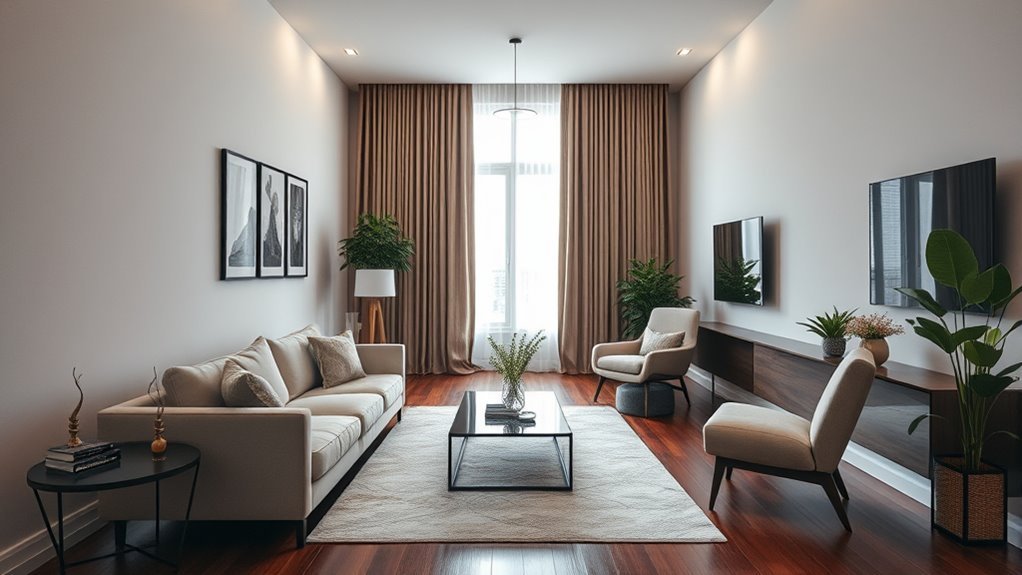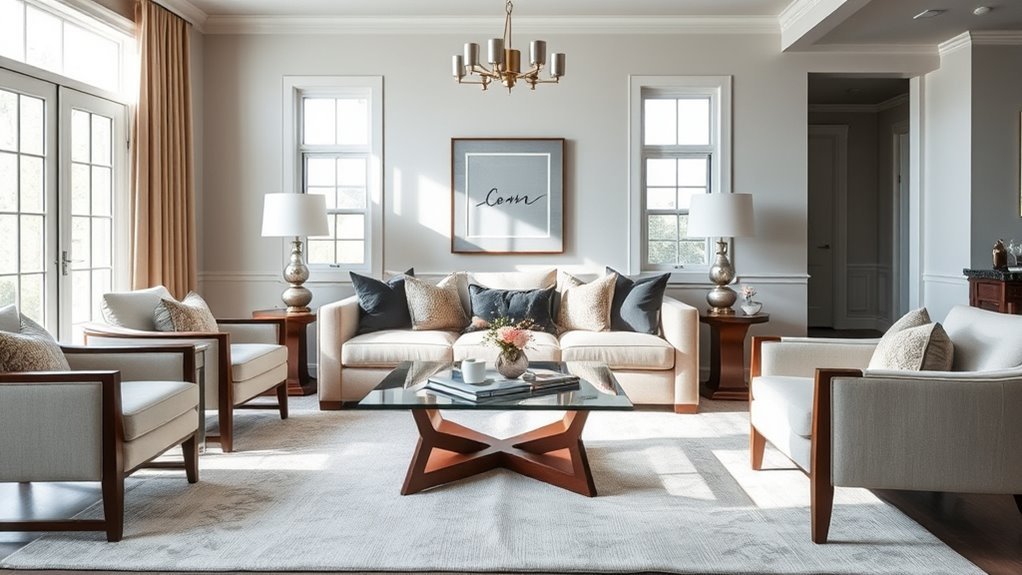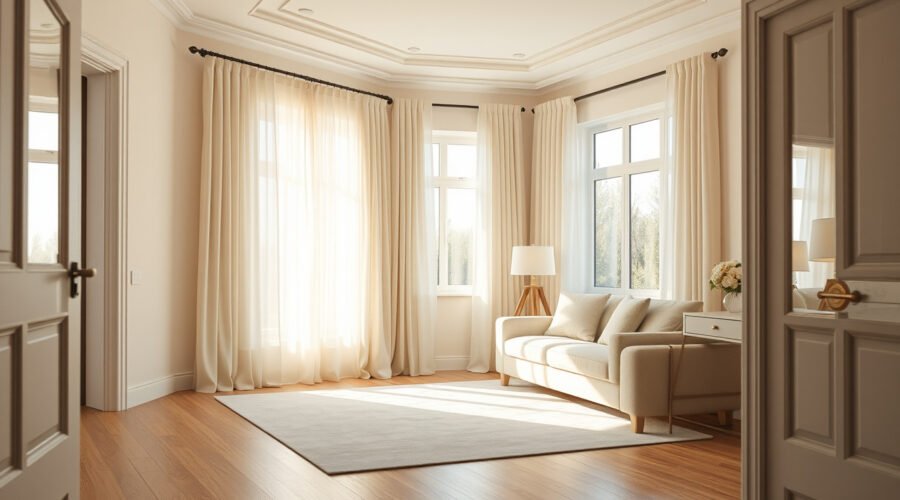
If you have ever wondered why does your living room feel dark even with every lamp switched on, the culprit is rarely a single bad bulb. A dark living room usually happens when several small light traps stack up at once: solar-blocking window screens, narrow curtain rods, light-absorbing wall paint, bulky furniture in front of sills, and reliance on a single overhead fixture. This guide shows you how to diagnose what is stealing your brightness and fix it step by step without knocking down walls or paying for a remodel.
Quick Answer
A living room feels dark when daylight is blocked at the windows, absorbed by dark surfaces and bulky furniture, or under-lit by a single ceiling fixture. Brighten it fast by cleaning window glass and screens, hanging sheer curtains wider than the frame, using paint with a Light Reflectance Value (LRV) above 60, and layering 2,000 to 4,000 lumens.
Key Takeaways
- Maximize window openings: Remove dense exterior solar screens in shaded rooms and extend curtain rods 8 to 12 inches past each side of the frame so open drapes expose 100% of the glass.
- Check paint LRV and sheen: Choose main wall colors with an LRV of 63 to 77 in an eggshell or satin finish, and paint ceilings flat white (LRV 80+) to bounce light downward.
- Clear window sightlines: Keep tall bookcases and high-backed sofas away from window walls, and use raised-leg furniture so daylight travels across the floor.
- Hit target room lumens: Aim for 10 to 20 lumens per square foot (2,000 to 4,000 total lumens for a 200-square-foot living room) spread across ambient, task, and accent fixtures.
- Match bulb temperature and quality: Use 2700K to 3000K warm white LED bulbs with a Color Rendering Index (CRI) of 90+ so the room looks bright, cohesive, and inviting.
Understanding Natural Light Sources in Your Living Room
Natural light sets the baseline brightness of your living room before you touch a light switch. The direction your windows face and the exterior structures outside them determine both the strength and the color cast of your daylight from morning until dusk.
According to Sherwin-Williams’ guide on room orientation and Light Reflectance Value (LRV), north-facing rooms receive cool, indirect light that stays muted all day, while south-facing rooms enjoy steady, warm sunlight from late morning through late afternoon. East-facing spaces get bright, yellow-white morning sun that fades into cool afternoon shadow, and west-facing rooms stay dim in the morning before flooding with intense amber glare late in the day.
| Window Direction | Daylight Pattern | Why It Can Feel Dark | Best Brightening Strategy |
|---|---|---|---|
| North-Facing | Cool, indirect light all day with no direct sunbeams | Blue-gray cast makes cool gray or pure white walls look shadowy and flat | Use creamy, warm-undertone paint (LRV 70+) and 2700K LED lamps |
| South-Facing | Strong, warm, consistent sunlight most of the day | Closed blinds used to block midday heat trap the room in shadow | Swap heavy blinds for sheer or light-filtering shades that diffuse glare |
| East-Facing | Bright morning light; indirect, cooler light after noon | Loses direct sun by early afternoon when families use the room most | Place mirrors opposite windows and set afternoon task lighting on timers |
| West-Facing | Muted morning light; strong, warm late-afternoon sun | Feels dim and flat throughout the morning and early afternoon | Use balanced neutral walls and turn on ambient floor lamps before noon |
Outdoor obstructions can cut daylight before it ever reaches the glass. Deep porch roofs, window awnings, neighboring buildings, and overgrown shrubs cast permanent shadow bands across the upper pane, where most sky light enters. Dense exterior solar screens are another hidden culprit: while standard fiberglass insect mesh blocks only about 5% to 10% of incoming light, dark solar screens block 65% to 90% of solar energy and noticeably dim shaded rooms.
How Window Treatments Impact Light in Your Space
Window treatments control how much daylight enters your living room and how far it spreads across the ceiling and floor. Heavy fabrics and dark weaves soak up incoming rays, making a room feel gloomy even at noon on a sunny day.
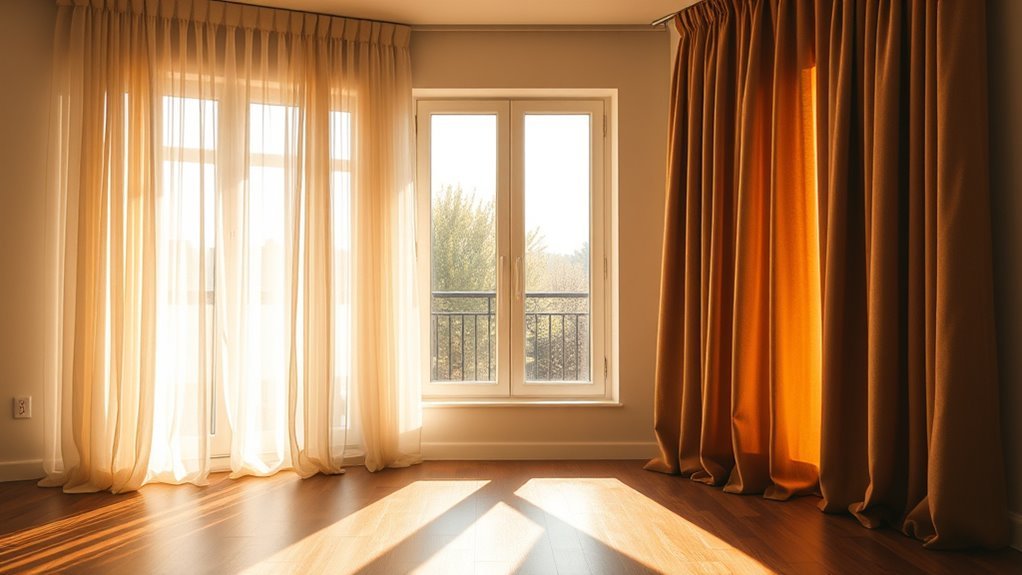
Swap thick velvet, suede, or blackout-lined curtains for sheer voile panels, linen-blend drapes, or light-filtering cellular shades in white, cream, or pale oatmeal. These translucent materials soften harsh direct sun into an even glow while keeping your seating area private from the street.
If you prefer slatted blinds, choose pale faux-wood or aluminum slats and tilt them slightly upward toward the ceiling rather than downward toward the floor. Angling slats upward bounces daylight across a bright ceiling so it reaches the back corners of the room. Vacuum or wipe fabric shades and blind slats regularly, as a layer of household dust dulls light transmission.
Recommended Products
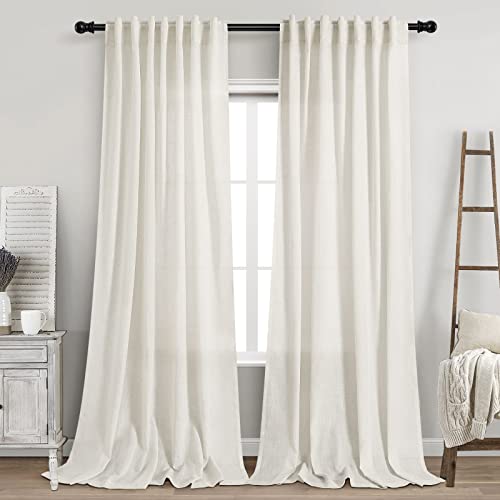
READY MADE: 2 Linen Curtain Panels per package.Each panel measures 52 inches wide by 108 inches long. Top design of Back tab & loop pocket provide 3 hanging options. <1> hanging from the back patch to create an elegant pleated look, <2> from the 3 inch rod pocket for a classic look <3> Hanging with clip rings for easy, slide open and closed (clip rings are not included)
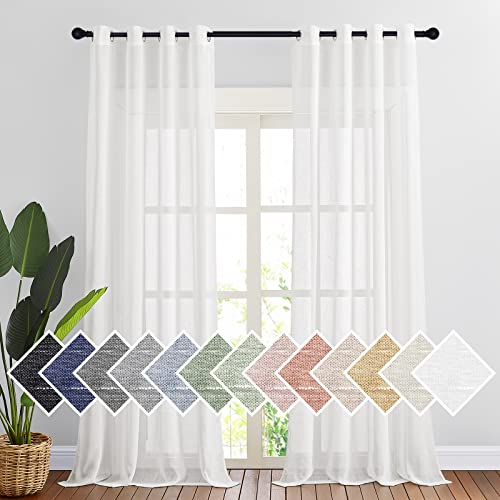
READY MADE: Package includes 2 flax sheer linen curtain panels, each measures 52"W (104"W for pair), with 8 (1.6" inner diameter) silver grommets to suit with standard or decorative curtain rod.

Sold as 2 Panels: Each package includes 2 pieces sheer curtains. Each panel measures 42 inch width, 84 inch long( The curtain length not include top 1.5 inch header) 2 pieces total width is 84 inches, Sheer curtains width is 1.5-2 times wider than your window to show a nice look. Multiple Length are available, please measure your window first for the right choose
Choosing Wall Colors That Enhance Brightness
Your walls and ceiling act as giant reflectors for both sunlight and lamp light. Choosing paint with a high Light Reflectance Value (LRV) and a subtle sheen helps light bounce from wall to wall instead of disappearing into the drywall.
Paint manufacturers measure LRV on a scale from 0 (absolute black, which absorbs all light) to 100 (pure laboratory white). Colors below LRV 50 absorb more light than they reflect. For a bright living room, choose foundation wall colors in the LRV 63 to 77 range—such as warm alabaster, cream, pale greige, or soft butter yellow—or explore high-LRV white and off-white paint colors rated at LRV 80 or above for rooms with limited window area.
| Living Room Surface | Target LRV Range | Best Paint Finish | How It Helps Brightness |
|---|---|---|---|
| Main Living Room Walls | 63 to 85 | Eggshell or Satin | Reflects ambient light smoothly without highlighting drywall seams |
| Ceiling (“Fifth Wall”) | 80 to 92 | Flat or Ultra-Matte | Diffuses upward lamp light and daylight evenly across the whole room |
| Window Casings, Doors & Trim | 80 to 90 | Satin or Semi-Gloss | Bounces light right at the window frame and creates crisp visual contrast |
| Single Accent Wall | 15 to 45 | Eggshell | Adds depth when placed on the window wall so incoming light hits lighter opposite walls |
Finish matters almost as much as color. Chalky matte wall paint scatters and absorbs light in dim rooms, whereas eggshell and satin finishes provide a gentle luster that helps bounce illumination deeper into the space.
Is Your Furniture Blocking Natural Light?
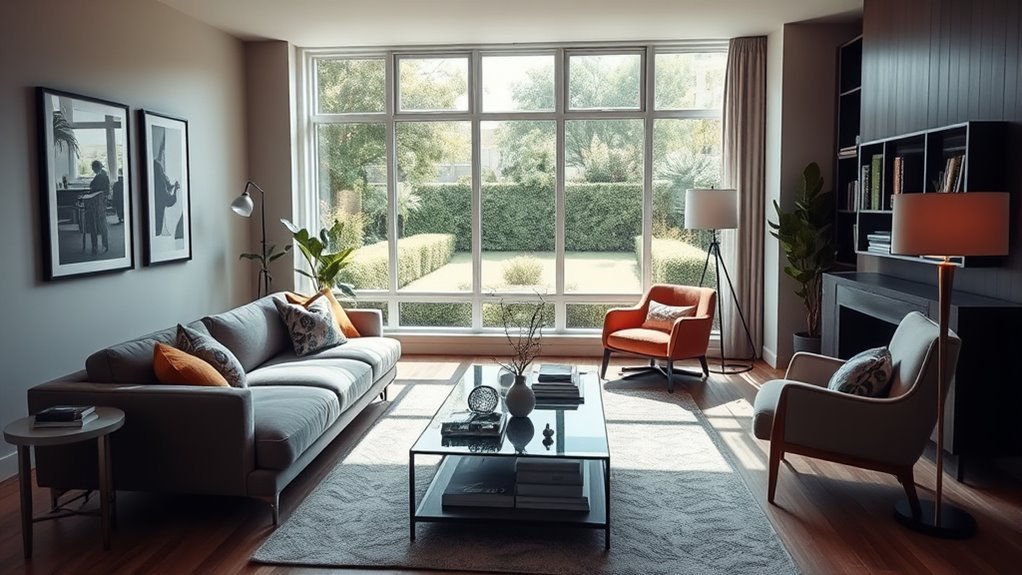
Even high-LRV walls cannot brighten a living room if oversized furniture blocks the path of incoming sunlight. Tall bookcases, deep media consoles, bushy indoor trees, and high-backed sectionals placed near windows cast wide shadows across the floor.
Keep a 2- to 3-foot clearance zone around window openings, and place your tallest storage pieces against solid interior walls instead. If a sofa must sit in front of a window, pick a low-profile frame whose back sits at or below the windowsill height.
Stand in your living room doorway and trace the path of light from the window to the center of the room. Swapping solid, floor-length skirted chairs and blocky wood coffee tables for furniture on raised legs and glass or acrylic tables lets light travel underneath and through the seating zone.
The Effect of Dirty Windows on Room Illumination
Grimy glass and clogged window screens act like a gray filter over your living room. Over months of weather and indoor living, exterior pollen, hard-water mineral spots, oxidation from aluminum screens, and interior cooking or candle film build up slowly enough that you rarely notice the lost brightness day by day.
Wash both the interior and exterior glass at least twice a year using a microfiber scrubber and a squeegee. Remove the exterior mesh screens, brush both sides with mild dish soap and warm water, and rinse them with a gentle garden hose spray before reinstalling. While you are at the window, wipe down the interior sills and casings—bright white frames bounce noticeably more light into the room than dusty or dark-stained trim.
Inspect the yard right outside the glass at the same time. Prune safe, low shrubs so foliage sits at least 18 to 24 inches below the bottom sill, and hire a certified arborist to thin heavy tree branches that overhang the roof.
Pro Tip: Clean windows on an overcast day or when the pane is in full shade so your cleaning solution does not evaporate on warm glass and leave light-scattering streaks.
Are Your Lighting Fixtures Working for You?
A living room will always feel dim after sunset if one central ceiling light does all the work. Overhead flush mounts and recessed downlights push light straight down onto the coffee table while leaving upper walls and corners in shadow—a problem lighting designers call the “cave effect.”
To eliminate dark pockets, match your total bulb output to your room size. Lighting pros recommend 10 to 20 lumens per square foot (foot-candles) for general living room illumination. That means an average 200-square-foot living room needs 2,000 to 4,000 total lumens split across three to five fixtures rather than a single overhead lamp.
Evaluate Fixture Placement
Good fixture placement spreads light evenly across vertical walls and into the corners where shadows gather. Instead of clustering lamps where outlets happen to sit, triangulate your light sources around the perimeter of the room.
Place a floor lamp in a far corner, a table lamp beside the sofa, and a plug-in wall sconce or picture light along a windowless wall. Vary the heights of your fixtures so the bottom of a table lampshade sits near eye level when you are seated (about 40 to 42 inches off the floor), while a torchiere or open-top floor lamp directs light upward onto the ceiling.
Assess Bulb Brightness
Always judge bulb brightness by lumens (light output) rather than watts (energy draw). As outlined in the U.S. Department of Energy lighting guide, checking the standardized Lighting Facts label on the box tells you the exact lumen count, Kelvin color appearance, and wattage of any LED bulb.
Use these standard LED equivalents when upgrading dim living room fixtures:
- 450 lumens (replaces 40W incandescent, draws ~5–6W LED): Best for small accent sconces or multi-bulb chandeliers.
- 800 lumens (replaces 60W incandescent, draws ~8–10W LED): Standard baseline for living room table lamps and reading lights.
- 1,100 lumens (replaces 75W incandescent, draws ~11–13W LED): Ideal for corner floor lamps or medium rooms with dark walls.
- 1,600 lumens (replaces 100W incandescent, draws ~14–17W LED): Best for indirect torchiere floor lamps that bounce light off the ceiling.
How Layered Lighting Enhances Brightness
Layered lighting combines overhead, eye-level, and focal-point fixtures so your living room feels evenly lit from every seat. Using three distinct layers lets you eliminate shadows without relying on a blinding overhead glare.
| Lighting Layer | Primary Job | Recommended Output | Best Living Room Fixtures |
|---|---|---|---|
| Ambient Lighting | Fills the room with soft, overall illumination and bounces light off the ceiling | 10 to 20 lumens per sq. ft. across the room | Semi-flush ceiling mounts, chandeliers, upward-shining torchiere floor lamps |
| Task Lighting | Provides focused, shadow-free brightness at seating height for reading or hobbies | 800 to 1,200 lumens per reading spot | End-table lamps with white shades, swing-arm wall lamps, arched reading lamps |
| Accent Lighting | Washes vertical walls, bookshelves, and dark corners so the perimeter looks wider | 150 to 450 lumens per accent fixture | Wall sconces, rechargeable picture lights, LED shelf strips, uplights behind plants |
Adding dimmer switches or smart dimmable plugs gives you full control over all three layers, letting you run 100% brightness on cloudy afternoons and dial the lamps down to a warm glow for movie nights.
Top Mistakes That Block Light in Your Living Room
Two common decorating mistakes quietly steal up to a third of a living room’s available light: mounting curtain hardware directly onto the window frame and surrounding dark walls with equally dark floors and rugs.
Heavy Window Treatments
Hanging a curtain rod the exact width of your window casing forces the open fabric panels to bunch up in front of the outer panes, blocking 20% to 30% of the glass all day long. Low rods also cut off the top of the window, where daylight angles deepest into the room.
Fix your window hardware and drapery setup with these adjustments:
- Mount rods higher: Install the curtain rod 4 to 6 inches above the top window casing (or just below the crown molding) to expose the entire top pane.
- Extend rods wider for “stackback”: Choose a rod that extends 8 to 12 inches past each side of the window frame so open curtains stack completely against the drywall, leaving 100% of the glass uncovered.
- Skip dark valances: Remove top valances and heavy pelmets that trap rising light at the top of the window.
- Ditch double layers in dim rooms: If your living room faces north or sits under a porch overhang, use a single layer of light-filtering shades or sheer drapes instead of pairing blinds with heavy curtains.
Dark Wall Colors
Deep navy, charcoal, espresso brown, and forest green walls (often rated at an LRV of 5 to 20) absorb roughly 80% to 95% of the light that hits them. When those dark walls meet dark hardwood floors and a dark leather or charcoal sofa, light has no bright surface to bounce off.
You can keep a moody wall color without living in a cave by building high-LRV contrast around it. Cover 60% to 70% of a dark floor with a cream, ivory, or pale patterned area rug, paint the ceiling and baseboards a crisp white (LRV 80+), and hang large light-matted artwork and brass or glass accents on the darkest walls.
Smart Solutions to Brighten Your Living Room
You can brighten a dark living room in a single afternoon by starting with free adjustments before buying new fixtures or paint. Follow this step-by-step order to get the biggest jump in brightness for the lowest cost:
- Wash the glass and remove solar screens: Clean both sides of the window panes and pop off dark exterior solar screens on north- or east-facing windows that do not need heat protection.
- Pull tall furniture 3 feet back from windows: Shift bookcases, tall plants, and high-backed chairs to interior walls so daylight can spread across the room.
- Hang a large mirror opposite or perpendicular to a window: Position a mirror on the wall directly across from or adjacent to your brightest window so it catches incoming daylight and bounces it into the back half of the room.
- Swap opaque lampshades for translucent white linen: Replace black, navy, or heavy burlap shades with white or cream drum shades that let light pass outward through the fabric as well as out the top and bottom.
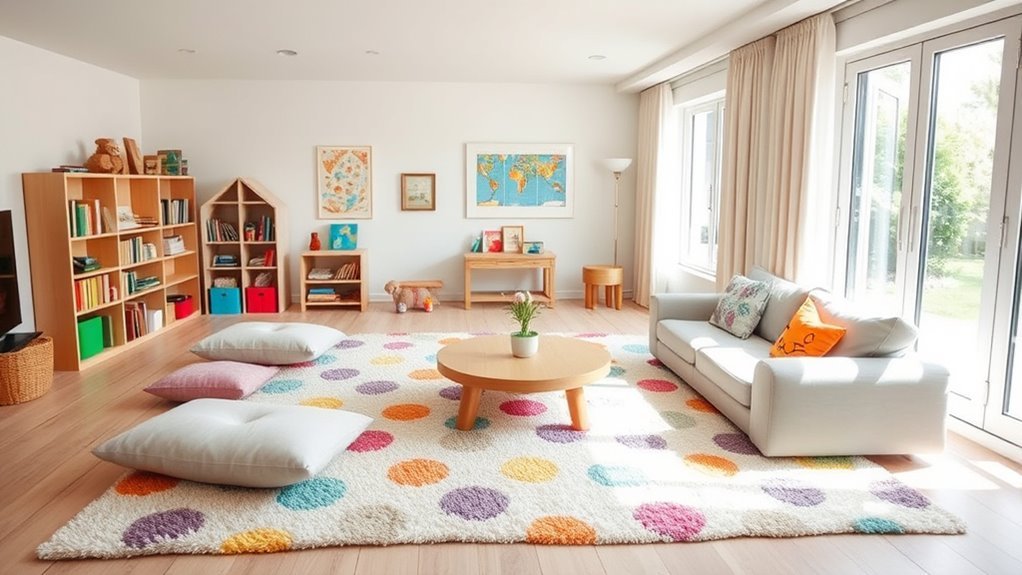
- Lay down a light area rug and pale textiles: Drape ivory or warm beige throws over dark sofas and anchor the seating area with a light-colored rug to bounce overhead light upward.
- Add a corner uplight or plug-in sconce: Place a lamp in the darkest corner of the room to wash the walls with warm light.
Recommended Products

Multi-Function Dimmable Lamp: Vertical lamp includes an 12W dimmable LED bulbs that can be set to different color temperatures (3000K-6500K). 5%-100% dimmable brightness can be used to create different atmospheres and customize your favorite bedroom floor lamp.

Modern Fully Dimmable(0-100%) Floor Lamp & Convenient Rotary Switch: Compared with traditional Non-dimmable floor lamps for living room, our floor lamp is fully Stepless Dimmable, which suitable for all the room style and using situation ,find the perfect light for your needs. This standing lamp is very easy to turn on and off. Just simply twist it and then you can adjust the arc floor lamps brightness what you want. 4.1FT rotary switch, which is very convenient for you to adjust it.

Stable Base & Linen Shade: This floor lamp set features a sturdy metal base that provides reliable support, preventing wobbling or tipping. The matching linen shade diffuses light softly and evenly, effortlessly creating a warm and inviting home atmosphere
Choosing the Right Light Bulbs for a Cozy Atmosphere
Picking the right LED bulb means balancing brightness (lumens) with color temperature (Kelvins) and color accuracy (CRI). The wrong bulb spec can make a bright living room feel sterile and hospital-like or make a warm room look muddy and yellow.
According to the Office of the Ohio Consumers’ Counsel lightbulb guide, light appearance is measured on the Kelvin (K) scale: lower numbers produce a warm, golden glow, while higher numbers emit a crisp, bluish-white light. For living rooms, choose 2700K to 3000K (Warm White / Soft White) LEDs, and keep all bulbs in the room within 300K of each other so warm table lamps do not clash with icy 5000K ceiling bulbs.
Check the box for a Color Rendering Index (CRI) of 90 or higher (often labeled “High CRI” or “CRI 90+”). Standard 80-CRI bulbs can make wood furniture, wall paint, and fabrics look dull and gray under artificial light, whereas 90+ CRI bulbs render colors crisply even at warm 2700K temperatures.
Note: Dark or metallic-lined lampshades block up to 50% of a bulb’s side illumination, directing light only in narrow cones above and below the shade. If you keep a dark shade for style, step up to a 1,100-lumen bulb and add a second lamp nearby.
Recommended Products
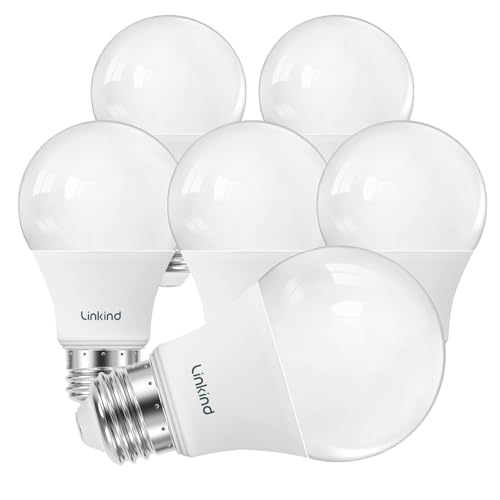
✔ 2700K WARM YELLOWISH LIGHT: The A19 dimmable LED light bulbs give off 800 lumens of 2700k cozy color light. Easy installation with the standard medium screw base E26. NOTE: Please confirm the Kelvin (K) value. This is the most accurate way to select your desired light color. This bulb is 2700K light, which produces a WARM YELLOWISH light. It is not a Bright White or Daylight White bulb. If you prefer a whiter light, please consider our 4000k Cool White or 5000K Daylight options.

【Classic Vintage Design & Wide Application】Designed based on Thomas Edison's original filament bulb, the vintage retro style making this led bulb also a beautiful decorative lights. Those led bulbs are suitable with chandeliers, ceiling fans, pendant lighting, sconces, lamp post, lanterns or any home lighting fixture with an E26 medium standard base socket. Widely used in bedroom,living room,dinning room, bathroom, laundry room, porch or entryway.
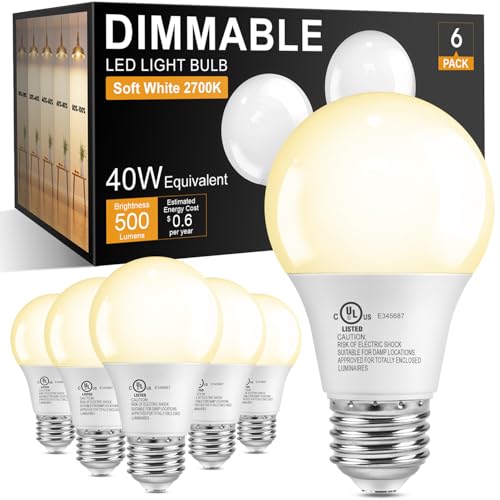
Dimming Range 10%-100%: Dimmable LED light bulbs compatible with most LED dimmers for smooth dimming. Compatibility Note: Best performance with LED dimmers. May flicker with halogen dimmers at low settings. Not for 3-way fixtures. Adjust brightness to control your space's look and feel
Related Guides
Frequently Asked Questions
How do you fix a dark living room fast?
You can fix a dark living room in under an hour by opening curtains completely clear of the glass, washing the windows and screens, and pulling tall furniture away from the window wall. Next, swap dim bulbs for 800- to 1,100-lumen warm white LEDs and add a floor lamp to the darkest corner.
Why is my living room so dark during the day?
A living room usually feels dark during the day because of north-facing windows, exterior shade from porch roofs or trees, dark solar screens, or heavy drapes covering the edges of the glass. Inside the room, low-LRV paint colors, dark floors, and bulky furniture near the sill absorb the remaining daylight.
How do you brighten a very dark room without painting?
To brighten a dark room without painting, hang sheer white curtains on wide rods, lay a large cream or light-neutral area rug over dark flooring, and hang a large mirror opposite or perpendicular to a window. Layer at least three lamps at different heights using translucent white shades and 2700K–3000K LED bulbs.
Why does my living room light still look dim?
Your living room lights will look dim if a single ceiling fixture is trying to light the whole room or if your total bulb output falls below 10 to 20 lumens per square foot. Opaque dark lampshades, low-CRI bulbs, and dark walls also soak up light before it reaches the corners.
Can mirrors really make a living room brighter?
Yes, mirrors noticeably brighten a living room when placed where they catch and bounce a real light source. Hang a large mirror on a wall perpendicular or directly opposite a window to reflect daylight deeper into the room, or place a mirror behind a table lamp to double its glow.
How many lumens do I need for a dark living room?
Aim for 10 to 20 lumens per square foot of floor space. For a standard 200-square-foot living room, you need 2,000 to 4,000 total lumens distributed across a ceiling fixture, one or two floor lamps, and two table or wall lamps rather than one bright overhead bulb.
What paint LRV is best for a dark living room?
Choose a wall paint with a Light Reflectance Value (LRV) between 63 and 85 in an eggshell or satin finish to reflect plenty of natural and artificial light. For rooms with very small or north-facing windows, pick warm off-whites with an LRV of 75 to 85 and keep the ceiling above LRV 80.
Conclusion
A dark living room rarely comes from a single flaw—it happens when blocked windows, light-absorbing surfaces, and weak overhead lighting team up against you. Start today with the zero-cost fixes: wash your window glass and screens, clear tall furniture away from the sills, and slide curtains completely off the panes. From there, layer 2700K–3000K LED lamps across the dark corners and bring in lighter textiles or high-LRV paint so your space feels bright, warm, and welcoming at any hour.
Sources
- Sherwin-Williams – How to Choose Paint Colors Based on Room Direction: Window orientation light characteristics and the 0–100 Light Reflectance Value (LRV) scale.
- Benjamin Moore – The Ultimate Guide to White & Off-White Paint Colors: High-LRV white and off-white paint selection for light reflection.
- U.S. Department of Energy – Consumer Guide to Energy-Efficient Lighting: Lumen-to-watt comparisons, Kelvin color scale, and the DOE Lighting Facts label.
- Office of the Ohio Consumers’ Counsel – How to Shop for Lightbulbs: Recommended Kelvin color temperature ranges by room type.