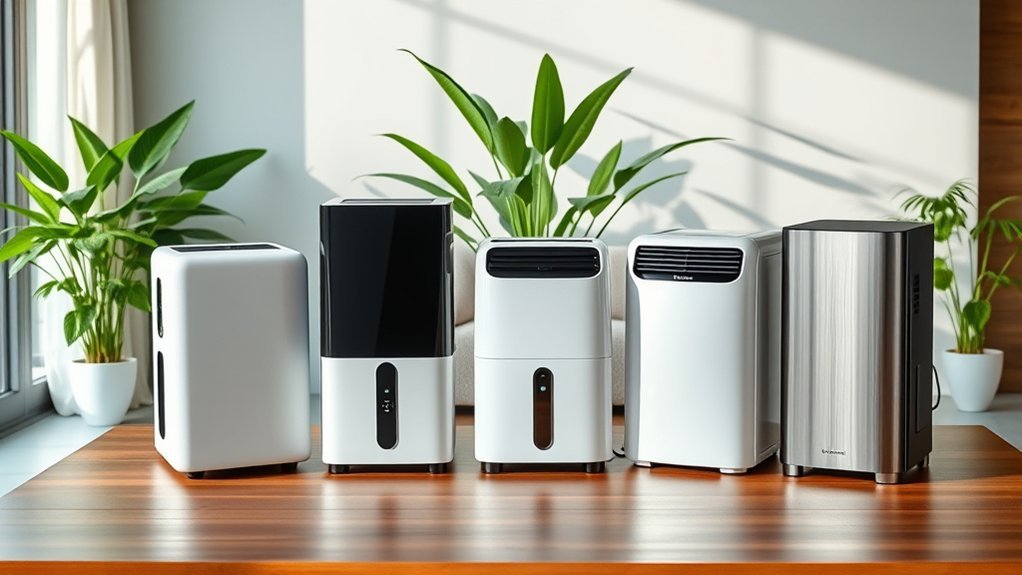
Choosing the best dehumidifier for home living spaces starts with moisture-removal capacity, room conditions, drainage, noise, and controls—not only a large square-foot number on the box. This updated 2026 guide compares seven portable compressor dehumidifiers for bedrooms, basements, laundry areas, and open living zones. Compact thermoelectric units are excluded because their ounce-per-day extraction rates are not directly comparable with compressor models.
Quick answer
AEOCKY offers the strongest efficiency-focused package in this group, while Yaufey is a practical alternative for a persistently damp basement or large open zone. Choose the standard Midea 22 Pint for simple controls, the Midea Cube for app control and a much larger bucket, and Waykar for moderate humidity where flexible drainage matters. KNKA and PLUSCENT add useful laundry and continuous modes, but their standardized capacity and long-term support are less clearly documented.
Key takeaways
- Compare standardized pint capacity before advertised coverage.
- High-temperature, high-humidity maximums are not normal daily output in every room.
- Gravity drainage needs a continuously downward hose path.
- A portable unit works best in one connected area, not through closed doors or separate floors.
Quick Comparison of the Best Home Dehumidifiers
Capacity note: ENERGY STAR figures use standardized test procedures and are more useful for direct comparison. Manufacturer maximums measured around 95°F and 90% to 95% relative humidity can be much higher. Advertised coverage is general guidance rather than a precise sizing standard.
| Product | Best For | Advertised Coverage | Capacity Basis | Drainage | Check Details |
|---|---|---|---|---|---|
| AEOCKY RHEA-001 | Efficiency-focused humidity control | Up to 4,500 sq. ft. | 24.5 pints/day standardized; up to 80 pints/day at manufacturer high-humidity conditions | Tank or drain hose | Check on Amazon |
| Yaufey JD025Q-80 | Damp basements and open rooms | Up to 5,000 sq. ft. | 24.93 pints/day standardized; up to 80 pints/day at 95°F and 90% RH | Tank or included hose | Check on Amazon |
| Waykar PD160B | Moderate humidity and easy drainage | Up to 2,000 sq. ft. | 9.81 pints/day standardized; up to 34 pints/day at 95°F and 90% RH | Tank or included hose | Check on Amazon |
| Midea EasyDry 22 Pint | Simple medium-room control | Up to 1,500 sq. ft. | 22.31 pints/day standardized | Tank or gravity hose connection | Check on Amazon |
| Midea Cube 20 Pint | Large bucket and app control | Up to 1,500 sq. ft. | 20.16 pints/day standardized | Large bucket or included hose | Check on Amazon |
| KNKA PD22SC-12 | Laundry and multiple operating modes | Up to 2,500 sq. ft. | Manufacturer maximum up to 34 pints/day at 95°F and 90% RH | 3L tank or included hose | Check on Amazon |
| PLUSCENT PD10 | Flexible value and laundry drying | Up to 2,500 sq. ft. | Manufacturer maximum up to 32 pints/day at 95°F and 90% RH | 2L tank or included hose | Check on Amazon |
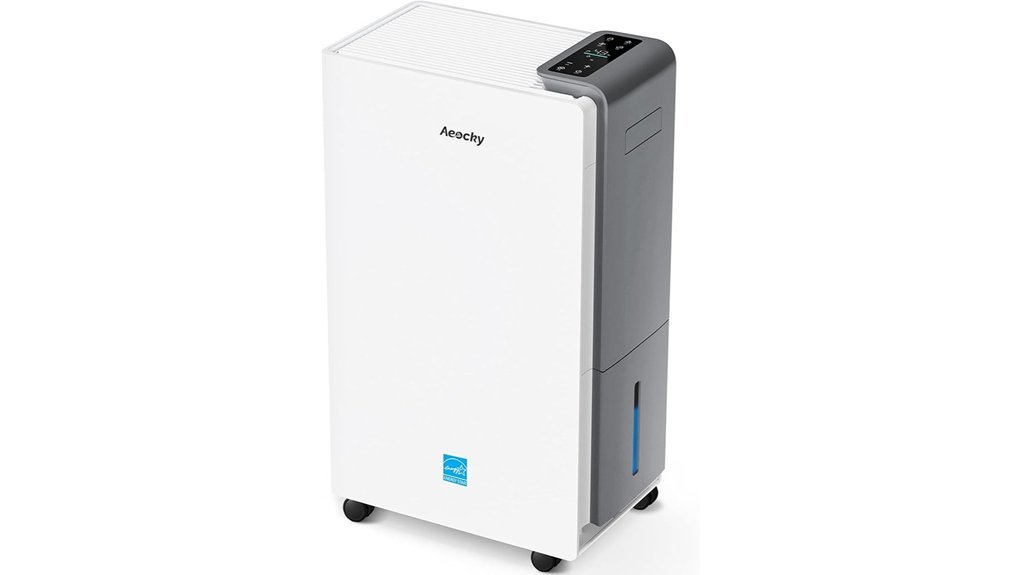
AEOCKY RHEA-001 Dehumidifier with Drain Hose
Best Overall for Efficiency-Focused Humidity Control
The AEOCKY RHEA-001 is a portable compressor dehumidifier for basements, open living areas, and other connected spaces with recurring humidity. Its marketing lists up to 4,500 square feet and a maximum of 80 pints per day at very hot, very humid conditions. For a fair comparison, its ENERGY STAR standardized water-removal rating is 24.5 pints per day. It also offers an adjustable humidistat, automatic defrost, a child lock, wheels, a water tank, and gravity-hose drainage.
Why you’ll like it: It combines verified ENERGY STAR Most Efficient status with flexible drainage and automatic humidity control, making it a strong choice for regular use where efficiency matters.
Who should buy it: Homeowners who want a well-equipped unit for one large connected zone and prefer verified efficiency over inflated coverage alone.
Who should avoid it: A severely wet basement, major water intrusion, or a divided multi-floor home may need a higher standardized-capacity unit, multiple units, or a whole-home system.
Pros:
- Verified ENERGY STAR Most Efficient model.
- Tank and continuous gravity-drain options.
- Automatic humidity control, defrost, timer, and mobility features.
Cons:
- The 80-pint figure is a high-humidity maximum, not its standardized rating.
- Advertised 4,500-square-foot coverage should not replace capacity-based sizing.
- Larger footprint than compact medium-room models.
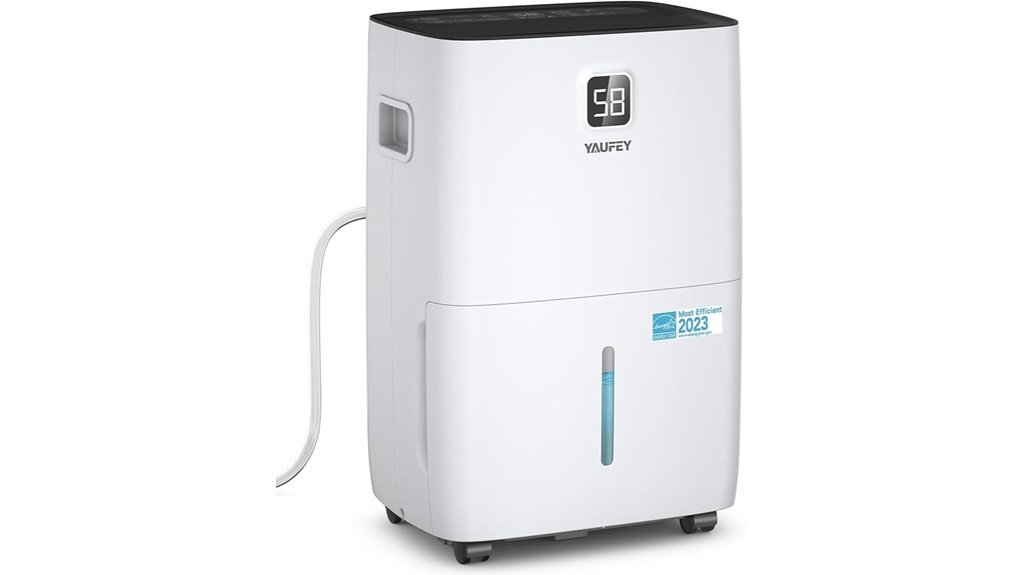
Yaufey JD025Q-80 Energy Star Dehumidifier
Best for Persistently Damp Basements
The Yaufey JD025Q-80 is designed for basements, open rooms, and other connected zones that need regular moisture control. The manufacturer lists up to 5,000 square feet and up to 80 pints per day at 95°F and 90% relative humidity. Its standardized ENERGY STAR capacity is 24.93 pints per day. Features include an adjustable humidistat, automatic defrost, timer, washable filter, approximately 1.06-gallon tank, and an included hose for continuous gravity drainage.
Why you’ll like it: It provides two drainage methods, automatic humidity management, and a useful tank size for spaces where the unit may run for long periods.
Who should buy it: Buyers managing recurring basement humidity who can place the unit near a suitable downhill drain.
Who should avoid it: Buyers expecting one portable unit to dry separate rooms behind closed doors or solve an active leak.
Pros:
- Verified ENERGY STAR certification.
- Tank and included continuous-drain hose.
- Automatic defrost, timer, humidistat, and washable filter.
Cons:
- The 80-pint maximum is not the standardized daily capacity.
- Coverage claims can be optimistic in cool or severely wet conditions.
- Unattended drainage depends on correct hose slope and drain placement.
Waykar PD160B Dehumidifier
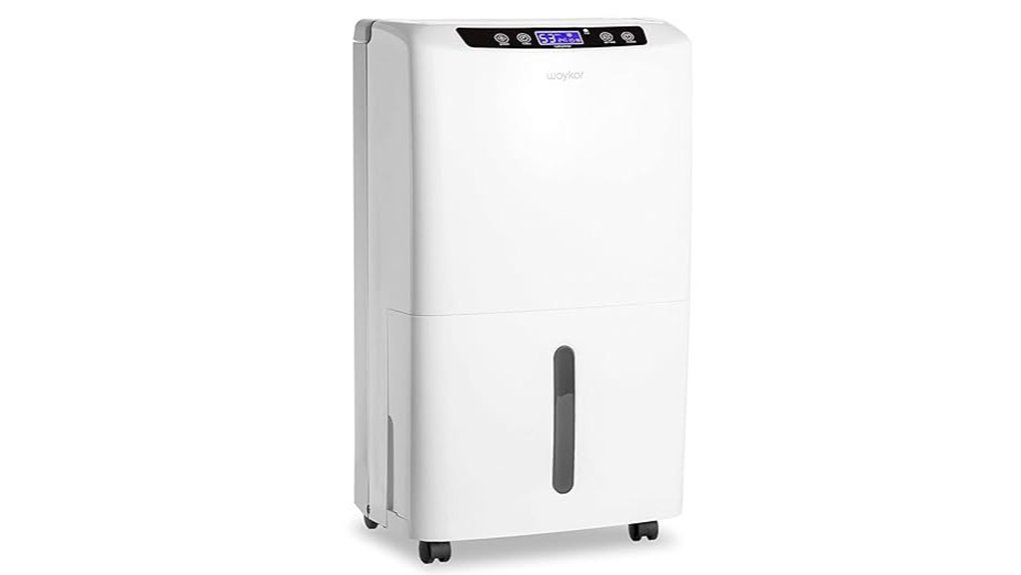
Best for Moderate Humidity and Flexible Drainage
The Waykar PD160B targets bedrooms, offices, laundry rooms, and moderately damp basements. The manufacturer lists up to 34 pints per day at 95°F and 90% relative humidity and coverage up to 2,000 square feet. Its current ENERGY STAR standardized rating is 9.81 pints per day, so it should not be sized as though it were a standardized 34-pint machine. It includes a removable tank, gravity-drain support, automatic defrost, wheels, handles, a timer, and an adjustable humidistat.
Why you’ll like it: The included drainage setup and portable design are convenient for regular moisture control in a moderate-size connected area.
Who should buy it: Buyers with moderate humidity who value easy movement, automatic cycling, and the option to use a hose.
Who should avoid it: A very wet or cold basement may need substantially more standardized capacity.
Pros:
- Verified ENERGY STAR certification.
- Automatic or continuous gravity drainage.
- Portable design with humidistat, timer, and auto defrost.
Cons:
- Standardized capacity is far below the 34-pint high-humidity maximum.
- The tank is relatively small for continuous heavy moisture.
- Published noise descriptions vary, so an exact dB promise is best avoided.
Midea EasyDry 22 Pint Dehumidifier
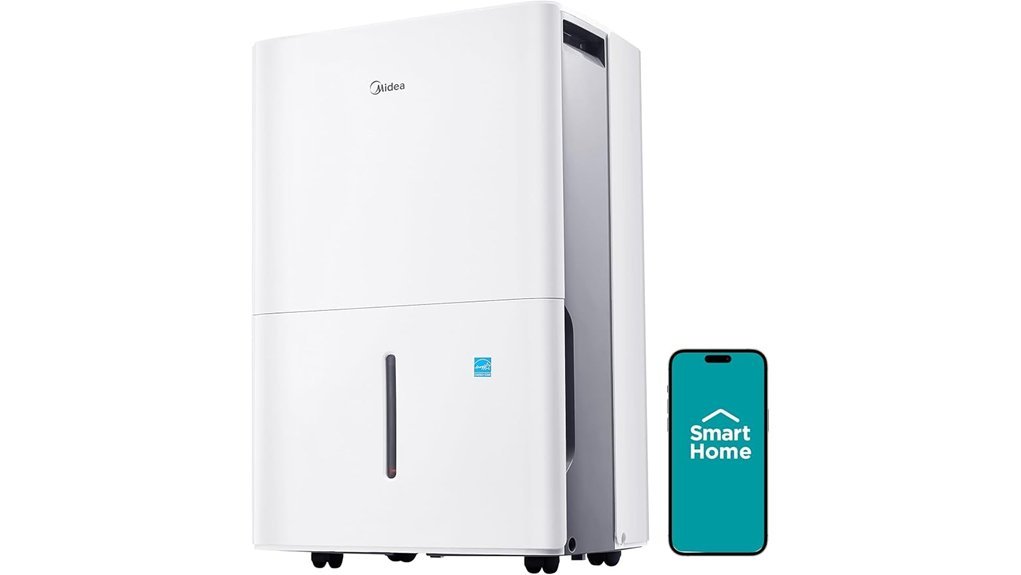
Best Simple Choice for Medium Rooms
The Midea EasyDry MAD22C1AWS is a straightforward compressor dehumidifier for bedrooms, bathrooms, offices, and smaller basements. Midea lists it for spaces up to 1,500 square feet, and its ENERGY STAR standardized capacity is 22.31 pints per day. It includes digital controls, an adjustable humidity setting, timer, washable filter, wheels, automatic shutoff, and a gravity-drain connection. This model does not include smart control.
Why you’ll like it: It provides a comparable standardized capacity, simple controls, and established manufacturer support without requiring an app.
Who should buy it: Buyers who want uncomplicated humidity control in one medium-size room or connected zone.
Who should avoid it: Choose the Midea Cube below when remote app control or a much larger bucket is a priority.
Pros:
- Verified ENERGY STAR capacity and certification.
- Simple digital controls and adjustable humidistat.
- Washable filter, wheels, and gravity-drain connection.
Cons:
- No Wi-Fi or voice-assistant control.
- Lower capacity than larger standardized 35- or 50-pint models.
- A compatible drain hose may need to be purchased separately.
Midea Cube 20 Pint Smart Dehumidifier
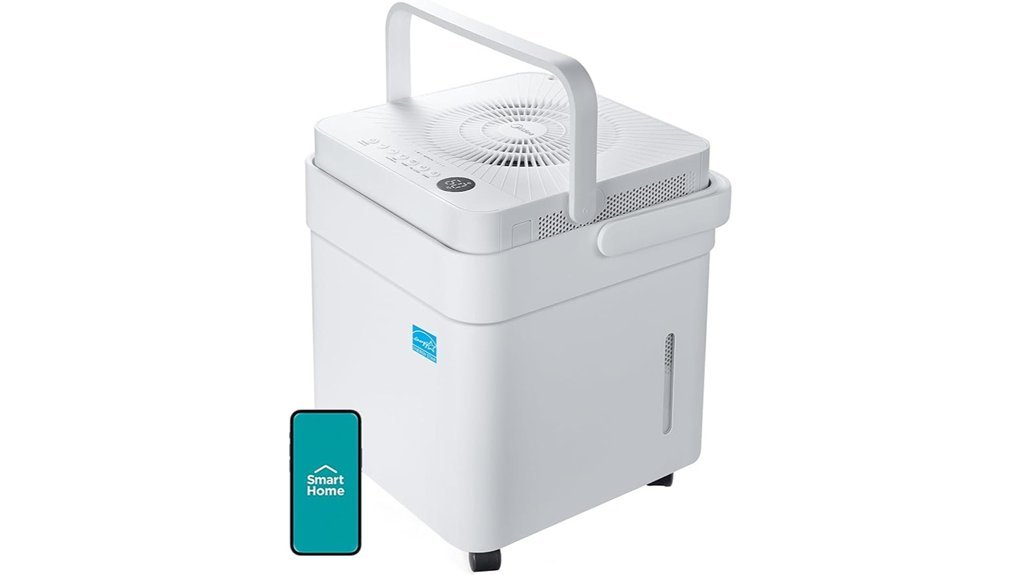
Best Large-Bucket Smart Pick
The Midea Cube MAD20S1QWT combines a standardized 20.16-pint daily capacity with a lift-and-twist design, app control, voice-assistant compatibility, and a bucket marketed at about 3.2 gallons. It is advertised for spaces up to 1,500 square feet and supports continuous gravity drainage with an included hose. Selectable fill levels can reduce the amount of water collected before shutoff when a lighter bucket is easier to carry.
Why you’ll like it: Its large bucket can reduce emptying frequency, while app access makes it easier to monitor and adjust the unit from another room.
Who should buy it: Buyers who want smart control, longer bucket runtime, and flexible storage in a medium-size connected area.
Who should avoid it: Anyone who may struggle to lift a heavy full bucket should use a lower fill setting or continuous drainage.
Pros:
- Verified ENERGY STAR capacity and certification.
- App control and voice-assistant compatibility.
- Large bucket, selectable fill levels, and included drain hose.
Cons:
- The bucket can become heavy at higher fill settings.
- Twenty-pint standardized capacity may be slow in severe basement humidity.
- App setup adds complexity compared with basic controls.
KNKA PD22SC-12 Dehumidifier with Drain Hose
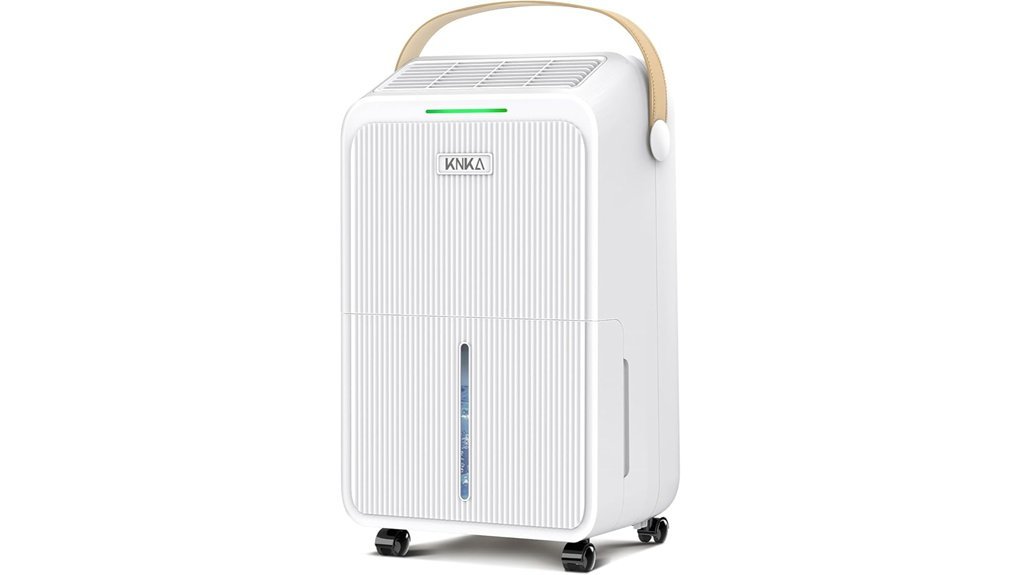
Best for Multiple Operating Modes
The KNKA PD22SC-12 is a compressor dehumidifier marketed for spaces up to 2,500 square feet, with a manufacturer maximum of 34 pints per day at 95°F and 90% relative humidity. Its DEHU, DRY, and CONT modes cover normal humidity control, indoor laundry drying, and continuous operation. It also includes a 3-liter tank, drain hose, digital display, timer, automatic defrost, child lock, washable filter, handles, and wheels.
Why you’ll like it: The included hose and three operating modes make it adaptable for basements, bedrooms, and laundry areas.
Who should buy it: Buyers who want an affordable feature set and are comfortable verifying current warranty and standardized capacity details before ordering.
Who should avoid it: Buyers who prefer extensively documented independent efficiency data or a long-established national service network.
Pros:
- DEHU, DRY, and CONT operating modes.
- Tank and included gravity-drain hose.
- Auto defrost, timer, child lock, and washable filter.
Cons:
- No standardized capacity figure was confirmed for direct comparison.
- Brand support and warranty terms should be checked on the current listing.
- The included hose may be too short for some placements.
PLUSCENT PD10 32 Pint Dehumidifier
Best Flexible Value Pick
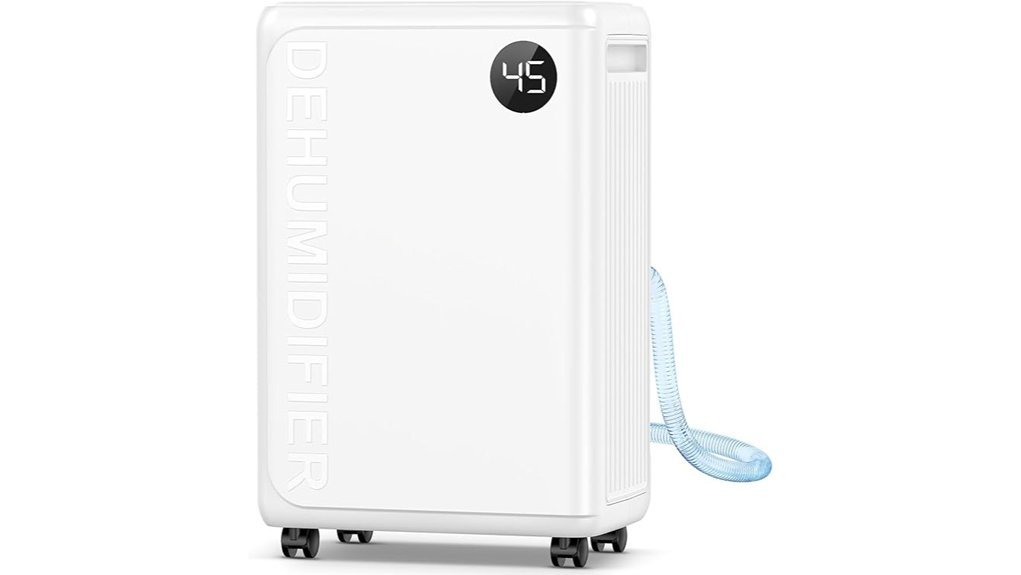
The PLUSCENT PD10 is marketed for spaces up to 2,500 square feet and a maximum of 32 pints per day at 95°F and 90% relative humidity. It includes DEHU, CONT, and DRY modes, a 24-hour timer, automatic defrost, automatic restart, automatic shutoff, a washable filter, wheels, a 2-liter tank, and an included gravity-drain hose.
Why you’ll like it: It offers a broad feature set for general humidity control and indoor laundry drying while keeping the controls straightforward.
Who should buy it: Value-focused buyers who want multiple modes and continuous drainage for a moderate-humidity room.
Who should avoid it: Buyers who need independently verified standardized capacity, established repair coverage, or a large bucket for manual use.
Pros:
- Multiple modes, timer, auto restart, and auto defrost.
- Tank and included gravity-drain hose.
- Portable design with washable filter.
Cons:
- No standardized capacity figure was confirmed for direct comparison.
- The 2-liter tank can fill quickly in high humidity.
- Current warranty and service terms should be verified before purchase.
Factors to Consider When Choosing a Home Dehumidifier
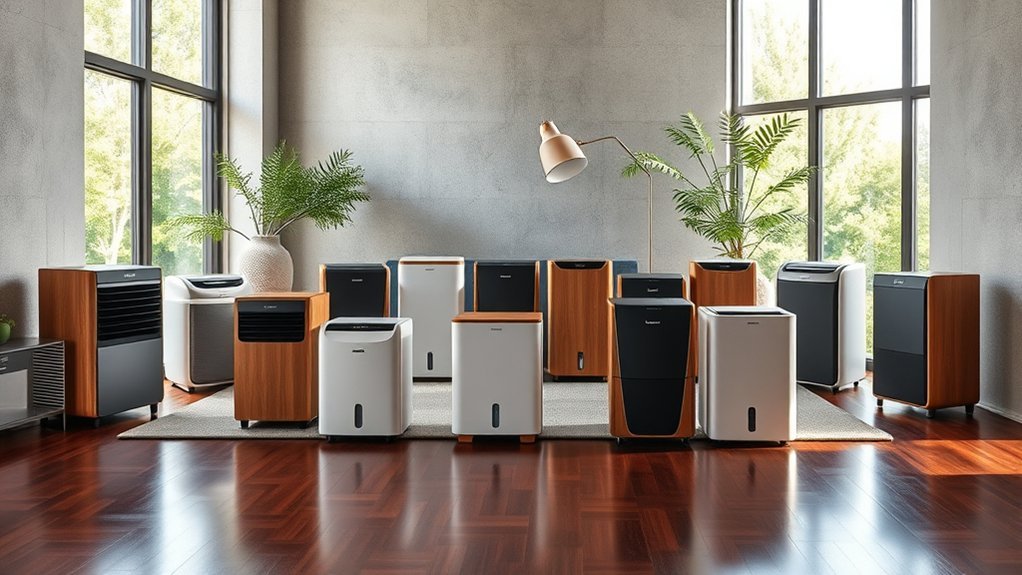
The right dehumidifier depends on moisture severity, standardized capacity, temperature, airflow, drainage, and maintenance. Use the points below to avoid buying a unit that looks powerful in marketing but is undersized for the room.
1. Compare Standardized Pint Capacity First
A pint rating describes how much water a dehumidifier removes in 24 hours at specified test conditions. Standardized ratings are the fairest way to compare models. A manufacturer maximum measured at 95°F and 90% or 95% relative humidity can be much higher than normal output in a cooler basement or air-conditioned room.
2. Treat Square-Foot Coverage as General Guidance
Coverage claims are not a substitute for capacity. The same 1,000-square-foot room can have a light seasonal humidity problem or active water intrusion. Start with moisture severity and standardized capacity, then use coverage as a secondary check.
3. Understand Compressor vs. Thermoelectric Models
Compressor dehumidifiers are normally the better choice for whole rooms, basements, and persistent humidity because they remove far more water per day. Small thermoelectric units can help in closets, cabinets, RV compartments, or lightly damp bathrooms, but their ounce-per-day extraction should not be compared directly with pint-rated compressor machines.
4. Choose a Practical Drainage Method
Manual tanks are simple but may need frequent emptying. Gravity drainage works only when the hose slopes continuously downward to a floor drain, sink, or safe outlet. A built-in pump is needed when water must travel upward, and none of these seven models should be assumed to include one unless the current listing clearly says so.
5. Look for an Adjustable Humidistat
A humidistat lets the unit cycle near the selected humidity level instead of running continuously. For a second opinion, place a separate hygrometer several feet from the unit and away from direct discharge air, exterior doors, and damp walls.
6. Verify ENERGY STAR by Model Number
ENERGY STAR certification is model-specific. Check the exact model number rather than relying on broad wording in a product title. Certification can improve efficiency compared with a similar non-certified unit, but it does not guarantee a fixed dollar saving because local rates, runtime, climate, and room conditions vary.
7. Match Noise Expectations to the Room
Bedrooms and offices benefit from lower fan settings and sleep modes. Exact dB claims can vary by test method and fan speed, and compressor cycling may be more noticeable than the listed fan-only number.
8. Consider Tank Weight and Maintenance
A large bucket reduces emptying frequency but becomes heavy when full. Clean the washable filter on the schedule in the manual, keep air inlets clear, and inspect continuous-drain hoses for kinks, clogs, leaks, and upward sections.
9. Check the Minimum Operating Temperature
Cool basements and garages can cause frost on the evaporator coils. Automatic defrost helps, but buyers should still confirm the model’s minimum operating temperature when winter use is important.
10. Know the Limits of a Portable Unit
A portable dehumidifier works best in one connected area with reasonable airflow. Closed doors, stairways, and separate floors restrict circulation. Widespread humidity may require multiple units or a professionally sized whole-home dehumidifier connected to the HVAC system.
Before You Buy: Quick Checklist
- Measure the actual room or connected open area.
- Decide whether the space is mildly damp, very damp, or wet.
- Compare standardized pint capacity before high-humidity maximums.
- Confirm whether a drain hose is included and whether it can slope downward.
- Check bucket size, full-bucket weight, filter access, and minimum operating temperature.
- Verify the exact model number, warranty, ENERGY STAR status, and smart features.
- Repair leaks and water intrusion instead of relying on a dehumidifier alone.
Frequently Asked Questions
How Many Pints Do I Need for a Home Dehumidifier?
A moderately damp bedroom or living area may work with a standardized 20- to 25-pint model. Larger, cooler, or persistently wet basements often need more capacity. Moisture severity, temperature, airflow, and drainage matter more than advertised square footage alone.
Why Does One Product Show Two Different Pint Ratings?
Manufacturers may advertise a high-humidity maximum measured around 95°F and 90% relative humidity, while ENERGY STAR or DOE data uses a standardized procedure. Use the standardized figure when comparing different models and treat the larger maximum as a best-case extraction number.
Can One Portable Dehumidifier Handle a Whole House?
It may help a small open floor plan, but closed rooms and separate floors limit airflow. A portable unit is best for one connected zone. Widespread humidity may require multiple units or a whole-home system.
How Often Should I Empty the Water Tank?
Empty the tank whenever the full indicator appears. In humid weather, a small tank may fill once or more per day. Continuous gravity drainage reduces manual emptying when a safe downhill drain is available.
Can I Use a Dehumidifier in Winter?
Yes, within the model’s rated temperature range. For a cold basement or garage, choose automatic defrost and confirm the minimum operating temperature in the manual.
Do Dehumidifiers Remove Allergens?
A dehumidifier is not an air purifier. Lowering excess humidity can make the room less favorable for moisture-related problems, but existing mold, leaks, and water damage still need direct cleanup and repair.
Is a Larger Dehumidifier Always Better?
No. A larger unit may remove moisture faster, but it can cost more, occupy more space, and create more noise than needed. Choose enough standardized capacity for the room’s moisture load without paying for capacity you will not use.
Final Recommendation
Choose the AEOCKY RHEA-001 when verified efficiency, automatic controls, and flexible drainage are the priorities. The Yaufey JD025Q-80 is a strong alternative for recurring basement humidity. The Midea EasyDry 22 Pint is the safest simple-control choice, while the Midea Cube 20 Pint is better when app access and a large bucket matter most.
Waykar, KNKA, and PLUSCENT can fit moderate-humidity rooms and laundry areas, but compare their standardized capacity and current warranty details carefully. Whichever model you choose, size by standardized pint capacity, provide a safe drainage plan, and treat square-foot claims as secondary guidance.