Updated August 2026.
For a 600 sq ft room, apartment, or basement, moisture-removal capacity matters more than a large marketing coverage number. Compact semiconductor units can help in closets and small bathrooms, but a compressor dehumidifier is generally more appropriate when you need to manage humidity across an entire 600 sq ft area. The four options below provide whole-room compressor operation, adjustable humidity controls, and tank or hose drainage for different moisture loads.
Quick Verdict
Best for flexible modes and drainage: KNKA. Best compact compressor option for light-to-moderate humidity: Aiusevo AS280. Best ENERGY STAR-certified option for mild dampness: Waykar PD160B. Best for a very damp basement or faster moisture removal: AEOCKY.
Quick Comparison for a 600 Sq Ft Space
| Product | Best Use | Capacity Note | Drainage | Amazon |
|---|---|---|---|---|
| KNKA | Seasonal or moderate dampness; laundry-drying flexibility | Seller lists up to 34 pints per day at 95°F and 90% RH | 3-liter tank or included gravity-drain hose | Check Details |
| Aiusevo AS280 | Light-to-moderate everyday humidity | Seller lists up to 21 pints per day at 95°F and 90% RH | 2-liter tank or included gravity-drain hose | Check Details |
| Waykar PD160B | Mild dampness and efficiency-focused use | Seller lists 34 pints at 95°F/90% RH; ENERGY STAR lists 9.81 pints under the cooler DOE test | 0.66-gallon tank or included gravity-drain hose | Check Details |
| AEOCKY | Very damp basements, high moisture loads, and faster drying | Seller lists 80 pints at 95°F/95% RH and 59.3 pints at 86°F/80% RH | Tank or gravity-drain hose | Check Details |
KNKA Compressor Dehumidifier with Drain Hose — Best for Flexible Modes
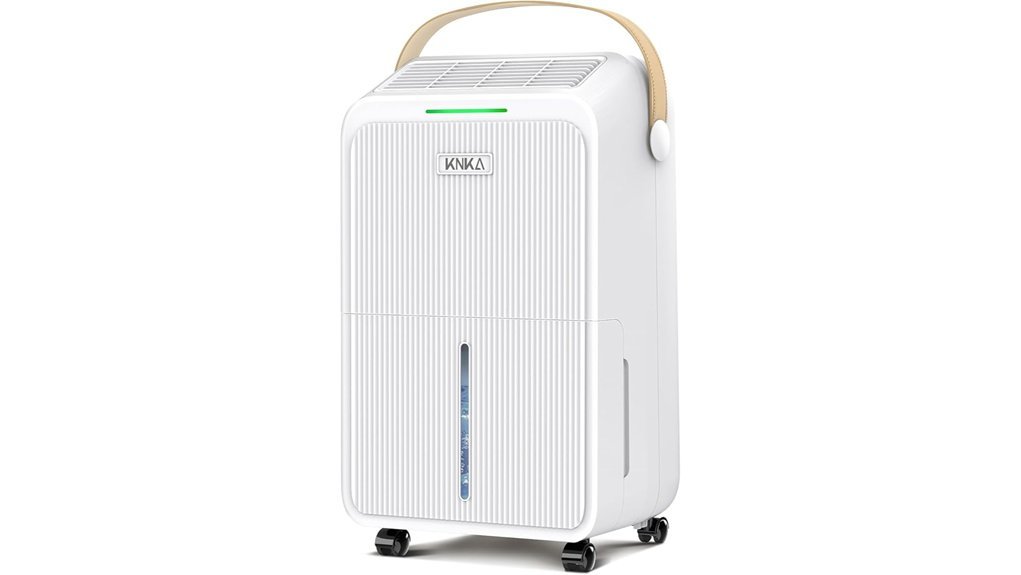
The KNKA is a flexible compressor option for a 600 sq ft bedroom suite, living area, laundry space, or basement with seasonal or moderate humidity. The seller states that it can remove up to 34 pints per day at 95°F and 90% relative humidity. That is a hot-condition maximum rather than a typical cool-basement result, so actual collection will normally vary with temperature and moisture level.
You can choose DEHU mode for automatic humidity control, DRY mode for damp laundry, or CONT mode for continuous operation. The listing also describes a 3-liter internal tank, automatic defrost, a digital display, two fan speeds, wheels, a washable filter, and an included 3.28-foot gravity-drain hose.
Best For: Buyers who want multiple operating modes, automatic humidity control, and flexible tank or hose drainage.
Why You’ll Like It:
- DEHU, DRY, and CONT modes address everyday humidity, laundry drying, and continuous operation.
- The 3-liter tank is larger than the Aiusevo tank, while hose drainage supports longer unattended operation.
- Automatic defrost, wheels, a washable filter, and a digital control panel improve everyday usability.
Who Should Avoid It: Buyers with only a small closet moisture problem may not need a full-size compressor appliance. Those dealing with wet walls, active seepage, or repeated water intrusion should consider a higher-capacity option and correct the water source.
Limitations:
- The advertised 34-pint capacity was measured at 95°F and 90% relative humidity, not under normal cool-basement conditions.
- The tank can still require frequent emptying during high-moisture operation if you do not use the drain hose.
- The hose relies on gravity and must slope continuously toward a lower drain unless you add a separate condensate pump.
Aiusevo AS280 21-Pint Dehumidifier — Best Compact Compressor Option
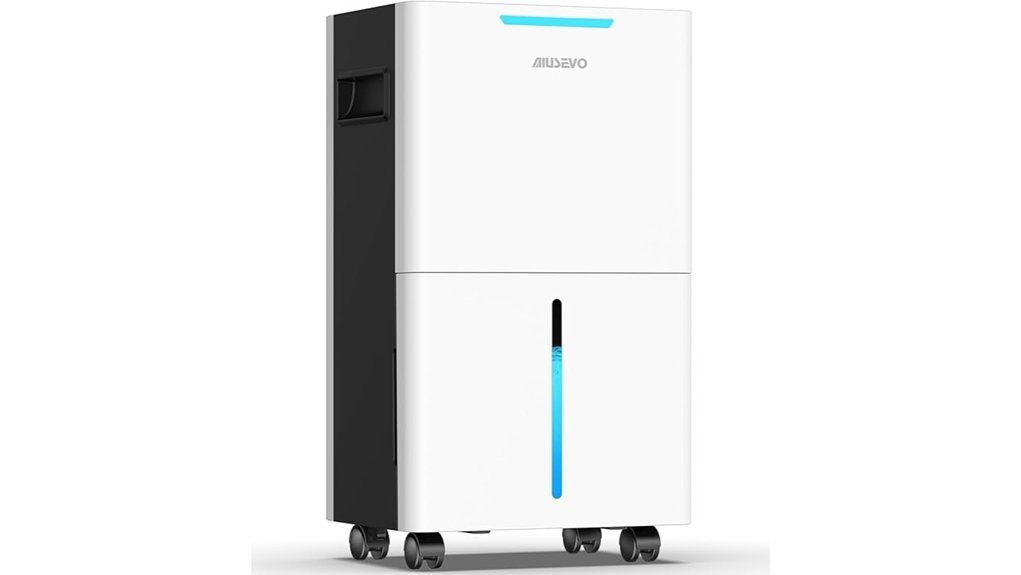
The Aiusevo AS280 is a sensible option when a 600 sq ft space feels humid or musty but does not have severe seepage, wet walls, or standing water. Its listing describes a compressor system that removes up to 21 pints per day at 95°F and 90% relative humidity. Because that is a hot, highly humid test condition, normal-room extraction can be lower.
DEHU, DRY, and CONT modes provide automatic humidity control, laundry drying, and continuous operation. The listing also identifies a 2-liter removable tank, an included 3.28-foot drain hose, automatic defrost, a child lock, timer, digital display, two fan speeds, handles, and 360-degree wheels.
Best For: Light-to-moderate humidity, finished living spaces, and buyers who want a smaller compressor model with automatic controls.
Why You’ll Like It:
- Automatic humidity control cycles the compressor according to the selected setting.
- Three operating modes cover normal dehumidification, laundry drying, and nonstop operation.
- The included hose, removable tank, handles, and wheels make placement and maintenance easier.
Who Should Avoid It: Choose a higher-capacity option if the space is consistently very damp, has visible water intrusion, or must dry quickly after a leak.
Limitations:
- The 21-pint headline figure is based on 95°F and 90% relative humidity and should not be treated as a standardized cool-room rating.
- The 2-liter collection tank may fill quickly during humid weather.
- Compressor and fan noise may be noticeable in a quiet bedroom, even when the unit is operating normally.
- Continuous drainage requires a secure downhill hose route unless a separate pump is used.
Waykar PD160B ENERGY STAR Dehumidifier — Best for Mild Dampness
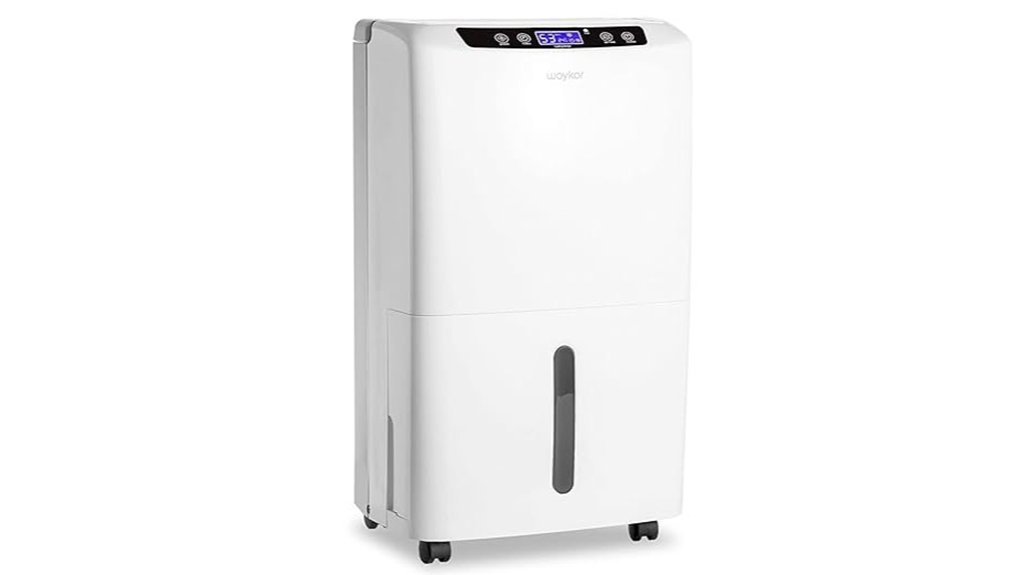
The Waykar PD160B is worth considering when the room has mild seasonal humidity and verified energy efficiency is a priority. Amazon describes it as a 34-pint model based on testing at 95°F and 90% relative humidity. However, the official ENERGY STAR Product Finder lists PD160B at 9.81 pints per day under the cooler DOE Appendix X1 test procedure. These are different test methods, so the figures should not be compared as though they describe identical conditions.
The unit includes an adjustable humidistat, two fan speeds, a 24-hour timer, manual 90-degree airflow adjustment, automatic defrost, a removable 0.66-gallon tank, a washable filter, wheels, and hose drainage. Its ENERGY STAR certification is a more reliable efficiency signal than a vague promise of a specific dollar saving.
Best For: Mild seasonal humidity, bedrooms, finished rooms, and buyers who value independently verified energy efficiency.
Why You’ll Like It:
- ENERGY STAR certification provides a verified efficiency benchmark for the specified PD160B model.
- An adjustable humidistat and timer can reduce unnecessary operation after the room reaches the selected setting.
- The washable filter, wheels, bucket, and hose drainage support routine home use.
Who Should Avoid It: This should not be the first choice for active seepage, wet walls, post-flood drying, or a basement that remains very damp throughout the year.
Limitations:
- The 34-pint Amazon figure is measured at 95°F and 90% relative humidity; ENERGY STAR lists a much lower standardized capacity under cooler DOE conditions.
- Manual airflow adjustment is less convenient than motorized automatic swing.
- The 0.66-gallon tank can require frequent emptying when the room has a high moisture load.
- Confirm the exact model number because Waykar sells several products with similar names and different capacities.
AEOCKY High-Capacity Compressor Dehumidifier — Best for Very Damp Spaces
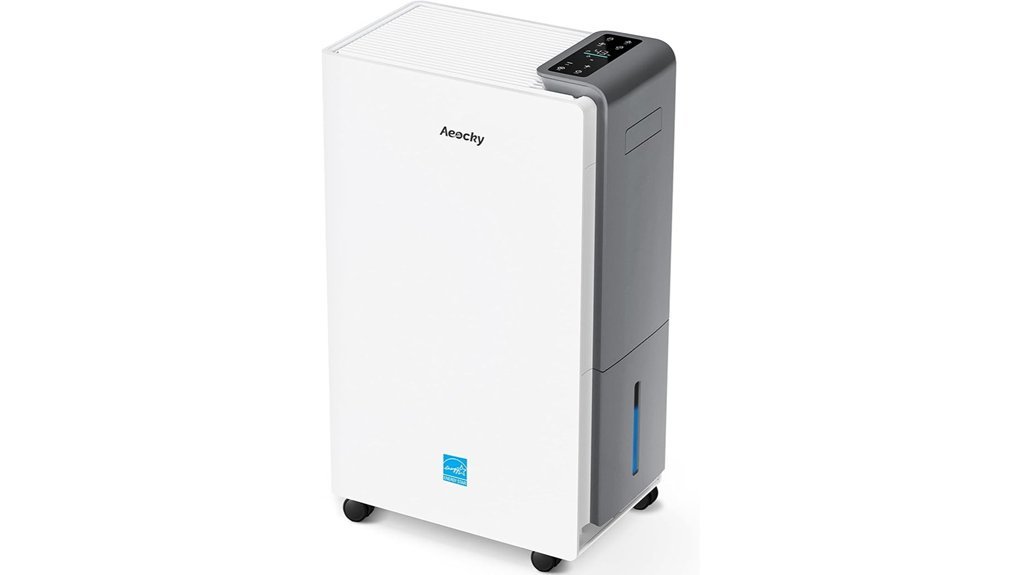
The AEOCKY is the high-capacity option for a 600 sq ft basement that is consistently very damp, has a high laundry load, or needs faster moisture recovery. Its current seller information lists 80 pints per day at 95°F and 95% relative humidity and 59.3 pints per day at 86°F and 80% relative humidity. Those figures demonstrate higher potential output than the smaller models, but they are still condition-specific seller ratings.
The unit includes automatic humidity control, drain-hose support, a timer, automatic defrost, a washable filter, handles, and wheels. The listing uses the word “smart” to describe automatic humidity sensing and power-loss memory. Do not assume that it includes native Wi-Fi, an app, or voice-assistant control unless the current product page explicitly confirms those features.
Best For: Very damp basements, high-humidity climates, laundry areas, and buyers who prefer additional moisture-removal headroom.
Why You’ll Like It:
- Its higher seller-rated extraction provides more drying headroom for demanding conditions.
- Automatic humidity control can reduce output after the room reaches the selected target.
- Continuous gravity drainage supports longer operation without repeated bucket emptying.
- Automatic defrost is useful where basement temperatures can reduce compressor performance.
Who Should Avoid It: Buyers with mild seasonal humidity, very limited floor space, or only a small enclosed moisture problem may be better served by a smaller compressor model.
Limitations:
- The 80-pint figure was measured at 95°F and 95% relative humidity and is not a typical cool-room capacity.
- “Smart” humidity control does not necessarily mean built-in Wi-Fi or app connectivity.
- The larger cabinet occupies more floor space and is less convenient to carry between levels.
- Do not assume a specific annual dollar saving; electricity cost depends on climate, runtime, utility rates, setpoint, and comparison model.
Factors to Consider When Choosing a Dehumidifier for 600 Sq Ft
A good 600 sq ft dehumidifier should be selected by moisture load, standardized pint capacity, room temperature, drainage access, noise tolerance, and exact model number. A seller’s square-foot claim is only a rough starting point.
Choose Standardized Capacity by Dampness
For a small-to-medium room below 2,000 sq ft, ENERGY STAR generally recommends about 20–30 standardized pints per day for slightly to moderately damp conditions, 25–40 pints for very damp conditions, and 30–50 pints for wet conditions. Review the full ENERGY STAR dehumidifier sizing guidance before comparing models.
A 600 sq ft finished room with seasonal humidity may need less capacity than a 600 sq ft basement with seepage, laundry drying, unsealed concrete, or frequent outdoor-air infiltration. Do not compare ENERGY STAR’s standardized ranges directly with seller ratings measured at 95°F without accounting for the different test conditions.
Compare Test Conditions, Not Just the Largest Number
Current DOE testing for portable dehumidifiers uses cooler conditions intended to better represent basement operation. Some Amazon listings instead highlight extraction measured at 86°F or 95°F and very high relative humidity. Warmer air can hold more water, so a product will usually collect more moisture during the hotter test.
Before buying, compare the exact model number, temperature, relative humidity, standardized capacity, and tank volume. The extraction rate and bucket size are different measurements: a “34-pint” dehumidifier does not necessarily contain a 34-pint tank.
Compressor vs. Semiconductor Dehumidifiers
Compressor models are generally the better fit for controlling a complete 600 sq ft space. Small semiconductor or thermoelectric units can work in a closet, cabinet, RV compartment, or small bathroom, but their daily extraction is often measured in ounces rather than dozens of pints under comparable conditions. They may be quieter, yet still take too long to control humidity across a larger open area.
Water Tank, Gravity Drainage, and Pumps
A larger tank reduces emptying frequency, but a drain hose is more practical for a persistently damp basement. Standard hose drainage relies on gravity, so the entire hose must run downhill to a floor drain, sump, shower drain, or other safe outlet below the unit’s drain port.
None of the four product descriptions in this roundup establishes a built-in condensate pump. If the available drain is above the dehumidifier, use a compatible separate pump rather than routing the hose uphill. Secure the connection, remove kinks, and test the drainage path before leaving the machine unattended.
Humidistat and Target Humidity
Choose a model with an adjustable humidistat and use a separate hygrometer to check the room reading. The EPA recommends keeping indoor relative humidity below 60% and ideally between 30% and 50%.
Starting near 50% is practical for many homes. Setting the unit unnecessarily low can increase runtime, noise, and electricity use without fixing an underlying leak. A dehumidifier’s sensor measures air near its intake, so its display may differ slightly from a hygrometer placed elsewhere in the room.
Noise and Placement
Compressor units produce fan, airflow, vibration, and compressor noise. Place the dehumidifier on a stable, level surface and leave the clearance required by its manual around the intake and exhaust. In a bedroom or living area, use a lower fan setting, sleep mode, or timer when available.
Do not place the appliance directly against curtains, upholstered furniture, walls, or stored boxes that can obstruct airflow. Keep doors and windows closed during operation unless ventilation is needed for another safety reason.
Low-Temperature Operation
Cool basement air reduces extraction and can cause frost on a compressor dehumidifier’s coils. ENERGY STAR notes that frost may become a concern when room temperatures fall below about 65°F. Check the manufacturer’s operating-temperature range and confirm that automatic defrost is included.
Automatic defrost helps protect operation, but it does not make extraction identical at all temperatures. A product that collects heavily in a hot test chamber can remove much less water in a cool unfinished basement.
Maintenance and Safety
Clean the filter according to the manual, wash and dry the bucket, inspect the hose for blockage, and keep the plug and cord away from standing water. Auto shut-off and a correctly seated bucket reduce overflow risk, but they do not replace routine inspection.
A dehumidifier cannot repair roof leaks, plumbing failures, poor grading, foundation seepage, groundwater entry, or an incorrectly vented clothes dryer. Correct the moisture source and dry wet materials promptly before relying on a dehumidifier for ongoing humidity control.
Before You Buy
- Measure the actual space and note whether doors normally remain open or closed.
- Use a separate hygrometer to record humidity and temperature for several days.
- Decide whether the room is mildly damp, very damp, or wet.
- Compare standardized capacity separately from hot-condition seller ratings.
- Confirm the exact model number, ASIN, tank size, and included hose.
- Plan a continuously downhill drain route or budget for a separate condensate pump.
- Verify the minimum operating temperature, warranty terms, and replacement-filter availability.
- Check the current Amazon page for specification or accessory changes before ordering.
Frequently Asked Questions
What Size Dehumidifier Do I Need for 600 Square Feet?
For a room below 2,000 sq ft, ENERGY STAR generally suggests 20–30 standardized pints per day for slight-to-moderate dampness, 25–40 pints for very damp conditions, and 30–50 pints for wet conditions. The correct choice also depends on temperature, leaks, laundry, ventilation, ceiling height, and how open the room is.
Can I Compare a 34-Pint Amazon Rating With a 30-Pint Standardized Rating?
Not unless both capacities were measured under the same test conditions. A 34-pint figure measured at 95°F and 90% relative humidity can be much higher than the same unit’s DOE capacity under cooler conditions. Check the temperature, relative humidity, model number, and test method before comparing products.
Is a Mini Dehumidifier Enough for 600 Square Feet?
Usually not for whole-room humidity control. Mini thermoelectric units are better for small enclosed areas. A compressor model is normally more appropriate when you need to lower humidity across an entire 600 sq ft room, apartment area, or basement.
What Humidity Level Should I Set?
A practical indoor target is generally 30%–50% relative humidity. Start near 50%, monitor condensation and comfort, and adjust gradually. If humidity remains high while the unit runs constantly, investigate air leaks, water intrusion, ventilation, room temperature, and whether the machine is undersized.
How Often Will I Empty the Tank?
Emptying frequency depends on the tank size, room temperature, humidity, and moisture source. A damp basement may fill a small bucket once or several times per day. Continuous gravity drainage is more convenient when a secure downhill drain path is available.
Does a Drain Hose Pump Water Uphill?
No. A standard continuous-drain hose relies on gravity and must slope toward a lower drain. If the drain is above the dehumidifier, you generally need a separate condensate pump or a model with a confirmed built-in pump.
Does “Smart Humidity Control” Mean Wi-Fi?
Not necessarily. Sellers often use “smart” to describe automatic humidistat operation, digital sensing, timers, or power-loss memory. Confirm that the listing specifically mentions built-in Wi-Fi, an app, or voice-assistant compatibility before expecting remote control.
Can a Dehumidifier Fix a Wet Basement?
No. It can remove moisture from the air and help materials dry after the water source is corrected, but it cannot repair foundation seepage, plumbing leaks, poor grading, roof leaks, blocked drainage, or groundwater problems.
Why Do Dehumidifier Capacity Ratings Differ?
Manufacturers, retailers, and certification programs may report results from different temperature and humidity conditions. Hot, saturated air contains more removable moisture than cool basement air, so a maximum-condition rating can be much higher than a standardized DOE rating. Compare like-for-like figures and exact model numbers.
Conclusion
There is no single dehumidifier that is best for every 600 sq ft room because moisture load and temperature matter more than floor area alone. The KNKA offers the most flexible combination of operating modes, a 3-liter tank, and hose drainage for seasonal or moderate dampness. The Aiusevo AS280 is a smaller compressor option for light-to-moderate everyday humidity.
The Waykar PD160B is the strongest choice when verified ENERGY STAR efficiency is the priority and the room has a relatively mild moisture load. Choose the AEOCKY when the basement remains very damp, needs faster drying, or justifies substantially more extraction headroom.
Final Recommendation
Measure humidity and temperature before ordering, compare capacities measured under the same test method, and plan the drainage route in advance. Whichever model you choose, maintain a realistic humidity target and repair the source of any water intrusion. Those decisions matter more than an oversized square-foot claim.