Updated August 2026.
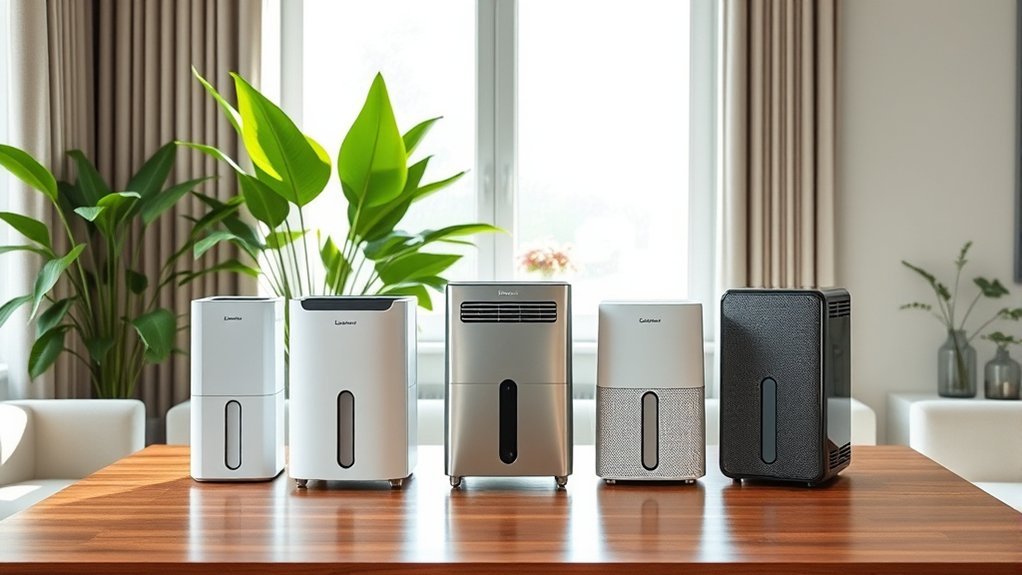
The best dehumidifier for a living space depends on the size of the room, the severity of the moisture problem, the operating temperature, and whether you can use continuous drainage. Pint-rated compressor models are generally better suited to basements, laundry rooms, open living areas, and persistent dampness. Compact semiconductor models are easier to place in bedrooms, bathrooms, closets, offices, and RVs, but they remove far less water.
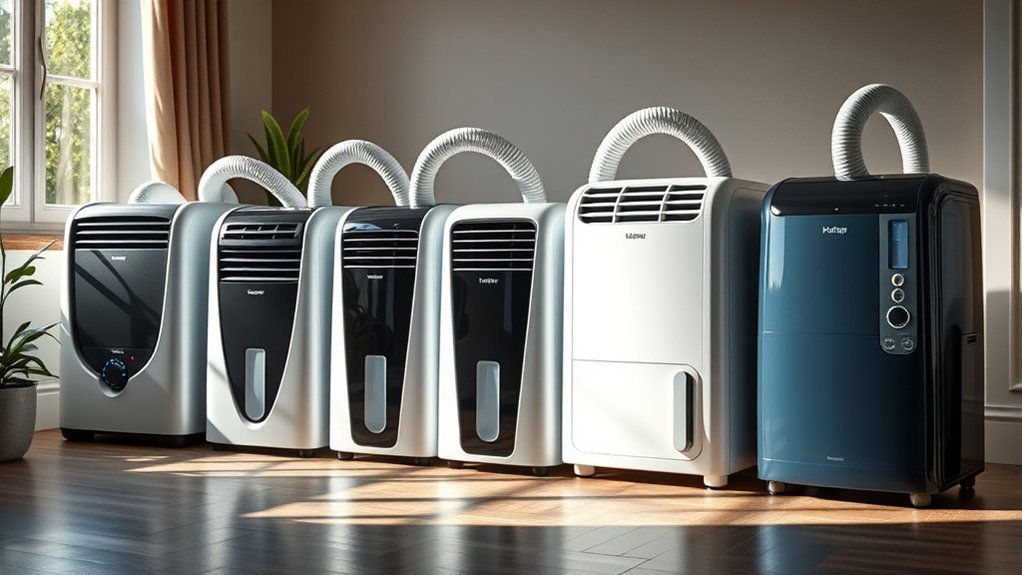
This guide compares six relevant options by seller-listed moisture-removal capacity, tank size, drainage, noise, controls, portability, and realistic use-case fit. Coverage figures are included for reference, but they should not be treated as guarantees of whole-room performance.
Quick verdict
Choose the Vellgoo 64 Pint for a large, consistently damp space and the KNKA 34 Pint when you want a smaller compressor model with an included drain hose. For localized moisture in a bedroom, bathroom, closet, office, or RV, the NovaLivin 68 OZ offers useful humidity presets, while the TABYIK 38 OZ is the easiest compact option to place in a tight area. Seller-listed coverage figures are not directly comparable across compressor and semiconductor designs.
Key takeaways
- Use a compressor dehumidifier for persistent room-scale humidity, a damp basement, or frequent laundry drying.
- Use a compact semiconductor dehumidifier for localized moisture in a small enclosed space.
- Compare daily extraction, test conditions, drainage, and temperature range before comparing advertised square-foot coverage.
How these picks were compared
The labels in this guide are based on current seller-listed specifications and practical use-case fit, not hands-on testing. We compared dehumidification technology, stated daily extraction, tank capacity, humidity controls, drainage, operating modes, noise claims, portability, and the limitations buyers should understand before ordering.
Quick Comparison of the Best Dehumidifiers for Living Spaces
The table is not a direct performance ranking because the products use different technologies and test conditions. Moisture-removal figures are seller-reported maximums measured under stated or favorable conditions. Actual collection varies with temperature, starting humidity, airflow, room layout, ventilation, and how often doors or windows are opened.
| Product | Best Use | Technology | Seller-Listed Moisture Removal | Tank / Drainage | Amazon |
|---|---|---|---|---|---|
| ToLife 95 OZ Best portable LED model |
Bedrooms, bathrooms, offices, or localized dampness | Semiconductor condensation | A clear daily extraction figure was not verified | 95 oz tank; manual emptying | Check Product Details |
| Vellgoo 64 Pint Best overall for large spaces |
Basements, large rooms, laundry areas, garages | Compressor | Up to 64 pints per day in the seller listing; confirm the current standardized rating | Tank plus seller-listed drainage options | Check Current Availability |
| NovaLivin 68 OZ Best humidity presets |
Small bedrooms, bathrooms, closets, offices, RVs | Dual semiconductor | Up to 34 oz per day at 86°F and 80% RH | 68 oz removable tank | Check Product Details |
| TABYIK 38 OZ Best for closets and RVs |
Closets, bathrooms, compact bedrooms, offices, RVs | Semiconductor | Up to 11 oz per day at 86°F and 80% RH | 38 oz tank; automatic shutoff | Check Product Details |
| KNKA 34 Pint Best value compressor model |
Basements, offices, laundry rooms, large bedrooms | Compressor | Up to 34 pints per day at 95°F and 90% RH | 3-liter tank and included drain hose | Check Product Details |
| Natrogix 106 OZ Best large-tank compact model |
Bedrooms, bathrooms, RVs, offices, localized damp areas | Dual-core semiconductor | Up to 40 oz per day at 86°F and 80% RH | 106 oz removable tank | Check Product Details |
ToLife 95 OZ Dehumidifier with LED Light
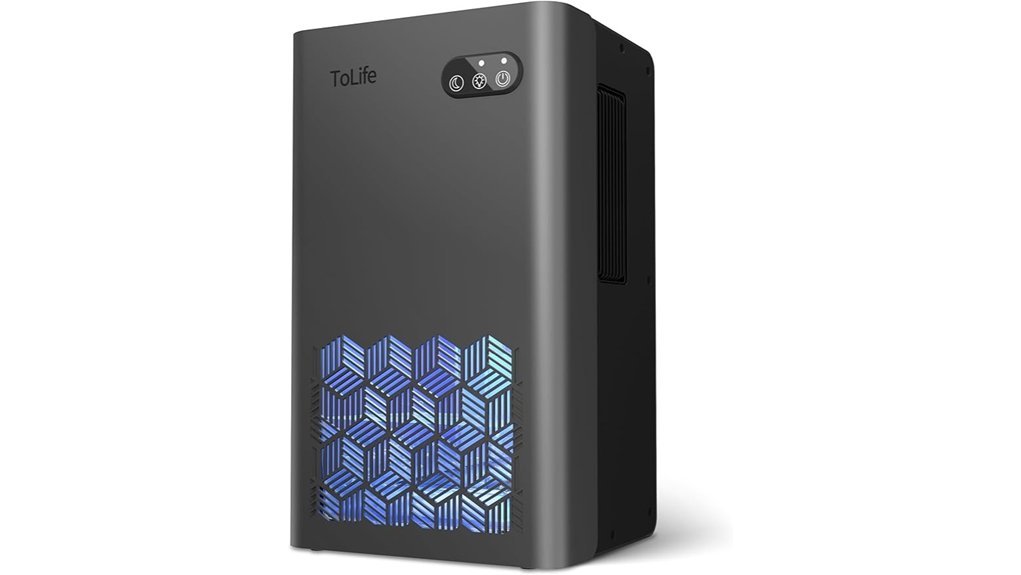
Best for: Buyers who want a portable, quiet dehumidifier for a bedroom, bathroom, office, or another localized damp area, with a large tank and optional ambient lighting.
The ToLife uses semiconductor condensation rather than a compressor. That makes it compact and easier to move, but its seller-listed 1,000-square-foot coverage should not be treated as equivalent to the coverage of a 34- or 64-pint compressor dehumidifier. A clear standardized daily extraction figure was not available in the product information reviewed, so it is better viewed as a localized moisture-control option for a smaller enclosed living space.
You can switch between a stronger operating mode and a lower-speed sleep mode. The 95 oz tank reduces how often you may need to empty it compared with many mini models, while automatic shutoff helps prevent overflow when the tank is full. Seven lighting options are included, although the lighting is an accent feature rather than a dehumidification benefit.
Why you may like it: Large tank for its class, portable design, sleep mode, straightforward controls, and optional ambient light.
Who should avoid it: Anyone dealing with a wet basement, water intrusion, soaked building materials, or heavy whole-room moisture that calls for a compressor dehumidifier.
Pros:
- Compact semiconductor design is easy to place and move.
- Low-speed mode is better suited to nighttime use.
- Automatic shutoff helps prevent tank overflow.
Cons:
- The seller-listed coverage figure may overstate practical whole-room performance.
- A clear daily extraction figure was not verified.
- Manual tank emptying is required.
Vellgoo 64 Pint Dehumidifier for Large Living Spaces
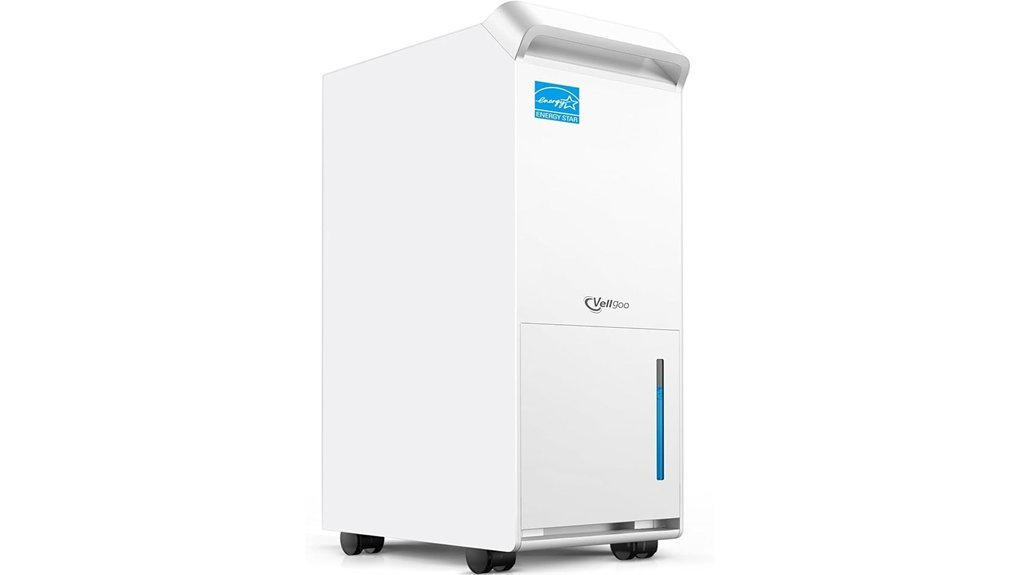
Best for: Large living areas, basements, garages, laundry areas, or other spaces with persistent humidity where compressor capacity and continuous drainage are more appropriate.
The Vellgoo is the strongest large-space option in this group based on its compressor design and seller-listed capacity of up to 64 pints per day. Treat that figure as a listing specification rather than a guaranteed standardized result unless the current certification record confirms the test method. Its advertised 4,000-square-foot coverage is also a maximum marketing figure; actual results depend on room temperature, starting humidity, ceiling height, airflow, and whether the space is open or divided.
Seller-listed humidity control, operating modes, automatic defrost, automatic restart, a washable filter, mobility features, and drainage choices make it better suited to regular room-scale use than the compact semiconductor models. Its larger cabinet requires more floor space, but that tradeoff is reasonable when higher extraction capacity is needed.
Why you may like it: High seller-listed capacity, better suitability for persistent dampness, adjustable humidity control, and less hands-on maintenance when connected to a suitable drain.
Who should avoid it: Buyers who need a tiny bedside unit, have very limited floor space, or want near-silent fan-only operation.
Pros:
- Highest seller-listed daily moisture capacity in this comparison.
- Continuous drainage can reduce repeated tank emptying.
- Humidity controls and multiple operating features support changing room conditions.
Cons:
- Larger and heavier than compact semiconductor units.
- Compressor and fan noise may be noticeable in a quiet bedroom.
- The seller-listed capacity and coverage should not be assumed to equal performance in every room.
Certification note: The product title may reference an earlier ENERGY STAR recognition year. Check the current listing and certification database rather than assuming that an older recognition remains current.
NovaLivin 68 OZ Dehumidifier with Humidity Presets
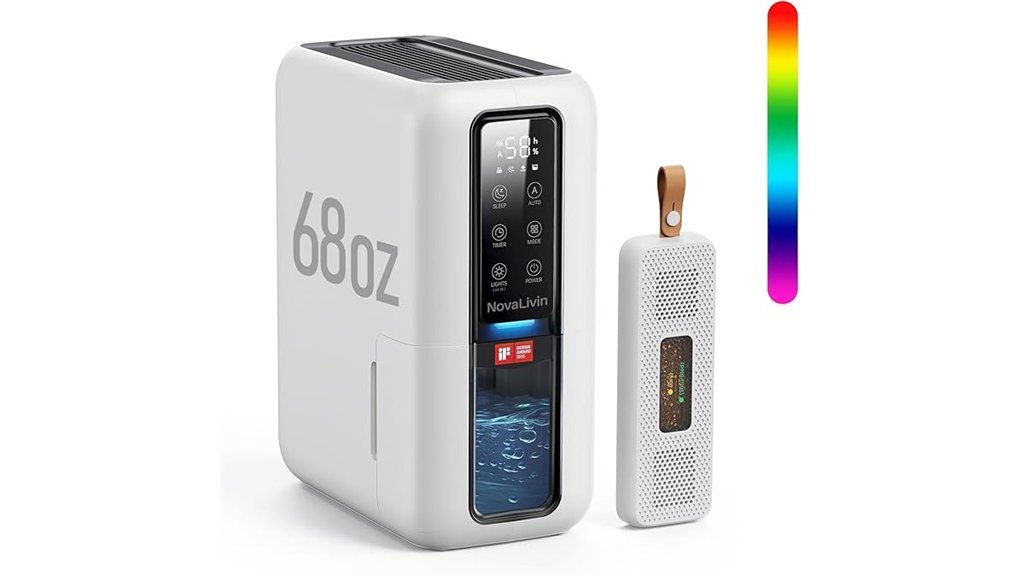
Best for: Small bedrooms, bathrooms, offices, closets, RVs, or other enclosed areas where preset humidity targets and quiet operation matter more than whole-basement capacity.
The NovaLivin is a dual-semiconductor model listed to remove up to 34 oz of moisture per day at 86°F and 80% relative humidity. That is a favorable test environment, so collection will usually be lower in cooler or less humid rooms. The 68 oz removable tank, two speed settings, 24-hour timer, and 40%, 50%, or 60% humidity presets provide more control than many basic mini dehumidifiers.
The seller describes sleep-mode operation at about 30 dB. That may suit some sleeping areas, although perceived sound depends on placement, fan speed, background noise, and room acoustics. Its compact footprint is convenient, but buyers with widespread dampness should move up to a compressor model.
Why you may like it: Useful humidity presets, timer control, two speed settings, a removable tank, and a compact portable design.
Who should avoid it: Buyers expecting the performance of a pint-rated compressor dehumidifier in a large, cool, or very damp room.
Pros:
- Adjustable humidity presets simplify everyday use.
- Dual speed settings allow a balance between sound and moisture collection.
- Removable tank is easier to empty and clean than a fixed reservoir.
Cons:
- Maximum moisture removal is based on hot, humid test conditions.
- Manual emptying may be frequent during humid weather.
- It is not a substitute for a compressor model in a persistently damp basement.
TABYIK Small Dehumidifier (38 OZ)
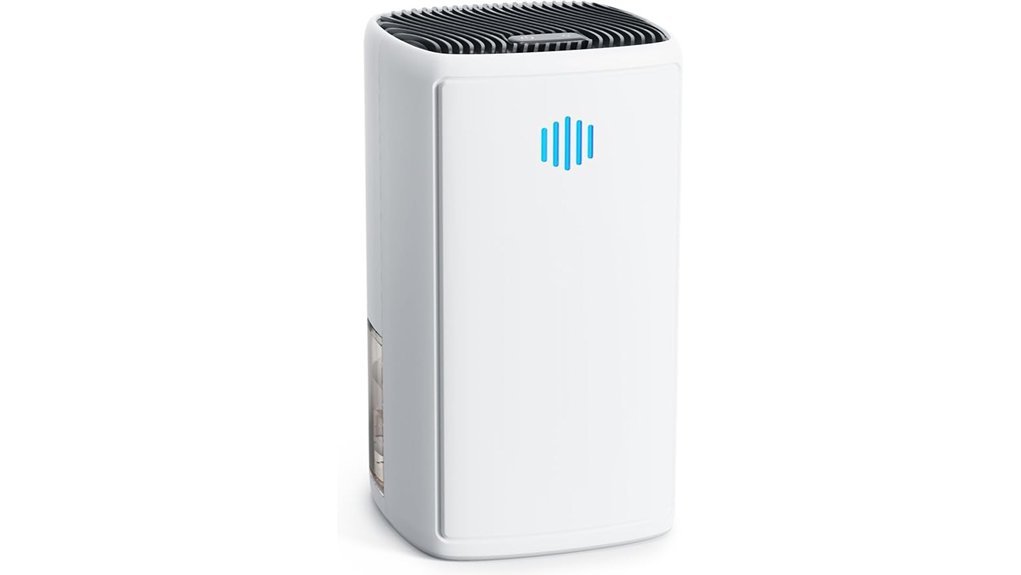
Best for: Closets, compact bathrooms, small bedrooms, offices, wardrobes, and RVs where portability and low operating noise are priorities.
The TABYIK 38 OZ is listed for spaces up to 280 square feet and for moisture removal of up to 11 oz per day at 86°F and 80% relative humidity. It is a small semiconductor model, so it should be chosen for localized dampness rather than a major room-scale moisture problem.
Its tank-full shutoff and red indicator reduce overflow risk, while the seller-listed noise level below 30 dB makes it more suitable for quiet rooms than a typical compressor appliance. Automatic defrost is also listed, but moisture collection will still fall as the room becomes cooler or less humid.
Why you may like it: Small footprint, light weight, quiet seller-listed operation, straightforward controls, and tank-full protection.
Who should avoid it: Buyers trying to dry a large basement, laundry room, open-plan living area, wet carpet, or water-damaged materials.
Pros:
- Compact dimensions fit shelves, counters, wardrobes, and other tight spaces.
- Quiet seller-listed operation suits bedrooms and offices.
- Automatic shutoff and a full-tank indicator improve everyday convenience.
Cons:
- Low daily extraction compared with compressor models.
- The 38 oz tank may need frequent emptying during humid weather.
- Not suitable for water leaks, wet building materials, or severe dampness.
KNKA 34 Pint Dehumidifier with Drain Hose
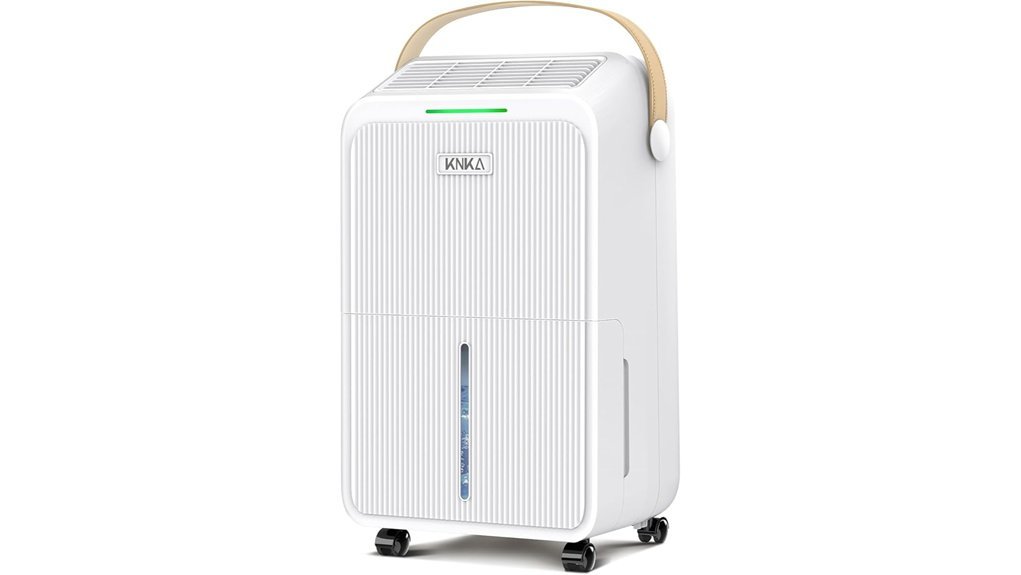
Best for: Basements, laundry rooms, offices, large bedrooms, and living spaces where buyers want compressor performance without stepping up to the larger Vellgoo model.
The KNKA is listed to remove up to 34 pints per day at 95°F and 90% relative humidity, with advertised coverage up to 2,500 square feet. Because that rating uses very warm and humid conditions, real-world daily collection may be lower. Even so, its compressor design makes it more appropriate than a mini semiconductor unit for recurring room-scale humidity.
DEHU, DRY, and CONT modes support normal humidity control, laundry drying, and continuous operation. The 3-liter tank can be emptied manually, or the included hose can be connected for gravity drainage. Wheels, a handle, washable filter, timer, child lock, digital humidity display, automatic shutoff, and automatic defrost add practical value for regular household use.
Why you may like it: Compressor performance, useful operating modes, adjustable humidity control, and an included drain hose in a smaller cabinet than the Vellgoo.
Who should avoid it: Anyone who needs a lightweight countertop unit or cannot provide enough clearance and a suitable downhill drainage route.
Pros:
- Better suited to persistent humidity than compact semiconductor models.
- Manual and continuous gravity drainage provide flexible maintenance.
- Wheels and a handle help move the approximately 23-pound cabinet.
Cons:
- Seller-listed capacity is measured under very warm and humid test conditions.
- The 3-liter tank can fill quickly when the unit is collecting heavily.
- Heavier and less convenient to carry than mini dehumidifiers.
Drainage note: Continuous drainage is gravity-fed unless a separate pump is specified. The hose must run downward to a suitable drain without loops, kinks, or an uphill section.
Natrogix 106 OZ Dehumidifier for Home Use
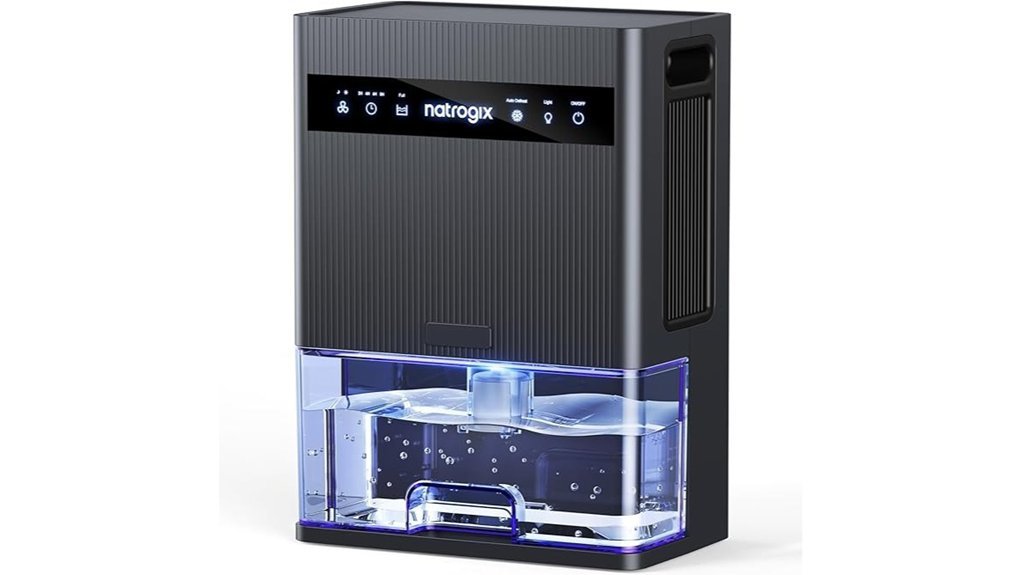
Best for: Buyers who want a compact semiconductor dehumidifier with a larger-than-average water tank for bedrooms, bathrooms, offices, laundry areas, or RV use.
The Natrogix combines a 106 oz tank with seller-listed dual-core semiconductor technology and moisture removal of up to 40 oz per day at 86°F and 80% relative humidity. Its advertised 1,000-square-foot coverage is best treated as a maximum marketing figure, not a guarantee that it will control humidity throughout a large open room.
Power and Sleep modes let you prioritize faster collection or quieter operation. The unit includes automatic shutoff, timer settings, automatic defrost, lighting controls, and a hidden handle for portability. The larger tank may reduce emptying frequency compared with smaller mini models, but it does not increase the underlying extraction rate.
Why you may like it: Large tank for a compact unit, portable design, sleep mode, timer, and simple tank-full protection.
Who should avoid it: Buyers who need verified compressor capacity, continuous drainage, or dependable whole-basement performance.
Pros:
- 106 oz tank can reduce emptying frequency compared with smaller mini models.
- Hidden handle supports room-to-room use.
- Power and Sleep modes offer basic control over speed and sound.
Cons:
- Coverage and extraction claims depend heavily on warm, humid room conditions.
- Manual tank maintenance is still required.
- It cannot match a pint-rated compressor model in a large or persistently damp room.
Factors to Consider When Choosing a Dehumidifier for a Living Space
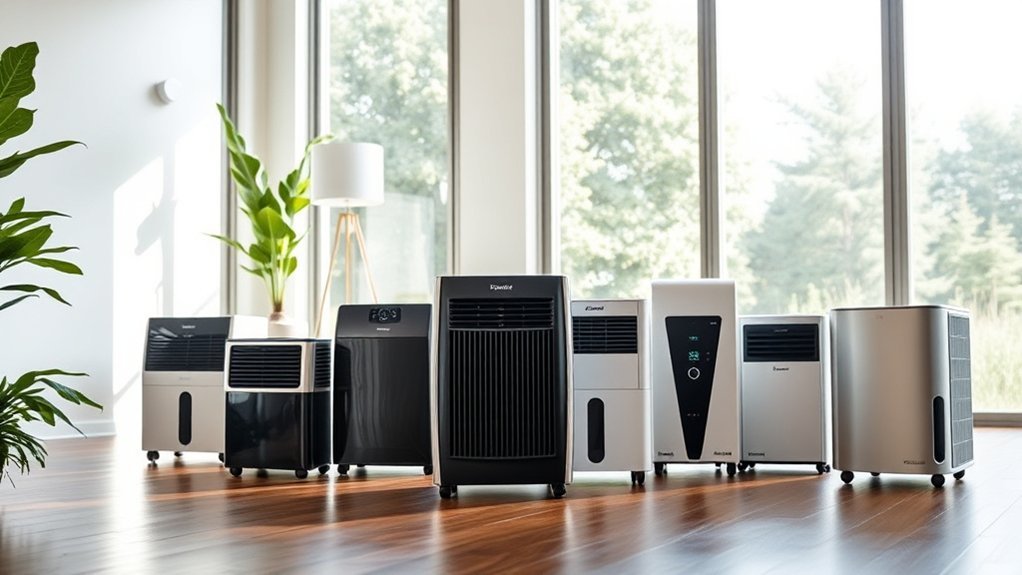
A dehumidifier should be selected by the moisture problem, room conditions, and daily removal capacity rather than tank size or square-foot marketing alone. Use the points below to narrow the list.
1. Coverage Area and Room Conditions
Square-foot claims are useful as a starting point, but they do not show how damp the room is, whether doors stay closed, how high the ceiling is, how much outdoor air enters, or whether the space is divided. A small enclosed bedroom may be easier to manage than a similarly sized open basement. For persistent dampness or a large living area, prioritize a compressor model with a pint-per-day rating.
2. Moisture-Removal Capacity and Test Conditions
Do not confuse tank volume with daily moisture removal. A 106 oz tank only tells you how much water the reservoir can hold. A 34-pint-per-day rating describes the amount the unit is listed to collect during a 24-hour test. Compare models using the same unit and check the temperature and relative humidity used for each result.
Current standardized portable-dehumidifier testing uses cooler conditions than many seller demonstrations. A product rated at 86°F or 95°F may collect substantially less water in an ordinary 65°F to 75°F room. Learn more from the ENERGY STAR explanation of dehumidifier testing and capacity.
3. Compressor vs. Semiconductor Technology
Compressor dehumidifiers generally remove more moisture and are better for basements, large rooms, laundry areas, and recurring humidity. Semiconductor models, sometimes called Peltier dehumidifiers, are smaller and often quieter, but they collect less water and work best in compact enclosed spaces. A mini model should not be expected to correct water intrusion, soaked materials, or a serious building-moisture problem.
4. Humidity Control
Look for an adjustable humidistat or preset relative-humidity targets. A separate hygrometer can help confirm whether the room is reaching the desired level. The EPA recommends keeping indoor humidity below 60% and ideally around 30% to 50%, although the best setting depends on climate, season, comfort, and condensation risk. See the EPA moisture and mold guidance.
5. Energy Efficiency
For a compressor dehumidifier that may run many hours per day, check the current listing and certification database for an Integrated Energy Factor or other verified efficiency information. Do not rely on a percentage-savings claim unless it is tied to a clearly identified test or certification. Correct sizing matters because an undersized unit may run continuously without reaching the target humidity.
6. Noise Level
Seller-listed decibel figures can help compare products, but real sound depends on fan speed, compressor cycling, flooring, furniture, room acoustics, and distance from the bed or seating area. Sleep modes reduce fan speed or turn off display lighting on many models. For a bedroom, place the unit on a stable surface with the required airflow clearance and avoid positioning it directly beside the bed.
7. Tank and Drainage Options
Manual tanks are simple but require regular emptying. Continuous gravity drainage is more convenient for basements and laundry rooms, provided the hose can slope downward to a suitable drain without kinks. A gravity-drain connection cannot push water upward. Buyers who need to reach an elevated sink or distant drain should look specifically for a built-in pump or use an appropriate external condensate pump.
8. Temperature and Automatic Defrost
Dehumidifiers collect less moisture in cooler air. Compressor models may develop frost on the coil, while semiconductor models also lose efficiency as the room cools. Automatic defrost can help protect operation, but buyers should still check the manufacturer’s recommended temperature range before using a unit in an unheated basement, garage, storage area, or seasonal property.
9. Size, Portability, Warranty, and Maintenance
Check the cabinet dimensions, weight, handle design, wheel placement, filter access, cord length, clearance requirements, warranty, return terms, and availability of customer support. Clean the filter and tank according to the manual, keep the intake and outlet unobstructed, and inspect a continuous drain hose regularly. A model that is easy to maintain is more likely to perform consistently.
Before you buy
- Measure the room and identify whether the moisture is localized or widespread.
- Use a hygrometer to check the starting relative humidity.
- Choose compressor capacity for persistent dampness and a mini unit for a small enclosed area.
- Confirm the seller’s test conditions for the stated daily extraction figure.
- Check the drainage route, operating-temperature range, dimensions, warranty, and return terms.
- Fix plumbing leaks, rain entry, foundation seepage, or wet materials instead of relying on a dehumidifier alone.
Moisture safety note
A portable dehumidifier can help manage airborne moisture after the water source is controlled, but it cannot repair a leak or safely resolve major flooding, extensive mold, sewage contamination, or hidden structural moisture. Seek qualified help when the moisture problem is widespread or the source is uncertain.
Frequently Asked Questions
How Often Should I Empty the Dehumidifier’s Water Tank?
Empty it whenever the full-tank indicator appears. Depending on tank size, extraction rate, and room humidity, that may mean daily emptying or only every few days. A continuous drain can reduce this task, but the hose and drain should still be checked for blockage, kinks, disconnection, or leaks.
Can a Dehumidifier Help With Allergies?
A dehumidifier is not an allergy treatment. Keeping indoor humidity in a moderate range may make the room less favorable for mold growth and dust mites, but the appliance will not remove every allergen. Visible mold, leaks, standing water, and water-damaged materials should be addressed directly.
What Is the Ideal Humidity Level for Living Spaces?
A common target is about 30% to 50% relative humidity, while prolonged levels above 60% should generally be avoided. The best setting depends on climate, season, comfort, and whether condensation appears on windows, pipes, walls, or other cold surfaces.
Are Dehumidifiers Noisy During Operation?
All powered dehumidifiers make some sound. Small semiconductor units usually produce fan noise, while compressor models add compressor cycling and stronger airflow. Check the seller-listed decibel level, use a lower fan or sleep mode when available, and place the unit on a stable surface away from the bed.
Is a Compact Dehumidifier Enough for a Basement?
Usually not if the basement has persistent dampness, condensation, a musty smell, laundry moisture, or a large open floor area. A pint-rated compressor model is generally the more appropriate choice. A compact semiconductor unit may help only in a small enclosed cabinet, storage corner, or similarly localized area.
Does a Larger Water Tank Mean Better Performance?
No. A larger tank means the unit can hold more collected water before it shuts off. Daily moisture-removal capacity, technology, airflow, room temperature, starting humidity, and room conditions determine how quickly the appliance can lower humidity.
Can a Dehumidifier Fix a Water Leak?
No. It may help dry the air after the source is stopped, but it cannot repair plumbing, drainage, foundation, roof, window, or condensation problems. Stop the water source and dry or replace wet materials promptly.
Can a Continuous Drain Hose Move Water Uphill?
Not unless the dehumidifier has a built-in pump or is connected to a suitable external condensate pump. A standard gravity-drain hose must run continuously downward to the drain. An uphill section, loop, blockage, or kink can stop drainage and cause the tank to fill.
Conclusion
The Vellgoo 64 Pint is the strongest fit in this list for a large, persistently humid living space, while the KNKA 34 Pint offers a more moderate compressor option with an included drain hose. For compact rooms, the NovaLivin 68 OZ offers useful humidity presets, the Natrogix 106 OZ provides a larger tank, the ToLife 95 OZ combines portability with ambient lighting, and the TABYIK 38 OZ is the easiest option to place in a closet, small bathroom, office, or RV.
Compact semiconductor models can be convenient, but buyers should keep expectations realistic about their lower extraction capacity. Persistent dampness, wet surfaces, or a large open room generally calls for a pint-rated compressor appliance and a plan for regular tank emptying or continuous drainage.
Final recommendation: Match the technology and daily removal rating to the moisture problem first. Then compare test conditions, tank maintenance, drainage, noise, operating temperature, cabinet dimensions, and current warranty details. A properly sized unit is more useful than the model with the largest marketing coverage number.