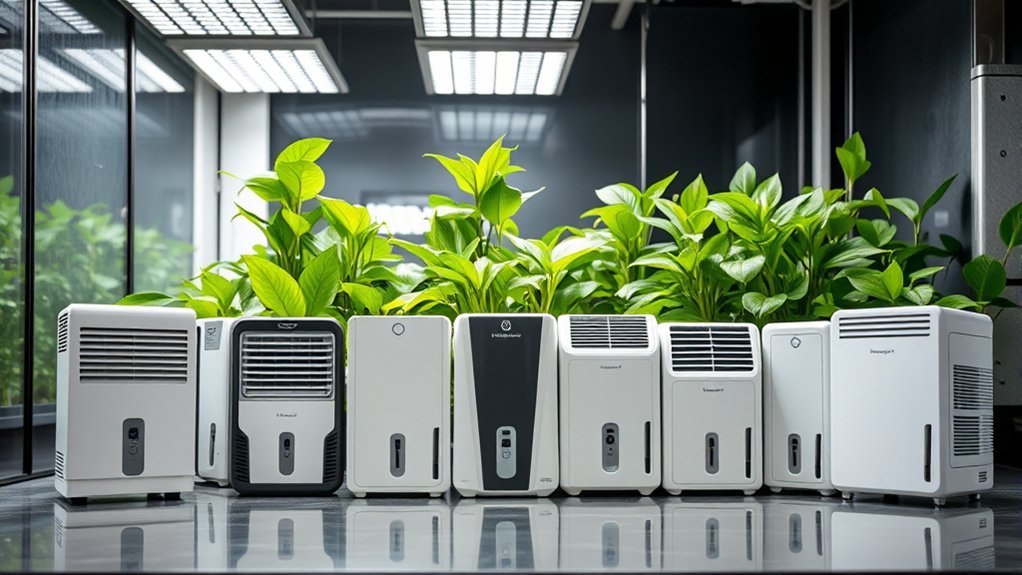
For a genuinely damp medium-sized room, basement, garage, or open living area, a compressor dehumidifier is usually a better fit than a small thermoelectric unit. After reviewing the original list, only the AEOCKY and Waykar models provide the capacity, humidistat control, and drainage options expected for ongoing moisture control in medium to large spaces. The AEOCKY is the stronger high-capacity choice, while the Waykar is the more practical option for a typical medium-sized area.
Affiliate disclosure: This article contains Amazon affiliate links. We may earn a commission from qualifying purchases at no additional cost to you.
Quick verdict
- Best overall for medium to large spaces: AEOCKY 4500 Sq.Ft Energy Star Dehumidifier
- Best value for a typical medium space: Waykar 34 Pints Energy Star Dehumidifier
Important: Coverage figures are manufacturer guidelines, not guarantees. Room temperature, starting humidity, airflow, water intrusion, and drainage setup can significantly affect real-world performance.
Quick Comparison
| Product | Best For | Rated Capacity | Drainage | Amazon |
|---|---|---|---|---|
| AEOCKY 4500 Sq.Ft Energy Star Dehumidifier | Damp basements, larger rooms, and heavier moisture loads | Up to 80 pints per day under the manufacturer’s high-temperature, high-humidity test condition | Tank or continuous hose drainage | Check Price on Amazon |
| Waykar 34 Pints Energy Star Dehumidifier | Typical medium rooms, garages, and moderately damp basements | Up to 34 pints per day under the manufacturer’s stated test condition | Removable tank or continuous hose drainage | Check Price on Amazon |
AEOCKY 4500 Sq.Ft Energy Star Dehumidifier
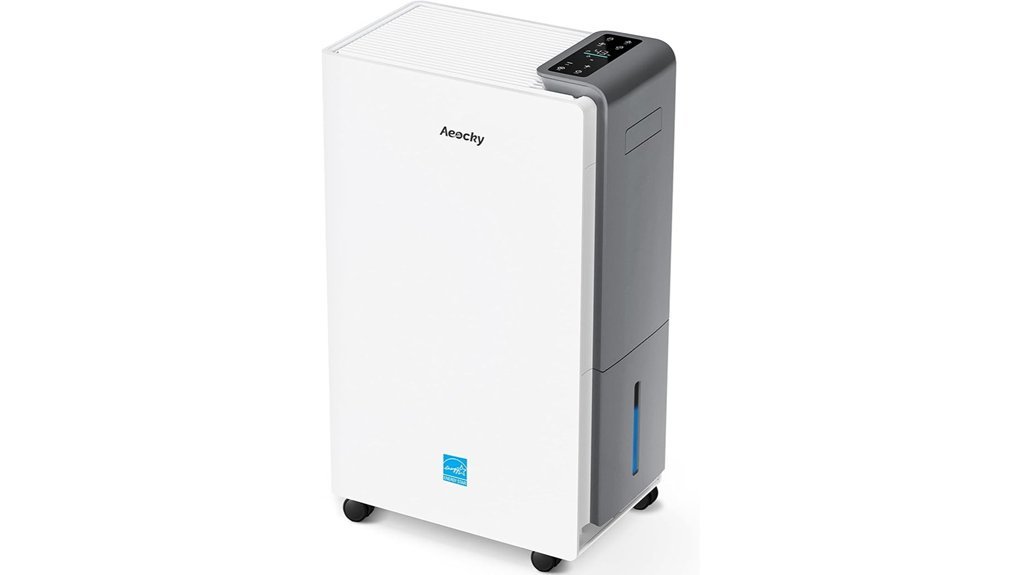
The AEOCKY is the stronger choice when a medium-sized space has a heavy moisture load or when one unit must serve a larger basement or open area. It uses compressor-based dehumidification, includes adjustable humidity control, and supports continuous drainage. The manufacturer advertises up to 80 pints of moisture removal per day under very hot and humid test conditions, so normal household performance will vary.
The model is listed as an ENERGY STAR Most Efficient 2025 portable dehumidifier. Its standardized ENERGY STAR capacity is lower than the maximum marketing figure, which is why buyers should compare test conditions rather than relying only on the largest number in the product title. It also carries a manufacturer-stated three-year warranty.
Best For: Damp basements, large bedrooms, open living areas, or medium spaces where a smaller unit would need to run constantly.
Why You’ll Like It: It offers higher moisture-removal capability, automatic humidity control, and a drain-hose option for longer unattended operation.
Who Should Avoid It: Buyers treating only a small bathroom, closet, or lightly humid bedroom may find it larger and more expensive than necessary.
Pros:
- Compressor design is better suited to persistent humidity than low-capacity thermoelectric units.
- Adjustable humidistat helps the unit cycle according to the selected humidity level.
- Continuous drainage can reduce the need to empty the tank manually.
- Three-year manufacturer-stated warranty provides longer coverage than many basic models.
Cons:
- The advertised 80-pint figure is based on unusually hot and humid conditions and should not be treated as an everyday removal rate.
- Its size and capacity may be excessive for a small room with only occasional condensation.
- Like other compressor dehumidifiers, it requires filter cleaning, clear airflow, and proper drainage setup.
Waykar 34 Pints Energy Star Dehumidifier
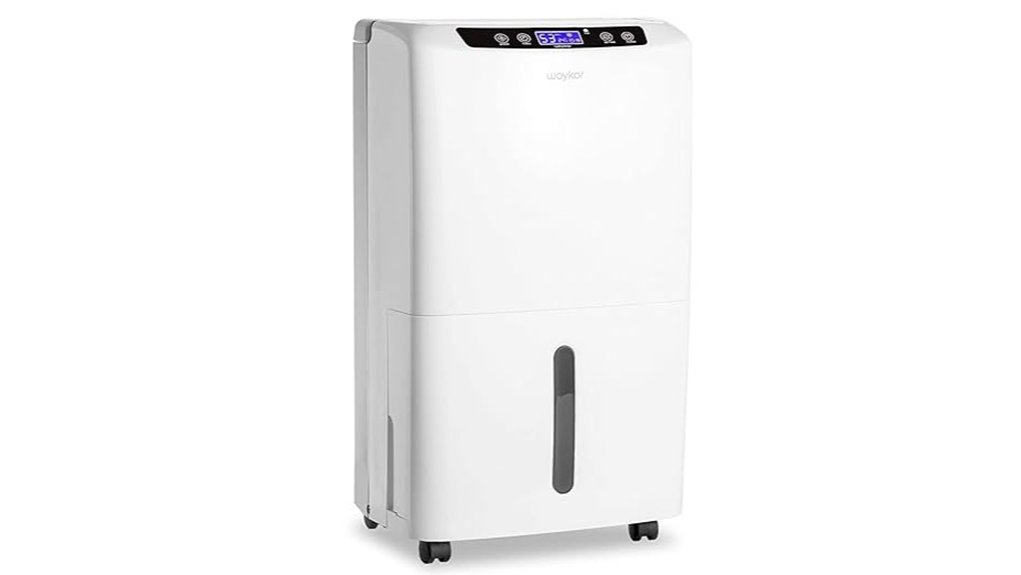
The Waykar 34 Pints Energy Star Dehumidifier is the more balanced pick for a typical medium-sized room, garage, or moderately damp basement. The manufacturer rates it to remove up to 34 pints per day under its stated hot and humid test condition and markets it for spaces up to 2,000 square feet. Actual results will depend on room temperature, humidity, airflow, and the severity of the moisture problem.
Its adjustable humidity control allows the unit to cycle around a chosen setting, while two fan speeds and manual airflow adjustment provide basic control over comfort and noise. The removable tank works for occasional use, and continuous gravity drainage is more convenient when a suitable floor drain or low outlet is available.
Best For: Homeowners who want a compressor dehumidifier for a medium room without moving to a much larger-capacity appliance.
Why You’ll Like It: It combines useful capacity, automatic humidity control, portable design, and two drainage methods at a more moderate size.
Who Should Avoid It: It may be undersized for active water intrusion, a very large open basement, or severe humidity that requires rapid removal.
Pros:
- 34-pint manufacturer-rated capacity is more appropriate for medium spaces than sub-2-pint compact models.
- Adjustable humidity control supports more consistent operation.
- Tank and continuous-drain options suit both temporary and longer-term use.
- Portable housing makes room-to-room placement easier.
Cons:
- The water tank may need frequent emptying in damp conditions when a hose is not used.
- Gravity drainage requires the hose outlet to remain below the drain connection.
- The one-year base warranty is shorter than the AEOCKY’s stated three-year coverage.
How We Narrowed the List
The original roundup mixed full compressor dehumidifiers with compact thermoelectric models. For this revised guide, products were retained only when their moisture-removal method and stated capacity made sense for ongoing use in a medium-sized room. Priority was given to:
- Compressor-based moisture removal for persistent indoor humidity
- An adjustable humidistat rather than simple on-and-off operation
- Meaningful daily extraction capacity
- Continuous drainage for unattended operation
- Clear limitations and test-condition disclosures
Before you buy
A portable dehumidifier can manage airborne moisture, but it cannot repair leaks, stop groundwater intrusion, or remove existing mold. Address the moisture source first when there is plumbing damage, seepage, standing water, or recurring visible growth.
Factors to Consider When Choosing Dehumidifiers for Medium Size Spaces
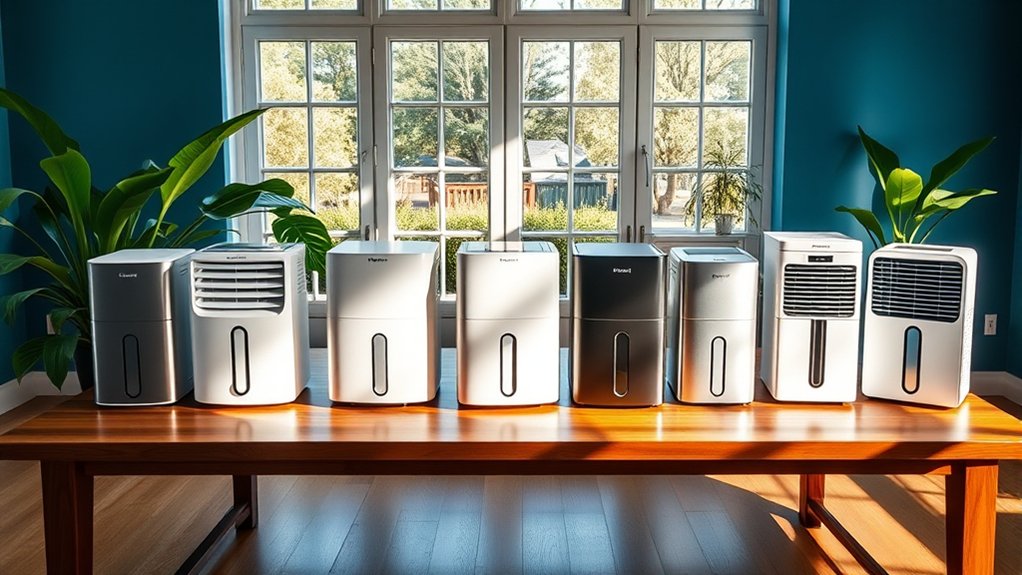
Choosing a dehumidifier by square-foot claim alone can lead to an undersized purchase. Compare the unit’s moisture-removal capacity, room conditions, drainage setup, noise, and control features before deciding.
Coverage Area and Dampness Level
A mildly humid bedroom and a wet basement of the same size do not need the same machine. Manufacturer coverage figures are useful for initial screening, but the room’s starting humidity, temperature, ceiling height, airflow, and moisture source matter just as much. Choose extra capacity for basements, laundry areas, garages, or spaces with persistent condensation.
Moisture Removal Capacity
Daily capacity is often shown in pints, but brands may use different test conditions. A high “maximum” figure measured in extreme heat and humidity will be higher than a standardized rating. For fair comparisons, check how the capacity was measured and avoid comparing numbers from different test conditions as though they are identical.
Compressor vs. Thermoelectric Models
Compressor dehumidifiers are generally the better choice for medium rooms and persistent dampness because they can remove substantially more water each day. Small thermoelectric units may be convenient in closets, cabinets, RVs, or lightly humid bathrooms, but broad square-foot claims do not make them equivalent to a 30-pint or larger compressor model.
Energy Efficiency
ENERGY STAR certification makes it easier to identify models that meet current efficiency requirements. However, certification does not tell you whether a unit is correctly sized for your room. A smaller machine that runs continuously can be less practical than a properly sized model that cycles off after reaching the set humidity.
Noise Level
Compressor models create fan and compressor noise, especially at higher fan speeds. For a bedroom or office, compare low-speed or sleep-mode specifications and consider where the unit will sit. Leaving open space around the air inlet and outlet also helps the machine operate without unnecessary strain.
Drainage Options
A removable tank is simple but may fill quickly in damp weather. Continuous gravity drainage is more convenient when the hose can slope downward to a floor drain or other suitable outlet. If the drain is above the machine, look for a model with a built-in pump rather than assuming a standard hose can move water uphill.
Safety and Maintenance Features
Useful features include full-tank shutoff, auto defrost, power-outage restart, a washable filter, and alerts for improper tank placement. Set the unit on a level surface, keep the air path clear, use a properly grounded outlet, and follow the manufacturer’s cleaning schedule.
Portability and Placement
Caster wheels and handles are valuable when the unit will move between rooms. Check the dimensions, cord position, hose route, and clearance requirements before buying. A unit placed against a wall or behind furniture may not circulate air effectively.
Frequently Asked Questions
How Often Should I Empty the Dehumidifier’s Water Tank?
Empty it whenever the full-tank indicator appears. In a damp room, that may be daily or more often. Continuous drainage is the better option when the tank fills too frequently.
Can a Dehumidifier Remove Mold or Allergens?
A dehumidifier does not remove existing mold or replace cleaning and repairs. Lower humidity can make the environment less favorable for moisture-related growth and dust mites, but visible mold, leaks, and water damage need separate treatment.
What Maintenance Is Required?
Clean the filter as directed, empty and rinse the tank, inspect the drain hose, and remove dust from the air inlet and outlet. Regular maintenance helps preserve airflow and reduces odors inside the tank.
Are Compressor Dehumidifiers Noisy?
They are usually louder than small thermoelectric models because they use a compressor and a larger fan. Low fan speed, sleep mode, and thoughtful placement can make the sound less noticeable.
How Do I Choose the Right Capacity?
Start with room size, then increase capacity for colder basements, high starting humidity, laundry use, poor airflow, or ongoing moisture entry. A hygrometer can help you measure the room before and after operation instead of relying only on how the air feels.
Should I Use the Tank or a Drain Hose?
Use the tank for temporary or portable operation. Use a drain hose for long-running basement or garage use when a safe, lower drain point is available and the hose can maintain a continuous downward slope.
Final Recommendation
Choose the AEOCKY when you need more headroom for a damp basement, larger room, or heavier moisture load.
Choose the Waykar when you want a more moderately sized compressor dehumidifier for a typical medium room, garage, or basement area.
Whichever model you choose, confirm the current product details, warranty terms, dimensions, drain-hose requirements, and electrical specifications before ordering. Correct sizing and fixing the source of moisture will matter more than decorative features or an inflated coverage claim.