Affiliate disclosure: This article contains Amazon affiliate links. We may earn a commission from qualifying purchases at no additional cost to you.
Last updated: August 2026
Choosing a dehumidifier or moisture absorber in Malaysia requires more than comparing tank size, noise, or advertised room coverage. For any powered unit, first confirm that the appliance or its supplied power adapter is suitable for Malaysia’s 230V mains supply and the required frequency shown on the product label. A basic travel-plug adapter changes only the plug shape and must not be used to connect a 110V or 120V-only appliance directly to a Malaysian outlet.
This guide compares two compact powered dehumidifiers and one passive hanging moisture absorber. They solve different problems: the electric units are intended mainly for mild humidity in small enclosed rooms, while the passive bags are better for wardrobes, cupboards, and similar storage spaces. For persistent dampness across a bedroom, living room, or other large occupied area, choose a locally supported 220–240V compressor dehumidifier sized for the real moisture load instead.
Quick verdict
- Best compact electric option: The 68 OZ model has a two-liter tank, adjustable settings, and a seller-stated wide-voltage adapter, but you should verify the physical adapter label, plug type, and frequency before ordering.
- Best multifunction option: The DINZAN unit combines dehumidifying, humidifying, basic filtration, and aroma functions for a small room, although its modes have important limitations and the AC adapter input must be checked.
- Best for wardrobes: The 18-pack hanging absorbers require no electricity and fit narrow enclosed spaces where a powered dehumidifier would be unnecessary.
Important: None of these compact options should be treated as a substitute for a full-size compressor dehumidifier when a room has persistent condensation, wet walls, leaks, or widespread dampness.
Malaysia electrical check
Malaysia uses a 230V single-phase supply for household equipment. Before connecting any powered product, inspect the rating label on both the appliance and its AC adapter. The adapter must explicitly accept the local mains voltage and the required frequency, and the supplied plug should be appropriate for Malaysia. Do not rely on a plug-shape adapter to convert voltage.
Quick Comparison
| Product | Type | Best Use | Key Limitation | Amazon |
|---|---|---|---|---|
| 68 OZ Compact Dehumidifier Best Compact Electric |
Semiconductor/Peltier | Small bedrooms, bathrooms, closets, and RVs | Not powerful enough for widespread or severe dampness | Check Availability |
| DINZAN 4-in-1 Unit Best Multifunction |
Semiconductor/Peltier | Small rooms needing adjustable humidity functions | Adapter input must be verified; functions cannot all run together | Check Availability |
| 18-Pack Hanging Absorbers Best for Wardrobes |
Passive calcium chloride | Wardrobes, cupboards, laundry cabinets, and storage areas | Single-use bags; not suitable for whole-room humidity control | Check Availability |
68 OZ Compact Dehumidifier for Small Rooms
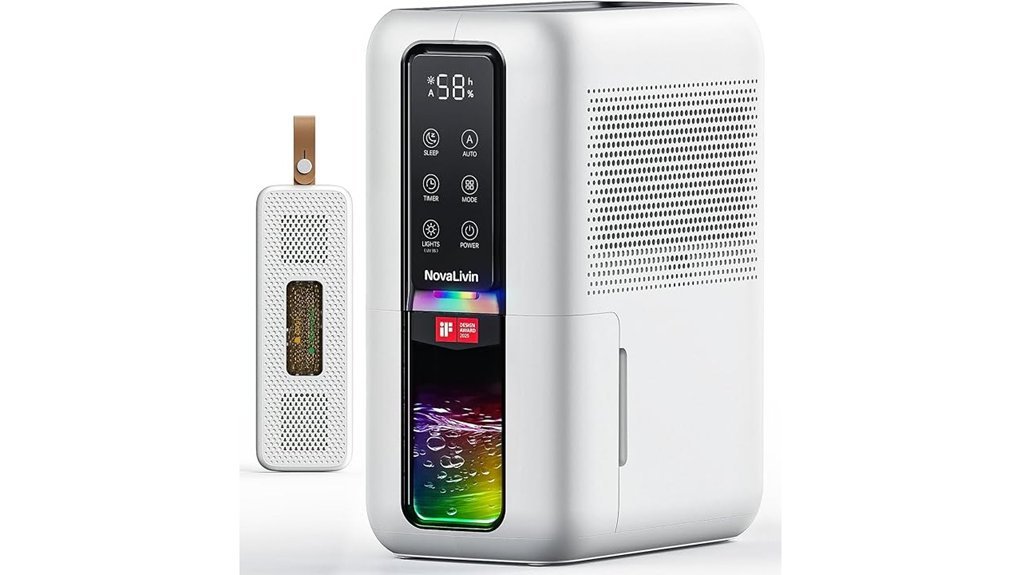
Best Compact Electric Option
This compact electric dehumidifier is the most conventional powered option in the comparison. The current Amazon product information lists a two-liter water tank, two operating speeds, automatic shutoff, and a seller-stated dehumidification capacity of 0.8 liters per day. Another current listing bullet gives a different daily extraction figure, so treat the performance number as seller guidance and verify the latest specification before buying.
It is better suited to a closed bedroom, bathroom, closet, or similar small space than to a large open-plan area. Semiconductor dehumidifiers generally have much lower extraction capacity than full-size compressor models, so this is a mild-humidity option rather than a remedy for structural dampness or major water intrusion.
Why you may like it
- The large tank reduces how often it must be emptied compared with many mini units.
- Automatic humidity settings and two fan speeds make operation more flexible.
- Sleep-oriented operation may be useful in bedrooms where low noise matters.
- The seller states that the included adapter accepts a wide voltage range, which is useful for international buyers only after the physical adapter label, frequency, and plug are verified.
Best For: Small enclosed rooms with mild condensation, musty air, or seasonal humidity.
Who Should Avoid It: Buyers dealing with water intrusion, wet walls, severe mold, large living areas, or moisture spreading through several rooms.
Pros:
- Two-liter collection tank with automatic full-tank shutoff.
- Adjustable humidity modes and two operating speeds.
- Compact enough for bathrooms, bedrooms, closets, and RVs.
- The seller advertises a wide-voltage adapter, subject to physical-label verification before use in Malaysia.
Cons:
- The current Amazon listing presents inconsistent daily extraction figures, so the latest specification should be checked before purchase.
- Semiconductor technology is considerably less powerful than a compressor dehumidifier.
- The built-in humidity reading should be treated as a general reference rather than a calibrated measurement.
- A current featured Amazon offer may not always be available.
Before connecting it: The seller describes the adapter as wide-voltage, but you should still confirm the physical adapter label accepts Malaysia’s mains voltage and required frequency. Also verify the supplied plug, warranty coverage, and seller support for Malaysia.
DINZAN 4-in-1 Dehumidifier, Humidifier, Filter and Aroma Diffuser
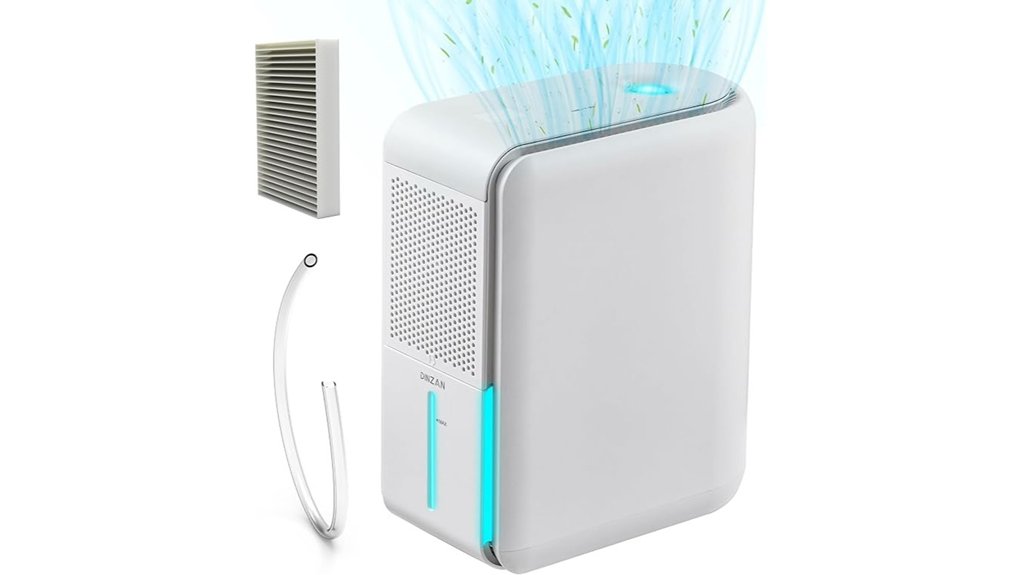
Best Multifunction Option
The DINZAN unit combines four functions in one compact appliance: dehumidifying, humidifying, basic air filtration, and aroma diffusion. Current Amazon product information lists a one-liter tank, 30-watt power consumption, a 24V appliance input, and seller-stated dehumidification of up to 580 milliliters per day.
This versatility can appeal to someone who wants one small appliance for different seasons. However, the humidifier and dehumidifier do not operate at the same time, and filtration may be restricted during humidification. It should therefore be viewed as a convenient multifunction device rather than a replacement for a dedicated high-capacity dehumidifier or a certified high-efficiency air purifier.
Why you may like it
- Combines several humidity and comfort functions in one small appliance.
- Digital controls allow users to switch between available modes.
- A drain-hose option can reduce manual tank emptying during dehumidification.
- Its compact footprint may fit a bedroom, office, or small bathroom.
Best For: Small rooms where the user wants both humidifying and dehumidifying functions at different times of the year.
Who Should Avoid It: Buyers who need strong compressor-based extraction, certified air purification, or independently operating simultaneous functions.
Pros:
- Dehumidifier, humidifier, filter, and aroma-diffuser functions.
- Digital display, timer, automatic shutoff, and humidity controls.
- Compact and marketed for quiet operation.
- Includes a connection for continuous gravity drainage.
Cons:
- Dehumidifying and humidifying modes cannot operate simultaneously.
- The small extraction capacity is intended for mild humidity in compact spaces.
- The appliance is listed as 24V, but that does not prove the included AC adapter accepts Malaysia’s 230V mains supply; the adapter label must be checked.
- Amazon has displayed a frequently returned item notice for this listing, so check current product details, seller information, and return terms before ordering.
Power compatibility note: The appliance itself is listed as 24V, which means the external AC adapter is the critical compatibility point. Buy only if the physical adapter label explicitly accepts Malaysia’s mains voltage and required frequency and the supplied plug is suitable for local use.
18-Pack Hanging Moisture Absorbers for Closets and Wardrobes
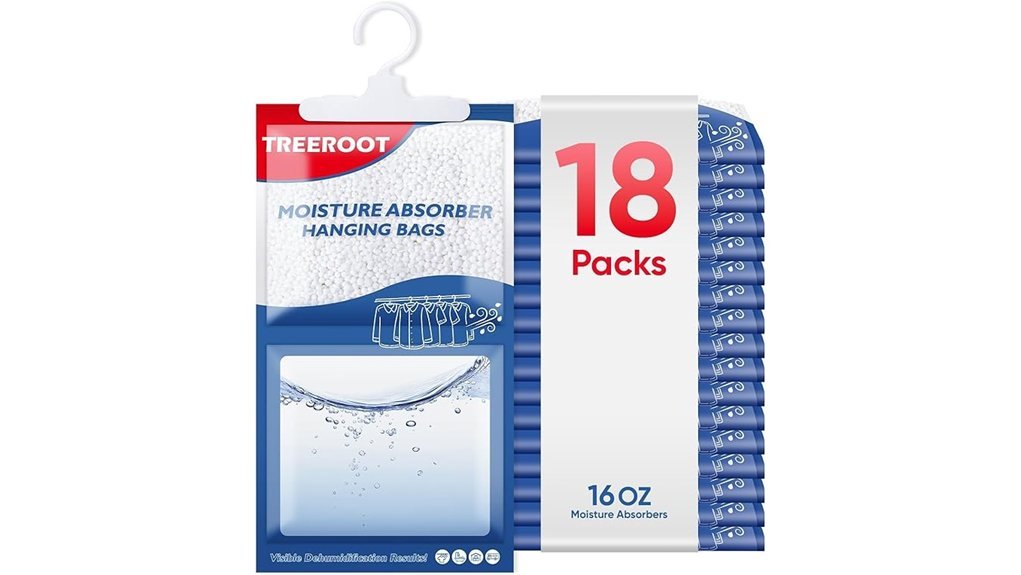
Best for Wardrobes
These hanging bags use calcium chloride to attract moisture and collect the resulting liquid in a lower compartment. They require no electricity, making them suitable for wardrobes, kitchen cupboards, laundry cabinets, shoe storage, and other enclosed spaces where an electric appliance would be impractical.
They should not be treated as room dehumidifiers. Passive bags work slowly and have no fan to circulate air, so their effect is concentrated around a small enclosed area.
Why you may like them
- No electrical connection or voltage check is required.
- The hanging design uses little shelf or floor space.
- A transparent lower compartment makes collected liquid visible.
- The large pack can be distributed across several wardrobes or cupboards.
Best For: Enclosed wardrobes, cupboards, storage cabinets, laundry spaces, and shoe closets.
Who Should Avoid Them: Anyone expecting fast humidity reduction across a bedroom, bathroom, living room, or open-plan space.
Pros:
- Requires no electricity, plug, batteries, or moving parts.
- Convenient hanging format for narrow storage areas.
- Transparent collection section helps users see when replacement is needed.
- Multiple bags can be placed in separate enclosed areas.
Cons:
- Single-use product that creates ongoing replacement waste.
- Performance varies with temperature, airflow, humidity, and enclosure size.
- Collected calcium-chloride liquid can damage surfaces if the bag is punctured or tipped.
- Current seller availability and pack details should be rechecked on the Amazon listing before purchase.
Safety note: Hang each bag securely and keep it away from children, pets, fabrics, metal objects, and finished surfaces. Replace it if the outer material becomes damaged.
How to Choose a Dehumidifier or Moisture Absorber in Malaysia
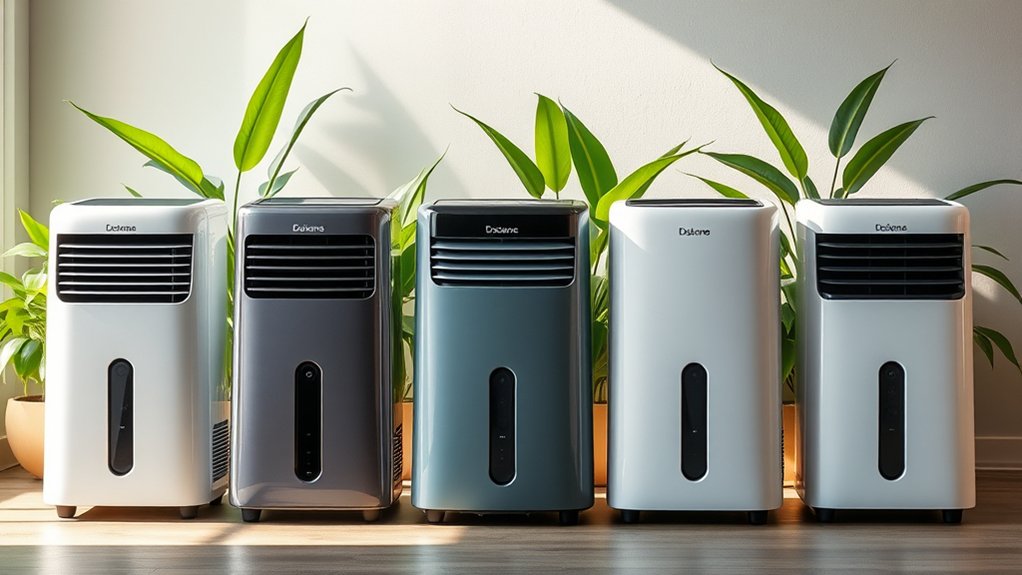
The best humidity-control method depends on the size of the space, the severity of the moisture problem, electrical compatibility, drainage, noise, and how precisely you need to control relative humidity.
Check Electrical Compatibility First
For a powered dehumidifier, inspect the rating label before buying or connecting the appliance. The appliance or its external AC adapter must explicitly accept Malaysia’s 230V mains supply and the required frequency. The supplied plug and fuse arrangement should also be appropriate for Malaysia.
Do not assume that a product is compatible simply because a travel adapter allows its plug to fit the socket. A plug adapter does not reduce Malaysia’s mains voltage for a 110V or 120V appliance.
Choose Between Powered and Passive Moisture Control
A powered dehumidifier uses a fan and either a compressor or semiconductor system to draw moisture from room air. It is the better option when you want ongoing water extraction and measurable humidity control.
A passive calcium-chloride absorber works without electricity but affects only a limited enclosed area. It is appropriate for wardrobes, cupboards, cabinets, stored luggage, and similar spaces. It is not a substitute for a powered unit in an occupied room.
Match the Unit to the Real Space
Manufacturer coverage figures usually describe maximum areas under specific test conditions. Extraction performance can fall when doors are open, airflow is unrestricted, temperatures change, or outdoor humidity continually enters the room.
Compact semiconductor models are most appropriate for small, closed rooms with mild moisture. For widespread condensation, laundry drying, or persistent Malaysian humidity across a large room, consider a locally available compressor dehumidifier with continuous drainage.
Compare Moisture-Removal Capacity
Moisture removal is normally stated in milliliters, liters, or pints per day. Always check the temperature and relative-humidity conditions used for the rating. A compact unit advertised at several hundred milliliters per day cannot be compared directly with a compressor model removing many liters per day.
Choose capacity based on the severity of the problem rather than tank volume alone. A large tank reduces emptying frequency but does not automatically mean that the machine removes moisture quickly.
Consider Drainage and Maintenance
Automatic shutoff helps prevent tank overflow, but a full tank also stops dehumidification until it is emptied. A gravity drain hose is useful for continuous operation when the unit can be positioned above a suitable drain.
Check that the tank can be removed and cleaned easily. Wash or vacuum reusable filters according to the manual, and keep air inlets clear of curtains, furniture, and walls.
Think About Noise and Placement
Noise matters most in bedrooms, nurseries, offices, and study areas. Seller-stated decibel ratings may be measured at a particular speed and distance, so treat them as comparison guidance rather than guaranteed in-room noise.
Place a powered unit on a stable, level surface with adequate clearance around its intake and exhaust. Closing doors and windows usually improves performance by preventing humid outdoor air from continually entering the room.
Review Safety Features
Useful powered-unit features include automatic full-tank shutoff, overheat protection, stable construction, washable filters, and automatic defrost where relevant. Never use a damaged power adapter, cord, plug, tank, or drain hose.
For passive calcium-chloride products, prevent tipping, punctures, and contact with children or pets. The collected liquid is concentrated brine and can damage metal, fabric, wood, and finished surfaces.
Before you buy
- Confirm that the appliance or AC adapter explicitly accepts Malaysia’s 230V mains supply and required frequency.
- Check the supplied Malaysian-compatible plug and warranty coverage.
- Decide whether you need whole-room extraction or only closet protection.
- Compare daily extraction capacity—not just advertised room size.
- Choose a tank or continuous-drain setup that suits daily use.
- Check current seller availability and return terms.
- Fix leaks or water penetration before relying on a dehumidifier.
Frequently Asked Questions
How Do I Maintain My Dehumidifier for Optimal Performance?
Empty and rinse the tank regularly, clean the filter according to the manufacturer’s instructions, and remove dust from the air inlets. Keep the unit upright with adequate airflow around it. Inspect the cord, adapter, drain hose, and tank for damage before use.
Can I Use a Dehumidifier in a Bathroom?
You can use a model whose manufacturer specifically permits bathroom use, but it must remain away from showers, bathtubs, sinks, splashing water, and wet floors. Operate it only from a suitable protected outlet and follow all placement instructions in the manual. Never handle its plug or controls with wet hands.
What Is a Practical Indoor Humidity Target?
A practical goal is to keep indoor relative humidity below 60%, with roughly 30% to 50% often cited as an ideal range when achievable. In Malaysia’s humid climate, the exact level you can maintain will depend on the building, weather, ventilation, and air-conditioning. Persistent condensation, musty odors, or damp surfaces can also indicate leaks or moisture sources that need attention.
How Can I Compare Energy Use?
Compare the unit’s wattage with its daily moisture-removal capacity. A very low-wattage semiconductor model may use less electricity per hour but can take much longer to remove the same amount of water as a compressor model. Automatic humidity control can reduce unnecessary operation once the target level is reached.
How Long Do Dehumidifiers Typically Last?
Lifespan depends on build quality, operating hours, room conditions, cleaning, and access to replacement parts. Regular filter and tank maintenance can reduce strain, but the warranty and availability of local repair support are more useful buying indicators than a generalized lifespan estimate.
Can I Use a Plug Adapter With a 110V or 120V Dehumidifier?
No. A plug adapter only changes the shape of the plug. It does not convert Malaysia’s 230V supply to 110V or 120V. Use only a model or manufacturer-supplied AC adapter whose physical rating label explicitly accepts Malaysia’s mains voltage and required frequency.
Final Recommendation
Best choice from this list:
Choose the 68 OZ compact electric dehumidifier for mild humidity in a small bedroom, bathroom, or closet, but only after confirming the physical adapter label, frequency, plug, and seller support are suitable for Malaysia.
Consider the DINZAN 4-in-1 unit when multifunctionality matters more than extraction power and the included AC adapter passes the same compatibility check.
For a wardrobe or cupboard, the 18-pack hanging absorbers are the simplest no-power option. For serious whole-room dampness, persistent condensation, wet walls, or water intrusion, skip these compact products and choose a locally supported 220–240V compressor dehumidifier sized for the actual moisture problem.