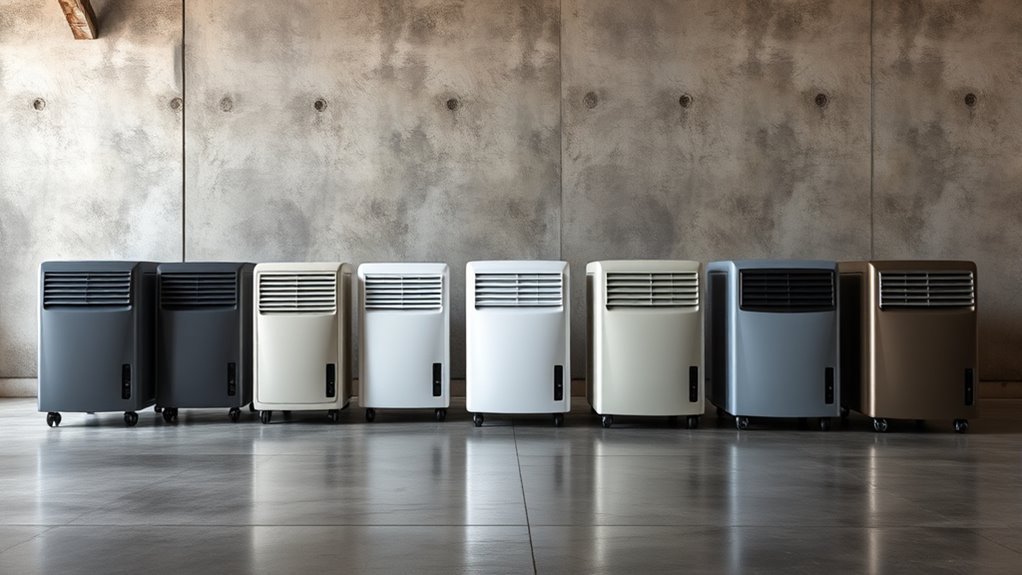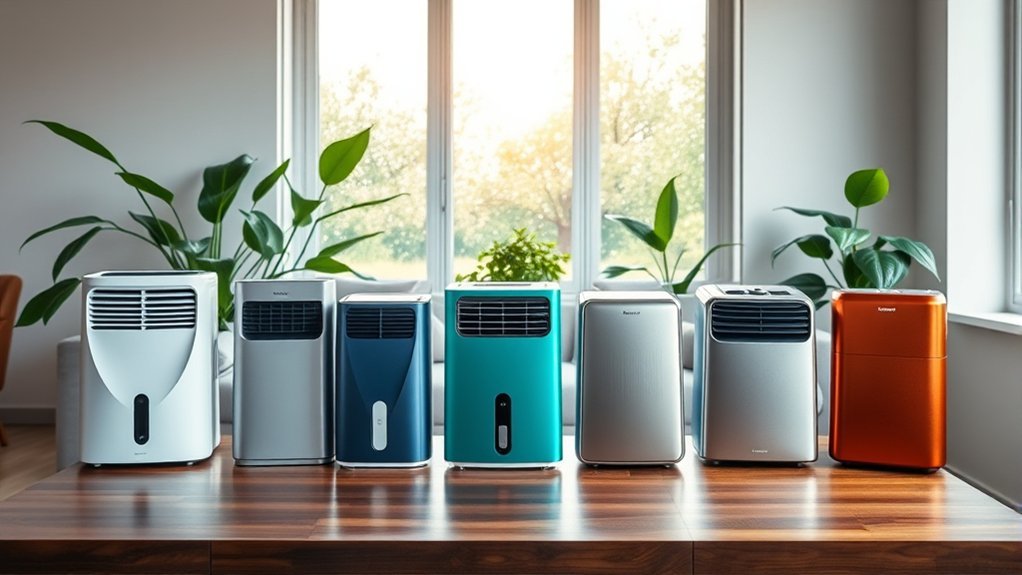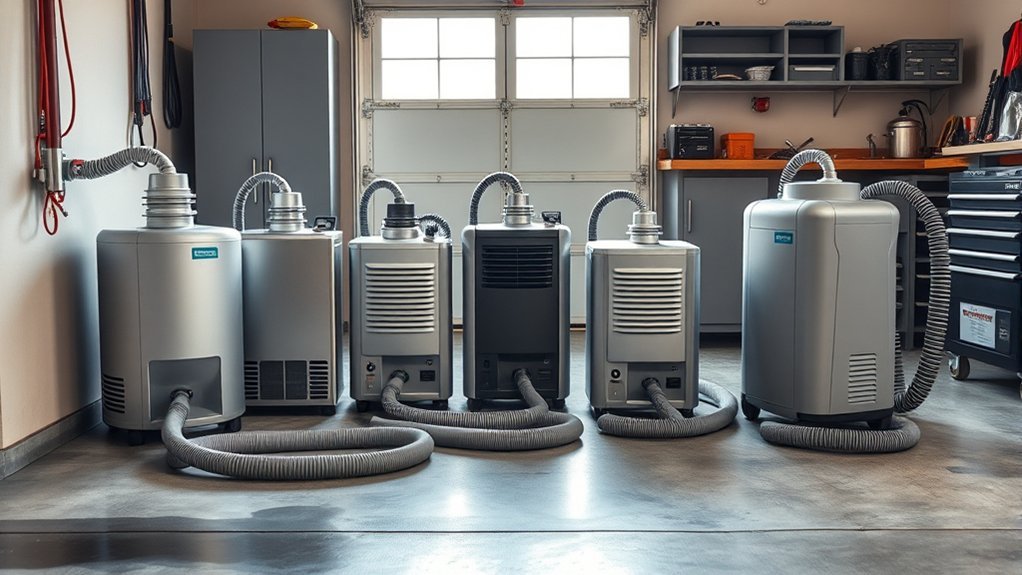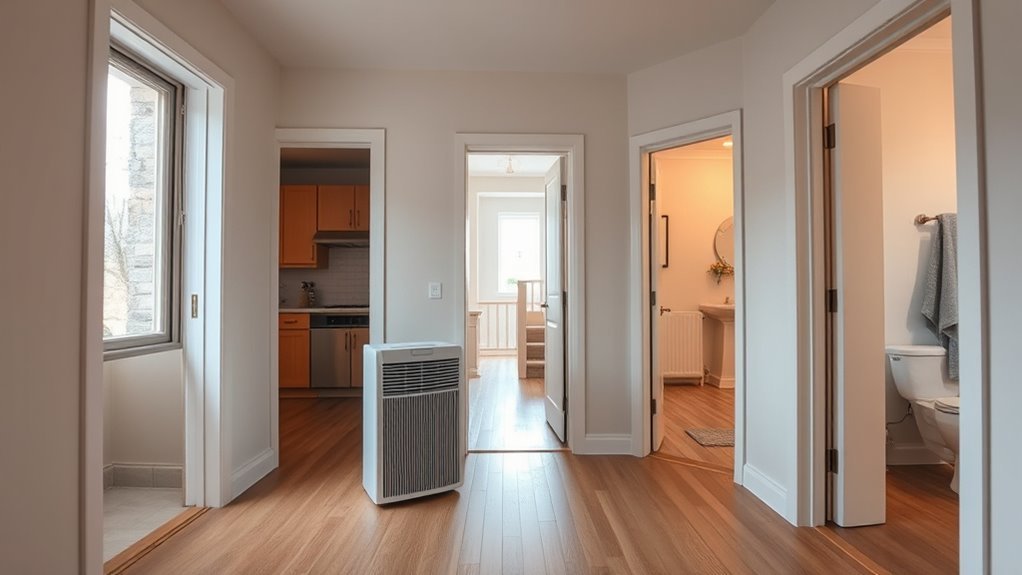
Using a single portable dehumidifier for a whole house sounds like an easy way to fix sticky indoor air without paying for HVAC upgrades. While a portable unit can dry a basement, a single room, or a compact open-plan apartment, walls and closed doors quickly block dry air from reaching the rest of the building. Whether one machine can keep up depends on its daily pint capacity, your floor plan, indoor temperatures, and how much moisture enters the structure.
Quick Answer
A single portable dehumidifier cannot reliably control humidity across a multi-story home or a layout with closed doors. It works well in one room, an open-concept zone, or an unfinished basement. For widespread dampness above 55% relative humidity, use a ducted whole-house dehumidifier or place separate portable units in key moisture zones.
Key Takeaways
- Size equipment by both square footage and dampness: ENERGY STAR recommends 20 to 50+ pints per day under current 65°F portable test conditions.
- Compare efficiency using the Integrated Energy Factor (IEF): ENERGY STAR Version 6.0 requires 1.70 to 3.30 L/kWh for portable units and 2.22 to 3.81 L/kWh for whole-home systems.
- Standard refrigerant dehumidifiers can frost up below 65°F, reducing moisture extraction in cool basements.
- Keep indoor relative humidity between 30% and 50% (and always below 60%) using independent hygrometers in distant bedrooms.
- Stop water intrusion, vent clothes dryers outdoors, and run kitchen and bath exhaust fans before relying on any dehumidifier.
Will a Portable Dehumidifier Work for a Whole House?
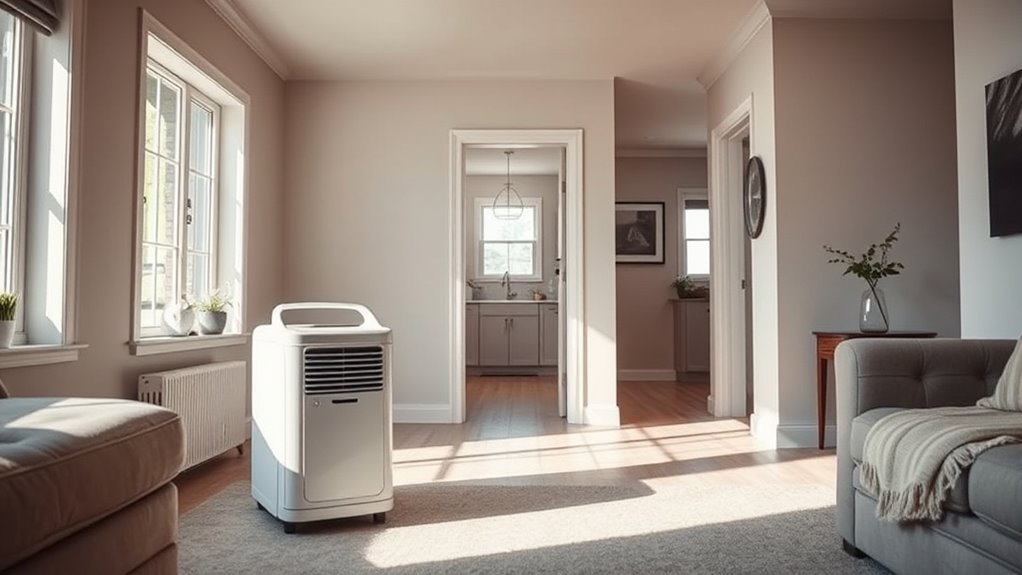
A portable dehumidifier can lower humidity beyond the room where it sits only when the home is small, interior doors stay open, and air circulates freely. Portable room dehumidifiers are built to treat a single enclosed space or open zone, whereas whole-home units connect to ductwork to pull damp air from multiple rooms and return dry air across the house. Rather than relying on a flat square-footage claim, follow the current ENERGY STAR dehumidifier guidance and size your unit by both area and dampness severity in pints of water removed per 24 hours.
One portable machine rarely controls an entire house when bedrooms stay closed at night, the layout spans multiple stories, or the basement is closed off from the main living level. In segmented homes, the built-in fan only processes air near the cabinet. The unit quickly reaches its target relative humidity (RH) in the immediate room and cycles off, leaving hallways and upstairs bedrooms damp.
Note: A manufacturer’s advertised square-footage rating assumes ideal, open-room laboratory conditions. High ceiling heights, air leakage, wet concrete walls, or frequent door openings increase the moisture load and reduce real-world coverage.
Why Portable Dehumidifiers Fall Short
Portable dehumidifiers fall short as whole-house solutions because their internal fans move a modest volume of air—typically 100 to 250 cubic feet per minute (CFM)—through a single intake grill. Interior walls, doorways, staircases, and pressure differences between floors stop moist air in distant rooms from reaching the machine.
Limited Coverage
No single square-foot limit—whether 500, 1,500, or 3,000 square feet—applies to every home without factoring in moisture load and test conditions. Since 2020, the DOE dehumidifier test procedure and capacity chart rates portable dehumidifiers at 65°F and 60% RH (down from the pre-2019 standard of 80°F) to reflect cooler basements, while whole-home units are tested at 73°F and 60% RH. Because cooler air holds less water vapor, a current 30-pint portable unit removes roughly the same moisture as a pre-2019 50-pint model, and a current 45-to-50-pint unit matches an older 70-pint rating.
Use the official ENERGY STAR capacity ranges below to match a portable unit to your space and moisture level:
| Space Condition Without Dehumidification | Typical Uncontrolled RH | Under 2,000 Sq. Ft. (Current DOE Pints/Day) | Over 2,000 Sq. Ft. (Current DOE Pints/Day) | Pre-2019 Label Equivalent |
|---|---|---|---|---|
| Slightly to Moderately Damp (feels damp, intermittent musty odor) | 50%–75% RH | 20–30 pints/day | 30+ pints/day | 30–50 pints/day |
| Very Damp (consistently damp smell, damp spots on walls or floors) | 75%–90% RH | 25–40 pints/day | 40+ pints/day | 40–65 pints/day |
| Wet (sweating walls/floors, active seepage, or indoor laundry drying) | 90%–100% RH | 30–50 pints/day | 50+ pints/day | 50–70+ pints/day |
Even when you buy a 50-pint model, four real-world factors restrict how far its dry air reaches:
- Moisture load: Unfinished concrete, groundwater seepage, hang-drying laundry, or a high occupant count adds water vapor faster than a single room unit can extract it.
- Home layout: Open floor plans mix air reasonably well, whereas closed bedroom doors and multi-story layouts trap pockets of humid air.
- Operating temperature: When room temperatures drop below 65°F, frost can build up on standard refrigerant coils, causing the compressor to short-cycle without removing water.
- Building envelope leakage: Unsealed crawlspaces, open windows, and leaky return ducts pull in humid outdoor air continuously.
If the room with the machine reaches 45% RH while an upstairs bedroom stays at 60% RH, the unit is providing localized drying rather than whole-home control.
Higher Maintenance Needs
Portable dehumidifiers require hands-on attention to keep airflow and water disposal running smoothly. While basic operation relies on a removable plastic collection tank (typically holding 8 to 16 pints), many portable units include a threaded hose connection for continuous gravity drainage, and select models feature an internal condensate pump. If you rely on the bucket, a float switch triggers an automatic shutoff as soon as the tank fills, pausing moisture control until you empty it.
| Task | Why It Matters |
|---|---|
| Empty the bucket or inspect the drain line | A full bucket triggers automatic shutoff; a kinked or slimy hose stops water removal and risks floor leaks. |
| Wash the intake air filter every 2–4 weeks | Dust buildup restricts airflow across the coils, lowering moisture extraction and increasing electricity use. |
| Maintain 6–12 inches of clearance around vents | Blocked intake or exhaust grilles cause the unit to recirculate its own dry air and short-cycle. |
| Check standalone hygrometers in distant rooms | The onboard humidistat only reads air right at the cabinet, which often differs by 10%–15% RH from other rooms. |
| Inspect coils for frost below 65°F | Iced coils block heat transfer; spaces cooler than 65°F require a low-temperature compressor model or desiccant unit. |
When a Portable Dehumidifier Makes Sense
A portable dehumidifier is the most cost-effective choice when excess moisture is concentrated in a single basement, crawlspace, laundry room, bathroom suite, or studio apartment. It is also ideal for renters, homes without central ductwork, seasonal late-spring clamminess, or drying a room after a minor clean-water spill.
- You need targeted moisture removal at the main source without modifying HVAC ductwork.
- The damp zone has an open layout where air can circulate freely back to the intake grille.
- You can run a short garden or drain hose downward to a floor drain or sump pit, or you are home to empty the bucket daily.
- Hygrometer readings in the rest of your living spaces already stay between 30% and 50% RH.
Portable units can still be energy-efficient when sized properly. Compare models using the Integrated Energy Factor (IEF), which measures liters of water removed per kilowatt-hour (L/kWh) including fan-only standby cycles. Standard ENERGY STAR certified dehumidifiers use about 13% to 15% less energy than minimum federal-standard models, while ENERGY STAR Most Efficient units save 19% to 23%. Under the ENERGY STAR Version 6.0 efficiency criteria (effective October 1, 2025), certified portable units must achieve an IEF of at least 1.70 L/kWh (up to 25 pints/day), 2.01 L/kWh (25.01 to 50 pints/day), or 3.30 L/kWh (over 50 pints/day).
Pro Tip: Place a digital hygrometer in the farthest bedroom and a second one 6 feet from the dehumidifier. Compare both readings over three humid days. If distant rooms stay above 55% RH while the room with the unit hits 45% RH, one portable machine cannot distribute dry air far enough.
What Whole-House Dehumidifiers Do Better
A whole-house dehumidifier connects directly to your central HVAC system or dedicated ducting to pull damp return air from across the house, dry it, and push it back into every supply register. Typical residential whole-home units remove 65 to 170 pints per day under DOE test conditions (73°F and 60% RH) and drain automatically into a plumbing line or condensate pump.
Recommended Products

【𝐄𝐍𝐄𝐑𝐆𝐘 𝐒𝐓𝐀𝐑 𝐂𝐞𝐫𝐭𝐢𝐟𝐢𝐞𝐝 𝐟𝐨𝐫 𝐄𝐟𝐟𝐢𝐜𝐢𝐞𝐧𝐭 𝐏𝐞𝐫𝐟𝐨𝐫𝐦𝐚𝐧𝐜𝐞】Delivers consistent dehumidification across a variety of real-life conditions. Designed for energy-efficient operation, helping reduce excess power consumption and lower long-term energy costs without sacrificing performance

2500 Sq. Ft Dehumidifier - SEMKAP dehumidifier for basement features a quiet, high-performance compressor that removes up to 32 pints of moisture per day (at 95°F, 90% RH). Ideal for basements, offices, bathrooms, bedrooms, kitchens, stockrooms, living rooms, laundry rooms, garages, crawlspaces, or RVs. It helps maintain optimal humidity between 40%–60%RH for healthier, more comfortable living

【The Undisputed Champion — Industry-Leading Dehumidifier Brand】When you choose AEOCKY, you get double market validation. According to data independently verified by Stackline, a leading third-party data analytics company, AEOCKY was an industry‑leading dehumidifier brand on Amazon U.S. in 2025. This means you’re not just choosing a flagship product from a market leader, but a top-performing brand backed by independent market data and trusted by millions of real users, delivering the ultimate combination of performance, quality and trust.
Whole-Home Humidity Control
By using your home’s duct network and high-capacity blower, a ducted dehumidifier treats separated bedrooms and multiple stories evenly. It solves whole-building dampness without taking up floor space or requiring you to leave bedroom doors wide open.
- Even air distribution: Conditioned air reaches closed bedrooms and upper floors through existing supply vents.
- Hands-free drainage: Condensate flows through a permanent PVC or tubing drain line directly to a floor drain, utility sink, or pump.
- Independent operation in mild weather: During rainy spring and fall weeks when indoor temperatures are comfortable (68°F–72°F) and the air conditioner barely runs, a whole-home dehumidifier removes moisture without overcooling the house.
- Quiet living spaces: Because the cabinet sits in a basement, mechanical closet, attic, or crawlspace, compressor noise stays out of bedrooms and living rooms.
According to ENERGY STAR, a properly sized whole-home model is well suited to a reasonably well-sealed house with central air conditioning where indoor relative humidity consistently stays above 55% throughout the building. Professional HVAC load calculation and duct design prevent backdrafting and ensure balanced static pressure.
Better Capacity And Efficiency
Whole-home dehumidifiers extract more water per day and often use less electricity per pint than running two or three separate portable machines. Under ENERGY STAR Version 6.0 requirements, certified whole-home dehumidifiers must meet a minimum IEF of 2.22 L/kWh for compact cabinets (case volume up to 8.0 cubic feet) and 3.81 L/kWh for larger cabinets (over 8.0 cubic feet). However, avoid blanket claims that every whole-house system is “four times more efficient” than a portable unit—portable and whole-home models are tested at different DOE temperatures (65°F vs. 73°F), so you should always compare the published IEF and expected run hours for your specific climate.
The best dehumidifier is not the one with the largest square-footage claim on the box. It is the system that holds every occupied room between 30% and 50% relative humidity without nonstop running, overflowing buckets, or clammy bedrooms.
Portable vs. Whole-House Dehumidifiers
Portable and whole-house dehumidifiers solve different moisture problems. Compare their tested capacity ranges, efficiency metrics, installation needs, and maintenance below before choosing a setup.
| Factor | Portable Dehumidifier | Whole-House Dehumidifier |
|---|---|---|
| Best use | Single room, basement, or open-concept zone | Widespread humidity across multiple rooms or stories |
| Typical DOE capacity | 20 to 55 pints/day (tested at 65°F, 60% RH) | 65 to 170 pints/day (tested at 73°F, 60% RH) |
| ENERGY STAR V6.0 IEF | ≥ 1.70 to ≥ 3.30 L/kWh (by pint capacity class) | ≥ 2.22 to ≥ 3.81 L/kWh (by cabinet case volume) |
| Air distribution | Relies on room airflow and open interior doors | Distributes dry air through central or dedicated HVAC ducts |
| Drainage | Removable bucket, gravity hose, or built-in pump | Permanent drain line or condensate pump |
| Installation | Plug into a grounded wall outlet | Professional HVAC ducting, wiring, and drain setup |
| Maintenance | Frequent bucket emptying and biweekly filter washing | Periodic filter replacement (MERV 8–13) and annual drain check |
| Noise in living areas | Audible fan and compressor hum in the room | Minimal; equipment is isolated in a mechanical space |
| Upfront cost | Lower (no installation labor required) | Higher (includes commercial-grade unit plus HVAC labor) |
Equipment lifespan depends heavily on annual run hours, coil corrosion resistance, filter care, and repairability. While whole-home cabinets use heavier-gauge components and replaceable HVAC parts than sealed consumer portables, no universal year count guarantees how long either type will last in a damp environment.
Recommended Products

【ENERGY STAR 25 ≠ ENERGY STAR Most Efficient 2025】Don't fall for competitors' word games. With only 2.6% of ENERGY STAR models earning "Most Efficient 2025" title, these options are exceptionally rare on the market. RHEA-001 is one of the few to truly hold this top-tier certification. Many brands use misleading phrases like "Energy Star Efficient 25" or "Energy Star 25" to imply a standard they haven't met. Choosing them is a risk.With AEOCKY, you get verified performance and the peace of mind of authentic, top-tier efficiency.

32-Pint Daily Capacity for Spaces up to 2,500 Sq. Ft. — Designed to manage ambient moisture in large living spaces, finished basements, and storage areas. This unit removes up to 32 pints of water vapor every 24 hours under test conditions of 95°F and 90% RH, helping promote a more balanced indoor air environment across areas up to 2,000 sq. ft

Quiet & High-Efficiency Dehumidifier: Adopting next-generation semiconductor cooling technology, efficient moisture removal while maintaining ultra-low noise operation. Stable humidity levels are maintained, making your home environment more comfortable and pleasantly dry.
How to Choose Between the Two
Start with multi-room measurements rather than guesswork. Place digital hygrometers in your dampest room, the main living area, and the farthest bedroom. According to the U.S. EPA mold and moisture guide, indoor relative humidity should stay below 60% and ideally between 30% and 50% to prevent mold growth, and wet surfaces should be dried within 24 to 48 hours. During freezing winter weather, you may need a setting closer to 30%–40% to stop condensation on cold window glass.
- Eliminate moisture sources first: Fix plumbing leaks, extend gutter downspouts away from the foundation, slope soil away from exterior walls, vent clothes dryers outdoors, and run kitchen and bath exhaust fans.
- Map the dampness: Log hygrometer readings for several days to see whether humidity above 55% is confined to one basement or spread across every floor.
- Calculate the moisture load: Factor in total square footage, ceiling height, unfinished masonry walls, occupant count, air leakage, and average room temperature.
- Select the right capacity: Match portable units to the ENERGY STAR pints-per-day chart at 65°F, or have an HVAC contractor size a whole-home unit using a residential moisture-load calculation.
- Set up reliable drainage: Route a gravity drain hose downward without loops or kinks, or choose a pump model if water must travel upward to a sink or drain standpipe.
- Verify multi-room performance: Check your distant hygrometers during humid weather rather than trusting the readout on the dehumidifier cabinet.
Pick a portable dehumidifier when dampness stays in one accessible zone. Invest in a whole-home system when humidity stays above 55% throughout the house, interior doors stay shut, or you would otherwise need two or more portable machines running simultaneously.
Warning: Always plug a dehumidifier directly into a properly grounded wall outlet (never an extension cord), keep drain hoses clear of electrical cords, and leave at least 6 to 12 inches of airflow clearance. Check any older or secondhand unit against the U.S. Consumer Product Safety Commission dehumidifier recall page, as millions of portable units have been recalled for overheating and fire hazards.
Recommended Products

【80 Pint Capacity for Up to 5,000 Sq.Ft Spaces】Quickly removes excess moisture from basements, bathrooms, bedrooms, RVs, and other large living areas, delivering 80 pints per day (95°F, 90% RH).conditions. Designed as a powerful dehumidifier for basement, home, and large spaces, it helps eliminate damp air, condensation—and pet-related odors caused by excess humidity. Even during humid seasons, it works continuously to maintain a dry, comfortable, and healthier indoor environment.

DEHUMIDIFERS FOR HOME: Removes up to 80 pints of moisture per day to help maintain a healthier, more comfortable home. This AprilAire Whole-House Dehumidifier is ideal for basements, crawl spaces, or ducted to HVAC—prevents mold, odors, and wood damage.

🌙 【Aroma Slot & Sleep Mode (<30dB)】Built-in hidden aroma slot for this small home dehumidifier, supports aroma pads, with a pre-installed washable and reusable filter cotton included for quick setup and convenient daily use. Sleep Mode reduces fan speed and operates below 30 dB, making it an ideal small dehumidifier for bedroom, nursery, closet, dorm, and other compact spaces.
When to Upgrade to Whole-House
Upgrade to a ducted whole-house dehumidifier when high humidity persists across multiple rooms even after you have fixed drainage issues and run a properly sized portable unit. Clear signs that a single portable machine is no longer enough include:
- Relative humidity consistently exceeds 55% across the main living floor and upstairs bedrooms.
- Closed bedrooms smell musty or feel clammy overnight while the room with the portable dehumidifier is dry.
- You have to run two or three portable units on different floors to keep indoor humidity below 50%.
- You are emptying water buckets once or twice a day because no floor drain is nearby.
- Your central air conditioner cools the house to the thermostat setpoint during spring, fall, or rainy summer days, but the air still feels sticky.
- You want quiet, hidden, automatic humidity control integrated with your HVAC filtration system.
Have a licensed HVAC professional calculate your home’s latent moisture load, verify duct airflow, and install a dedicated return and supply tie-in with a condensate trap and float safety switch. Combining whole-home dehumidification with air sealing and duct sealing prevents humid outdoor air from seeping back inside.
Frequently Asked Questions
Can one portable dehumidifier do a whole house?
Yes, but only if the home is small, has an open floor plan, and keeps interior doors open so air can circulate back to the machine. In a multi-story house or a layout with closed bedrooms, one portable unit will dry the immediate room while leaving distant rooms damp. Confirm actual coverage with separate hygrometers in several rooms.
Should you use a dehumidifier if you have COPD?
A dehumidifier can help reduce indoor triggers like mold spores and dust mites when indoor air is overly humid, though it is not a medical treatment for COPD. Avoid over-drying the air below 30% relative humidity, as overly dry air can irritate airways. Clean the water tank and filter regularly, monitor humidity with a hygrometer, and ask your physician for your ideal target range.
Will a dehumidifier help dry out plaster?
Yes, a dehumidifier helps extract moisture from damp plaster walls once the plumbing leak or water intrusion has been repaired. However, Historic England guidance on drying flood-affected buildings warns against aggressive forced drying in older buildings or on traditional lime plaster and timber, because rapid drying causes cracking, warping, and salt damage.
Can a dehumidifier help with dust mites?
Yes, keeping indoor relative humidity below 50% helps control dust mites because they absorb moisture directly from the air and cannot thrive in dry conditions. The American Lung Association dust mite guidance recommends pairing a dehumidifier or air conditioner with zippered allergen-proof mattress covers, weekly hot-water bedding washes, and regular HEPA vacuuming.
What humidity should I set my dehumidifier to?
Set your dehumidifier between 45% and 50% relative humidity for normal warm-weather moisture control. The U.S. EPA recommends keeping indoor relative humidity below 60% and ideally between 30% and 50% to prevent mold growth. In freezing winter weather, lower the target toward 30% to 40% if condensation forms on windows.
Should doors and windows be open while a portable dehumidifier runs?
Keep all exterior doors and windows closed while running a dehumidifier so the machine does not constantly pull in humid outdoor air. Leave interior doors open if you want air to mix between adjacent rooms, or close interior doors if you want to rapidly dry one isolated room such as a damp laundry area.
Where is the best place to put a portable dehumidifier for maximum coverage?
Place a portable dehumidifier near the primary moisture source—such as a damp basement or central hallway—with at least 6 to 12 inches of open space around its air vents. Keep it away from dusty workshop equipment and furniture that blocks airflow, and position it near a floor drain if you use a continuous drain hose.
Does running the HVAC fan help a portable dehumidifier cover the whole house?
Running your central HVAC fan can help mix dry air from a portable dehumidifier located near a central return grille, but avoid setting the thermostat fan to “ON” immediately after an air-conditioning cooling cycle. Running the blower while the AC evaporator coil is still wet evaporates moisture off the coil and blows it back into your rooms.
Conclusion
A portable dehumidifier is an effective, budget-friendly solution for a damp basement, laundry room, or open-concept living area, but it cannot push dry air through closed doors and multiple stories like a ducted system. Place digital hygrometers in your dampest room and your farthest bedroom this week to measure the gap: if distant rooms stay above 50%–55% relative humidity after you fix leaks and ventilation, get a load calculation for a whole-house dehumidifier or add a second portable unit in the problem zone.
Sources
- ENERGY STAR: Dehumidifiers: Portable and whole-home sizing chart, 65°F operating temperature limits, drainage options, and moisture-reduction tips.
- ENERGY STAR: Dehumidifier Testing and Capacity: U.S. Department of Energy test procedure temperatures (65°F portable vs. 73°F whole-home) and pre-2019 vs. current pint capacity equivalents.
- ENERGY STAR: Dehumidifiers Key Efficiency Criteria: Version 6.0 Integrated Energy Factor (IEF) requirements for certified portable and whole-home dehumidifiers.
- U.S. EPA: A Brief Guide to Mold, Moisture and Your Home: Recommended indoor relative humidity targets (below 60%, ideally 30%–50%) and 24–48 hour drying guidance.
- American Lung Association: Dust Mites: Keeping indoor relative humidity below 50% and combining humidity control with bedding and cleaning measures.
- U.S. Consumer Product Safety Commission: Dehumidifiers: Safety recalls and fire-hazard warnings for portable dehumidifiers.
- Historic England: Drying Flood-Affected Buildings: Cautions against rapid forced drying of traditional lime plaster, masonry, and historic timber.