
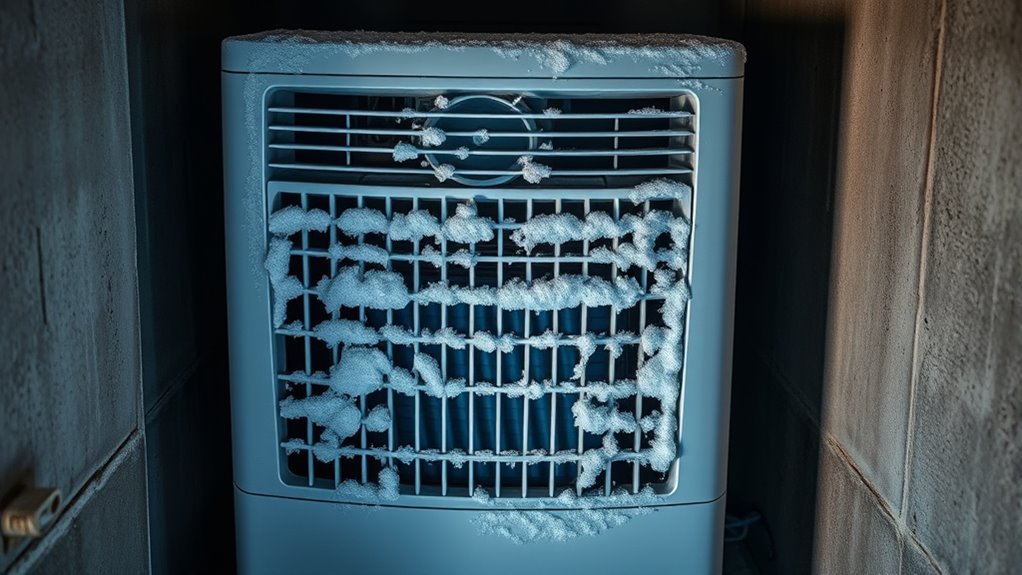
A dehumidifier freezing up means moisture is turning into ice on the internal evaporator coil faster than the appliance can melt it. While a thin veil of frost can appear briefly during startup or cool nights, solid ice blocks airflow, stops water collection, and strains the compressor. Most freeze-ups come down to a cold room, a clogged filter, cramped placement, or a failing fan or sensor.
Quick Answer
Turn the dehumidifier off, unplug it, and let all ice melt naturally for 2 to 8 hours. Next, verify the room is above your model’s minimum temperature (usually 41°F to 65°F), wash and dry the air filter, clear 12 to 18 inches around the vents, and restart at 45% to 50% humidity instead of Continuous mode.
At a Glance
| Time Required | 15–30 minutes of active checks, plus 2–8 hours for ice to thaw and dry completely |
| Difficulty | Easy for filter, airflow, and temperature fixes; professional service for internal faults |
| Tools Needed | Room thermometer, hygrometer, absorbent towels, soft brush, and vacuum with brush attachment |
| Cost | $0 for cleaning and setup adjustments; professional repair if a sensor, fan motor, or sealed system fails |
Common Causes of a Dehumidifier Freezing Up
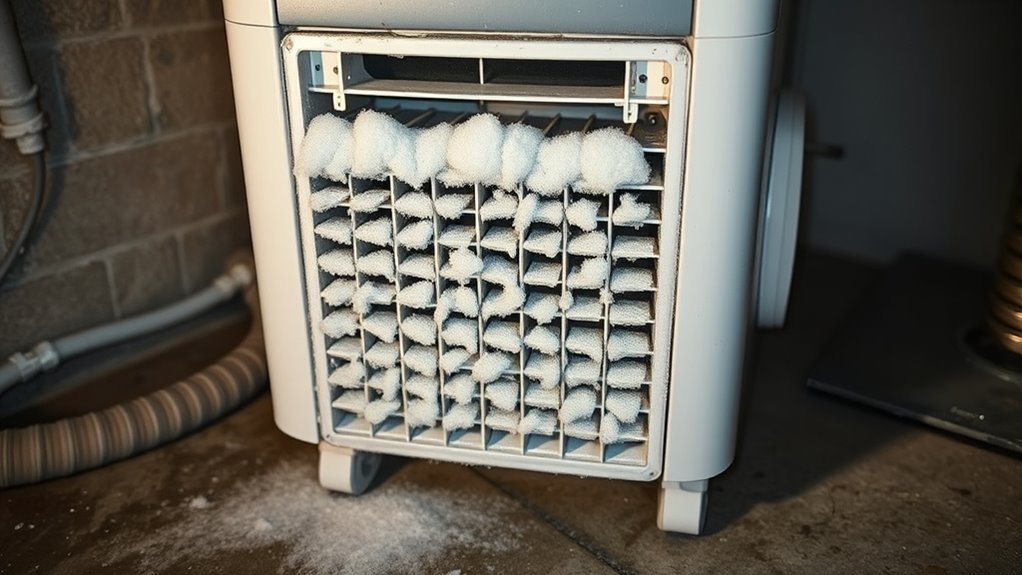
A dehumidifier freezes up when its evaporator coil drops below 32°F (0°C) while damp room air passes across the metal fins. In normal operation, warm room air keeps the coil just above freezing so condensed water drips into the bucket. Anything that chills the air, slows the airflow, or lowers refrigerant pressure will turn that condensation into ice.
| Possible Cause | Typical Clue | First Action |
|---|---|---|
| Room temperature is too low | Even frost forms across the coil during cool nights in a basement, garage, or crawlspace | Measure room air and compare it against your manual’s minimum temperature limit |
| Clogged filter or blocked grilles | Dust-caked mesh, weak exhaust breeze, or cabinet pushed against a wall or curtain | Wash and dry the filter, then restore 12 to 18 inches of open clearance |
| Continuous mode or overly low setpoint | Display set to CO or 30%–35% RH, keeping the compressor running non-stop in cool air |
Switch off Continuous mode and set target humidity to 45% or 50% RH |
| Fan motor or defrost sensor fault | Compressor hums with little or no fan breeze, grinding noises, or sensor error codes (such as E1 or E2) |
Unplug the unit and schedule service if airflow stays weak after thawing |
| Low refrigerant or sealed-system leak | Thick ice forms only on the bottom or inlet section of the coil in a warm room with strong airflow | Stop using the unit; have an EPA-certified technician diagnose or replace it |
Drainage issues—such as a kinked hose or a full bucket—should also be corrected during maintenance, though they usually trigger a full-bucket shutoff or leak rather than directly freezing the evaporator coil.
Normal Frost or a Real Freeze-Up?
A thin, powdery coating of frost can be completely normal when a compressor dehumidifier starts up in a cool room. According to GE Appliances’ operating guidelines, light startup frost should disappear within 30 to 60 minutes under normal conditions. During an automatic defrost cycle, the compressor pauses while the fan keeps spinning to warm the coil and melt that frost.
- Normal operation: Frost is thin and translucent, air flows steadily from the exhaust, no error code appears, and the coil clears itself during the defrost cycle.
- Real freeze-up: Solid white ice bridges the aluminum fins, ice remains after 60 minutes, water stops dripping into the bucket, airflow drops noticeably, or the cabinet vibrates loudly.
A thin frost that clears within an hour is normal defrost behavior. Solid ice that returns in a warm room with clean airflow is a mechanical warning.
Check the Room Temperature
Measure the air temperature right next to the appliance with a standalone thermometer. ENERGY STAR’s dehumidifier guidance notes that frost forms easily on coils when room air drops below 65°F (18°C), because the evaporator coil must run significantly colder than the surrounding air to condense moisture. However, 65°F is a frost-risk threshold rather than a universal cutoff.
Many modern low-temperature compressor models are rated down to 41°F (5°C), as documented in both Frigidaire’s frost buildup support guide and LG dehumidifier support. Below 41°F, even frost-control units may have to pause and defrost as often as once every hour, drastically cutting water removal.
| Dehumidifier Type | Typical Operating Range | Best Room Environment |
|---|---|---|
| Standard compressor dehumidifier | 65°F to 90°F (18°C to 32°C) | Heated living spaces, bedrooms, and warm summer basements |
| Low-temperature compressor unit (with auto-defrost) | 41°F to 90°F (5°C to 32°C) | Cool basements, cellars, and conditioned crawlspaces above 41°F |
| Desiccant dehumidifier (coil-free rotor) | 34°F to 86°F (1°C to 30°C), model-dependent | Unheated garages, winter basements, and spaces regularly below 45°F |
If your space stays below your manual’s minimum rating, turn the unit off or switch to a desiccant dehumidifier, which absorbs moisture using a heated silica-gel wheel rather than cold metal coils. Also check that no air-conditioning vent or drafty window is blowing cold air directly onto the cabinet.
Note: Built-in automatic defrost clears temporary ice buildup, but it cannot make a standard compressor dehumidifier extract moisture efficiently below its rated minimum temperature.
Clean the Filter and Vents
A dust-clogged air filter is the single most common maintenance cause of a frozen dehumidifier. When lint, pet hair, or basement dust blocks the mesh screen, less warm room air reaches the evaporator coil, causing the coil temperature to plunge well below freezing.
Warning: Always unplug the dehumidifier before removing the filter or cleaning any surface. Never operate the unit with a cover removed, reach through a grille, or use sharp tools or heat sources to remove ice. Unplug the unit immediately if you smell burning, see smoke or sparks, or feel a hot plug or outlet.
Recommended Products
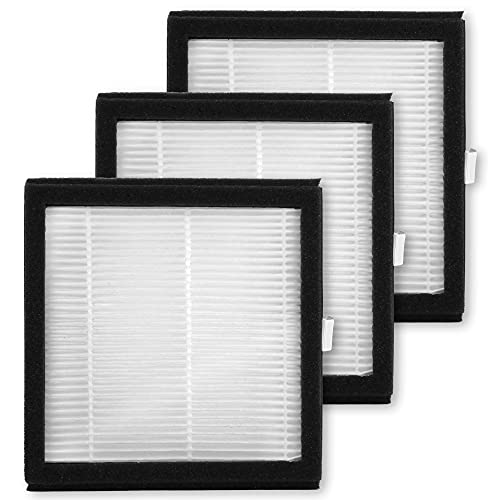
Includes 3 replacement filters

COMPATIBILITY: Our DH02 HEPA filter compatible with Afloia (AQ8/Q8)/ Honati/ Hysure Q7/ Tenergy Sorbi 2-in-1 Air Purifier/Dehumidifier(1000ML) or please double check before order

BUY WITH CONFIDENCE This genuine replacement water panel was designed and manufactured in the USA by AprilAire – the leader in indoor air quality solutions to optimize the performance of your AprilAire Humidifier Model: 110, 220, 500, 500A, 500M, 550, 550A, 558
Filter Cleaning Steps
- Turn the dehumidifier off, unplug it from the wall outlet, and wait for any ice on the coil to melt completely.
- Slide or unclip the air filter from the front, back, or side panel according to your owner’s manual.
- Use a soft brush attachment on your vacuum to lift dry lint and dust from both sides of the mesh.
- If the manual states the filter is washable, rinse it gently under warm running water (below 104°F or 40°C) with a few drops of mild dish soap. Avoid bleach, chemical sprays, or stiff brushes that tear the mesh.
- Shake off excess water and let the filter air-dry completely out of direct sunlight before reinstalling it.
Never reinstall a damp filter. Moisture on the mesh traps fresh dust into a muddy paste and can pull water droplets directly into the fan housing. Most manufacturers trigger a filter-check reminder light (often labeled CL or Filter) every 250 hours of operation, or roughly every 2 weeks during heavy use.
Vent Blockage Checks
After reinstalling the dry filter, verify that the cabinet has enough breathing room around its intake and exhaust vents. Manufacturers specify different minimum clearances depending on whether air exits from the top, side, or rear.
| Area to Check | Required Standard |
|---|---|
| Side and rear clearance | Allow at least 12 inches on all sides (LG standard) to 18 inches on all sides (GE standard) |
| Top discharge clearance | Keep 18 to 24 inches clear above top-exhaust units; never dry clothes or stack boxes on the cabinet |
| Exterior doors and windows | Keep closed while the dehumidifier runs so outdoor humidity and cold drafts do not overload the coil |
Look for Airflow Blockages
Even with a spotless filter, restricted room circulation can starve the coil of warm air. The dehumidifier needs an unobstructed path to pull damp air in, pass it across the evaporator, and push dry air out into the room without immediately sucking that exhaust air back in.
Recommended Products

Home Essentials: Fireplace chimney brushes includes two high quality synthetic brush head and flexible rods that extend up to 30 feet

All-in-One Dryer Duct Cleaning Kit — No more running to the hardware store for missing parts. This complete vent cleaning kit includes a heavy-duty dryer vent cleaning brush for 4-inch pipes, a set of flexible nylon rods, a dedicated lint brush, a dryer vent cleaner drill attachment, and protective gloves—everything you need in one box, ready to use right away.

HOME ESSENTIALS: The dryer vent cleaner kit brush Includes one high quality synthetic brush head and flexible rods that extend up to 40 feet.The short brush head has a diameter of 4 inches, while the long brush head has a diameter of 1.5 inches.
Clear Surrounding Space
Tucking a dehumidifier into a narrow alcove, behind a sofa, or between storage totes often causes air short-cycling. When discharged air bounces off a nearby surface and loops straight back into the intake grille, the local air around the cabinet dries out rapidly while the rest of the room stays damp. Move the unit toward the center of the room or into an open hallway on a hard, level floor.
Check Vents and Grilles
Inspect the plastic louvers on both the intake and exhaust grilles while the power cord is unplugged. On models with adjustable exhaust louvers, make sure the flap is fully open before starting the unit. Running a dehumidifier with a closed or partially jammed exhaust flap traps cold air inside the housing and freezes the coil rapidly.
Remove Dust and Debris
Use a soft bristle brush and a low-suction vacuum nozzle to clear lint mats clinging to the exterior grilles. Never blast compressed air into the vents; high-pressure air drives dust deeper onto the wet evaporator fins and can dislodge internal thermistor wires.
Pro Tip: After reassembling and starting the unit, hold a single ply of tissue paper 2 inches away from the intake grille. A healthy fan will pull the tissue steadily toward the vent; keep your fingers and the tissue from touching the grille openings.
Inspect the Coils for Dirt or Ice
With the dehumidifier unplugged and the filter removed, shine a flashlight onto the exposed evaporator coil. Watching where the frost forms tells you whether you are dealing with an airflow problem or a sealed-system refrigerant fault.
- Even frost across the entire coil: Usually points to cold room air, a dirty filter, restricted vents, or a stalled fan.
- Thick ice on only the bottom or one corner (with bare metal elsewhere): Strongly suggests low refrigerant from a sealed-system leak. When refrigerant pressure drops, the liquid expands and super-chills only the first few passes of tubing entering the evaporator while the rest of the coil stays warm and dry.
- Dust or bent aluminum fins: Fine dust that slipped past a loose filter insulates the metal fins and traps cold.
If dry dust is visible on an accessible coil, gently whisk it upwards and downwards—following the vertical direction of the thin aluminum fins—using a soft paintbrush. Never scrape the coil, press sideways against the fins, or spray household cleaners into the cabinet.
Recommended Products
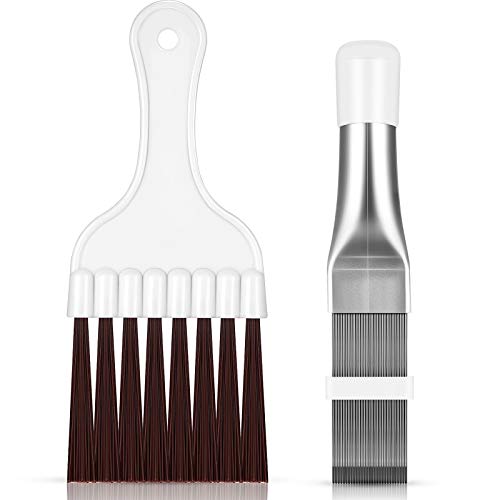
Instructions for use: If you need to use the product to straighten the fins during the cleaning process, pay attention to adjusting the white movable buckle; The closer the movable buckle is, the tighter the brush and the stronger the force; Attention: Only suitable for fins with not severely damaged, please refer to the manual for details, and the brush head is not detachable

✔️ Deep Cleans AC & Fridge Coils in Minutes Easily blast away built-up dust, grease, and debris from condenser/evaporator coils—restores cooling power and airflow without disassembly!
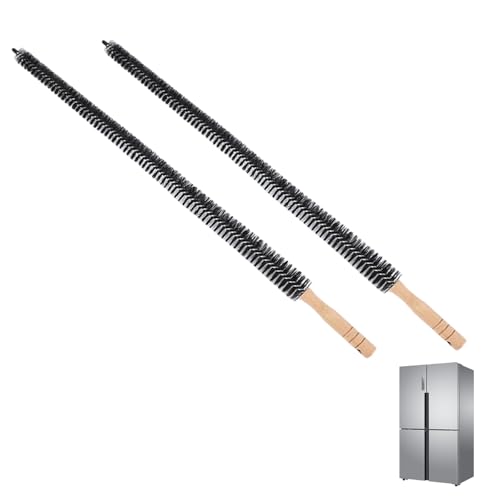
Flexible and Bendable:Fridge coil cleaning brush can bend at any angle for easy cleaning of gaps and corners
Check the Fan and Blower
The internal blower fan pulls room air across the cold evaporator coil and through the warm condenser coil. If the fan motor slows down, loses its start capacitor, or stalls completely, the compressor will turn the evaporator into a solid block of ice within 15 to 30 minutes.
- Listen during operation: You should hear a steady rush of air alongside the low hum of the compressor.
- Check Multi-Speed settings: Switch the fan speed from Low to High; if the sound and exhaust breeze do not change, the fan relay or motor windings may be faulty.
- Listen for mechanical wear: Grinding, squealing, rhythmic clicking, or a burning smell from the exhaust points to seized motor bearings or a loose blower wheel.
- Verify defrost fan behavior: When the compressor pauses for automatic defrost, the fan should continue running to melt the frost.
Keep the cabinet fully assembled during these checks. Never stick a screwdriver or finger through the grille to push a stalled fan blade, as the capacitor can hold a charge or the motor can start suddenly.
Check Humidity and Drainage Settings
Setting your dehumidifier to Continuous mode (often displayed as CO or Cont) or to the lowest possible humidity (30% to 35% RH) forces the compressor to run non-stop. In a cool basement, non-stop compressor operation gives frost no chance to melt between cycles.
Set the humidistat between 45% and 50% relative humidity for everyday use. The U.S. Environmental Protection Agency’s mold and moisture guide recommends maintaining indoor relative humidity below 60% and ideally between 30% and 50% to inhibit mold growth and dust mites. Once the room reaches 45% to 50% RH, the compressor cycles off naturally, allowing the coil to warm above freezing.
While checking your settings, inspect the water-collection path so meltwater does not overflow during thawing:
- Empty the bucket and confirm the float moves freely on its pivot.
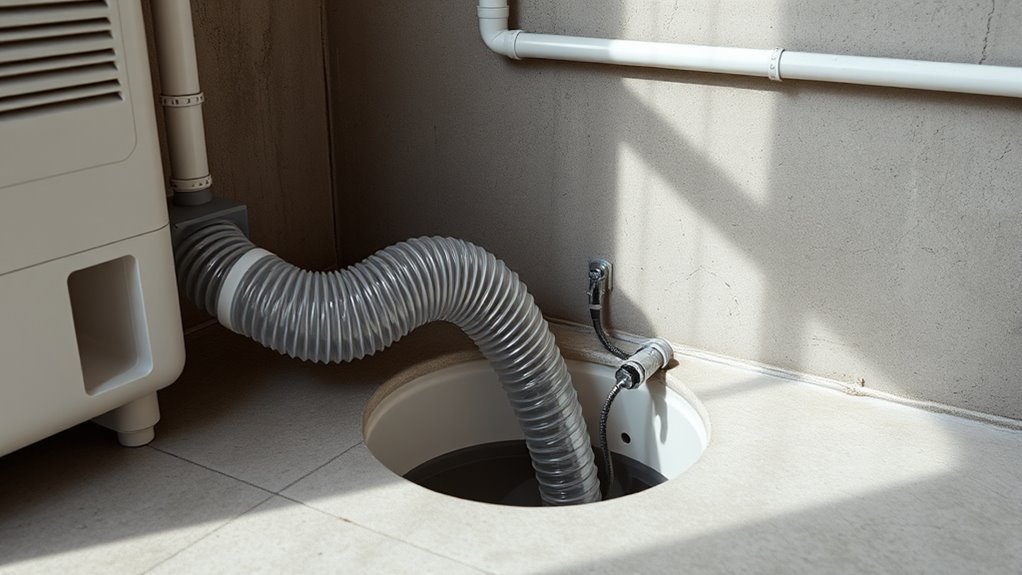
- If using a gravity drain hose, verify that it slopes continuously downward with no kinks, upward loops, or submerged ends.
- If using an internal condensate pump in a cold space, verify that the thin vinyl pump tube has not kinked or frozen where it exits the room.
Check Automatic Defrost and Error Codes
Modern dehumidifiers clamp a small thermistor (temperature sensor) directly onto the evaporator tubing. When the coil temperature drops below freezing for a set period, the control board illuminates the Defrost light, shuts off the compressor, and runs the fan until the coil warms up. If the thermistor drifts out of calibration or pulls loose from the tubing, the unit never enters defrost and freezes solid.
Check the digital display for diagnostic codes. While codes vary by manufacturer, the Frigidaire error code guide and other major brand manuals use several common alerts:
| Displayed Code | Typical Meaning | Recommended Action |
|---|---|---|
F0 or EC |
Sealed-system fault or refrigerant shortage | Unplug for 5 minutes to reset once; if the code returns in a warm room, call for service |
E1, E2, AS, or ES |
Humidity sensor or coil temperature thermistor fault | Thaw and dry the unit completely; if the code persists, the sensor or control board needs replacement |
LO or L2 |
Room humidity or temperature is below operating limits (under 35% RH or 41°F) | Turn the unit off until humidity rises or move it to a warmer room |
CL |
Filter clean reminder (typically after 250 hours) | Wash and dry the filter, then press the Filter Reset button |
P1, P2, or E0 |
Bucket full, float stuck, or internal pump blockage | Empty the bucket, clean the pump intake screen, and inspect the drain hose |
How to Defrost a Dehumidifier Safely
When thick ice coats the coils, passive thawing at room temperature is the only safe removal method. Puncturing a pressurized aluminum evaporator tube with a sharp tool releases refrigerant and permanently ruins the appliance.
- Power down and unplug: Press the power button, then unplug the power cord from the wall so the compressor cannot kick back on mid-thaw.
- Empty the bucket first: Thick coil ice can release several pints of water as it melts; starting with an empty bucket prevents floor overflow.
- Keep the cabinet upright on towels: Lay thick towels around the base. Never tip a frozen dehumidifier onto its side, which spills drip-tray water onto the main circuit board and displaces compressor oil.
- Move to a 65°F+ room if needed: If the unit froze in a cold cellar, carry it upright to a warmer room so the ice melts cleanly over 2 to 8 hours.
- Never apply external heat or tools: Keep hair dryers, heat guns, boiling water, and butter knives away from the coils. High heat warps the plastic drip pan and melts sensor insulation.
- Wait until electrical parts are bone-dry: Before plugging the unit back in, verify that the coil fins, filter, power cord, plug prongs, and floor are completely dry.
Troubleshooting Order: What to Check First
Once your dehumidifier is fully thawed and dry, follow this diagnostic sequence from quickest external verification to internal fault isolation so you can pinpoint the exact failure within one run cycle.
- Verify room baseline (2 minutes): Place a thermometer and hygrometer 3 feet from the unit. Confirm the air is above the manual’s minimum temperature (41°F or 65°F) and humidity is above 45% RH.
- Confirm airflow and clearance (5 minutes): Install the clean, dry filter, open any exhaust louvers, and measure 12 to 18 inches of clear space on all sides.
- Start a controlled test cycle (5 minutes): Plug the unit directly into a grounded 15-amp wall outlet (never an extension cord), set the humidistat to 50% RH, and select High fan speed.
- Verify fan pull immediately: Perform the tissue-paper check near the intake grille and confirm a strong, steady air stream exits the exhaust.
- Inspect the coil at the 45-minute mark: Shine a flashlight through the grille. Water droplets should be beading and dripping into the bucket. If thick ice is already building on only one corner of the coil in a 68°F+ room, unplug the unit—the sealed system is low on refrigerant.
- Verify the defrost pause (in rooms between 41°F and 64°F): If a thin frost film appears, watch whether the compressor stops while the fan keeps running to clear it within 30 to 60 minutes.
Prevent a Dehumidifier From Freezing Up
Consistent airflow and sensible humidity targets stop almost all preventable coil icing before it starts. Build these habits into your seasonal maintenance routine:
- Match the unit to the room’s winter low: Use a low-temperature compressor model down to 41°F, or switch to a desiccant dehumidifier for unheated garages and crawlspaces.
- Clean the filter every 2 weeks during peak use: Set a calendar reminder rather than waiting for frost to appear, especially in homes with pets or unfinished concrete floors.
- Avoid Continuous mode in cool weather: Let the built-in humidistat cycle the compressor off at 45% to 50% RH so the evaporator warms naturally between runs.
- Wait 3 minutes before restarting: If you turn the unit off or adjust power, wait at least 3 minutes before restarting so refrigerant pressure equalizes across the compressor.
- Keep dust-generating work away from the intake: Turn the dehumidifier off while sanding drywall, sawing wood, or sweeping concrete dust, which rapidly blinds both the filter and wet coil fins.
- Keep exterior windows and doors closed: Sealing the room stops cold drafts and endless outdoor moisture from forcing 24/7 runtime.
When to Stop and Call for Service
External cleaning and placement adjustments solve airflow freeze-ups, but internal electrical, fan motor, and refrigerant failures require a professional appliance technician or unit replacement.
- Thick ice forms on only one section of the coil in a warm room (65°F+) with a clean filter.
- The compressor hums, but the fan blade does not spin or exhaust airflow stays weak on High.
- Error codes such as
F0,EC,E1, orE2return immediately after a 5-minute power reset. - You hear metallic grinding, the 15-amp household circuit breaker trips, or the power cord or wall outlet feels hot to the touch.
- You notice oily residue on the copper tubing (a classic sign of a refrigerant leak), smell burning insulation, or see smoke or sparks.
Never attempt to open sealed copper refrigerant lines or attach DIY recharge kits. Under federal law, EPA Section 608 technician certification rules prohibit anyone without proper certification from performing service that could release refrigerants into the atmosphere. Because sealed-system repairs on portable dehumidifiers often exceed the price of a new unit, verify your warranty coverage before booking out-of-warranty refrigerant work.
Warning: Millions of portable dehumidifiers—including 1.56 million Gree-manufactured units recalled in August 2023 and earlier Midea and New Widetech models sold under brands like GE, Frigidaire, Kenmore, Danby, and Honeywell—have been recalled for overheating and fire hazards linked to over 450 fires. Check your model and serial number against the U.S. Consumer Product Safety Commission’s dehumidifier recall list before continuing to use an older or secondhand unit.
Sources
- ENERGY STAR: Dehumidifiers: Frost risk below 65°F, low-temperature model recommendations, and placement guidance.
- GE Appliances: Dehumidifier Ideal Operating Conditions: 41°F to 90°F temperature limits, 18-inch clearance requirement, 15-amp circuit rating, and 30–60 minute startup frost window.
- Frigidaire: Dehumidifier Frost Buildup: Light versus heavy frost, 41°F low-temperature limit, and Continuous mode adjustments.
- Frigidaire: Dehumidifiers Error Code Guide: Official diagnostic meanings for
F0andECsealed-system codes and drain pump checks. - LG USA Support: Dehumidifier General Usage: 41°F to 90°F operating range, 12-inch clearance, and compressor restart delay specifications.
- U.S. EPA: A Brief Guide to Mold, Moisture and Your Home: Recommended 30% to 50% indoor relative humidity range and 60% RH upper threshold.
- U.S. EPA: Section 608 Technician Certification Requirements: Mandatory certification requirements for servicing appliance refrigerant circuits.
- U.S. CPSC: Dehumidifier Recalls: Official model numbers, fire-hazard notices, and refund remedies for recalled dehumidifiers.
Key Takeaways
- Frost risk rises below 65°F, though many low-temperature compressor units run down to 41°F; spaces colder than 41°F require a desiccant dehumidifier.
- Even frost across the whole coil usually points to cold air or restricted airflow, while thick ice on only one section signals low refrigerant.
- A light startup frost should clear within 30 to 60 minutes as the compressor pauses for automatic defrost.
- Always thaw ice naturally with the power cord unplugged—never use a hair dryer, heat gun, or sharp tool on the aluminum fins.
- Repeated icing in a warm room with a clean filter and strong fan airflow indicates a thermistor, fan motor, or sealed-system fault.
Frequently Asked Questions
How do I keep my dehumidifier from freezing?
Keep your dehumidifier from freezing by running it only above its rated minimum temperature, washing the air filter every 2 weeks, and maintaining 12 to 18 inches of clearance around all vents. Set the target humidity to 45% to 50% RH rather than Continuous mode so the coil can warm between cycles.
Is a little frost on dehumidifier coils normal?
Yes, a thin layer of frost on the evaporator coil can be normal when the unit first starts or runs in a cool room. According to GE Appliances, startup frost normally clears within 30 to 60 minutes during automatic defrost. Thick solid ice that blocks the fins or never melts is not normal.
Can I run a dehumidifier below 65°F?
You can run a dehumidifier below 65°F only if your specific model is rated for low-temperature operation. While standard compressor units often frost below 65°F, many modern GE, Frigidaire, and LG models operate down to 41°F. For spaces colder than 41°F, use a coil-free desiccant dehumidifier instead.
How long does a frozen dehumidifier take to thaw?
A frozen dehumidifier typically takes 2 to 8 hours to thaw naturally after you unplug it, depending on room temperature and how thickly the ice has built up. Leave the unit upright on towels until every trace of ice is gone and the coil area, filter, cord, and floor are completely dry.
How do I clean the coils on my dehumidifier?
Clean accessible dehumidifier coils by unplugging the appliance, removing the air filter, and gently brushing dry dust in the vertical direction of the fins with a soft paintbrush or low-suction vacuum brush. Never bend the thin aluminum fins, scrape off ice, spray liquids near wiring, or dismantle sealed cabinet panels.
Why is only the bottom half of my dehumidifier coil freezing?
Ice forming only on the bottom or inlet section of the evaporator coil—while the rest of the coil stays bare and dry—usually indicates low refrigerant from a sealed-system leak. Because lower pressure causes refrigerant to over-chill right where it enters the evaporator, this issue requires an EPA-certified technician or unit replacement.
How do I know if my dehumidifier needs repair?
Your dehumidifier needs professional repair or replacement when heavy ice returns in a warm room despite a clean filter and open airflow, the fan stops spinning, or error codes like F0, EC, E1, or E2 repeat. Unplug the unit immediately if it trips a breaker, grinds loudly, or smells like burning plastic.
Conclusion
Fixing a frozen dehumidifier starts with unplugging the unit, letting the ice melt naturally, and checking the three essentials: room temperature above the model’s minimum limit, a clean and dry filter, and 12 to 18 inches of open clearance around every grille. Restart the unit at 45% to 50% RH and watch the first cycle closely—if thick or partial coil ice returns despite strong airflow and warm air, unplug the appliance and check your warranty or CPSC recall status before scheduling service.


[…] matters too. ENERGY STAR notes that frost can form on a dehumidifier’s condensing coils if the air temperature drops below 65°F, which can hurt […]
[…] Why is my dehumidifier freezing up? […]